
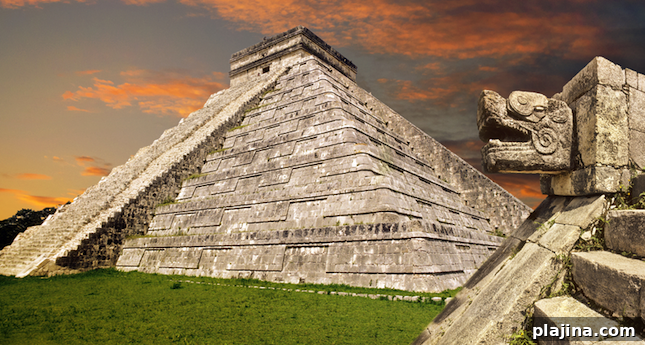
Discover the history, myths, and achievements of the Maya—an advanced civilization that left behind remarkable monuments and revered the ceiba tree as a sacred bridge between the heavens and the underworld. Through August 24, the exhibition Maya: Hidden Worlds Revealed is on display at the Denver Museum of Nature & Science. The interactive presentation features murals, scale models, and demonstrations of Maya mathematics. A film in the museum’s immersive theater explains how the Maya tracked celestial movements, made astronomical predictions, and developed their sophisticated calendar.
The exhibit is ideal for families and visitors of all ages. It showcases original relics and artifacts alongside large-scale reconstructions—a sacred cave complete with carved stone reliefs, a replica tomb, traditional houses, and the layout of a typical ancient Maya neighborhood. Hands-on activities let guests try a virtual archaeological dig, practice traditional weaving patterns, and learn the rules and techniques of the ancient Maya ball game.
In addition to material culture, the exhibition highlights the Maya’s scientific accomplishments: their precise observations of planetary cycles, innovative mathematical concepts including the use of zero, and the calendar systems that helped guide agricultural and ceremonial life. Multimedia displays and docent-led components provide context for how these discoveries shaped daily life and religious practice.
Visitors can expect a balanced mix of scholarship and interactive learning. Informational panels explain iconography, glyphs, and common symbolism—such as the ceiba tree—while tactile elements and replica artifacts make the past tangible. The exhibit’s models and dioramas help visualize urban planning, ceremonial centers, and the relationship between community spaces and ritual sites.
Whether you’re interested in archaeology, astronomy, art, or family-friendly experiences, the Denver Museum of Nature & Science’s presentation offers an accessible overview of Maya civilization. It emphasizes both the grand scope of their monumental architecture and the everyday technologies and crafts that sustained communities. The exhibit avoids sensationalism and focuses on evidence-based interpretation drawn from archaeological research and museum collections.
Plan your visit to allow time for the immersive film, the interactive stations, and the exhibit galleries. Exhibits like this often include scheduled talks or demonstrations—check museum listings for times—to enrich your experience with expert commentary and hands-on workshops. The combination of artifacts, reconstructions, and digital experiences creates a multi-layered portrait of the Maya world that resonates with visitors of all backgrounds.
If this topic interests you, consider exploring other regional features and travel-inspired stories that highlight cultural heritage and natural history. The museum’s presentation is a well-rounded introduction to a complex civilization whose contributions to astronomy, mathematics, and architecture remain influential today.