
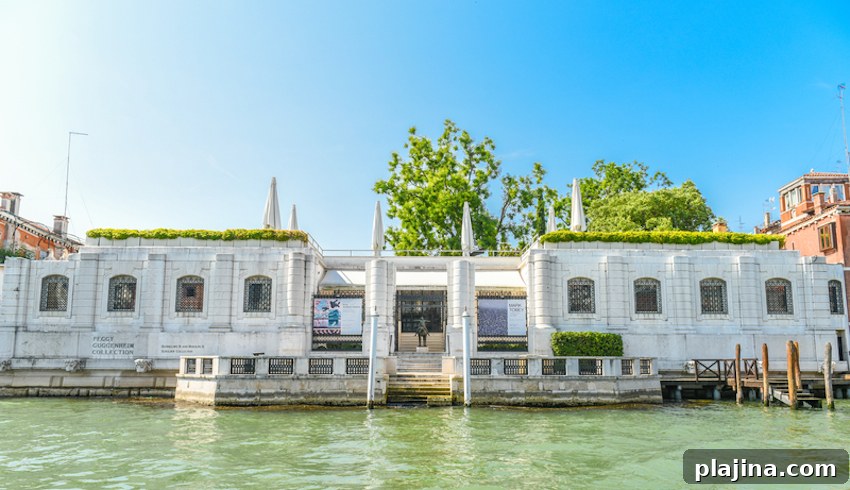
The Peggy Guggenheim Collection in Venice presents a comprehensive exhibition of Josef Albers’ work through September 3.
Curated by Lauren Hinkson, Associate Curator of Collections at the Solomon R. Guggenheim Museum, “Josef Albers in Mexico” surveys the artist, poet and theorist’s practice across painting, printmaking, mural work and architectural projects. Albers is widely known for his teaching at the Bauhaus in Dessau and Berlin, at Black Mountain College in Asheville, North Carolina, and later at Yale University in New Haven, Connecticut.
The show highlights lesser-known aspects of Albers’ output by including photographs and photo-collages he made after repeated visits to Mexican archaeological sites beginning in the 1930s. These photographic works reveal a side of his practice that is not often foregrounded in accounts of his career.
Between 1935 and 1967 Josef Albers and his wife, the artist Anni Albers, traveled extensively throughout Mexico and other parts of Latin America. Those journeys deepened his fascination with pre-Columbian art, indigenous culture and the monumental architecture of Mesoamerica.
During his travels Albers produced hundreds of black-and-white images documenting pyramids, shrines, sanctuaries and other ancient structures. The exhibition also features personal photographs, studies and letters, offering visitors a fuller sense of his process and interests alongside the paintings and prints for which he is best known.