
This year the European Capitals of Culture are Oulu, Finland, and Trenčín, Slovakia.
Located in northern Finland, Oulu promises a lively year of cultural events and initiatives designed to boost the city’s cultural profile and engage both residents and visitors. Under the theme “Cultural Climate Change,” Oulu’s program highlights diverse cultural expressions and community participation, using art and culture to build connections across social and environmental concerns.
Trenčín sits in western Slovakia in the Váh River valley near the Czech border, about 75 miles from Bratislava. The city is best known for its medieval castle perched on a rocky outcrop above the town, with a long history that reaches back to Roman times.
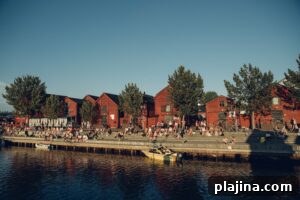
© Visit Oulu
Trenčín submitted its bid under the slogan “Cultivating Curiosity,” framing curiosity as a driver of cultural renewal and civic regeneration that encourages care, responsibility, interest and empathy. The selection report describes curiosity as a core condition for learning and creating flexible, creative environments capable of responding to new challenges and contributing to solutions for persistent problems. The city’s vision emphasizes contemporary cultural expression rooted in collaboration and co-creation, bridging past and future, urban life and nature, and culture and everyday routines. A broad program celebrating art and craft is scheduled throughout the year and appears on the city’s official cultural calendar.

© Visit Oulu
The European Capital of Culture initiative began in 1985 and has since awarded the title to more than 60 cities across Europe. The program celebrates cultural diversity, strengthens a shared European cultural identity, and promotes the role of culture in urban development. Earning the EcoC designation often acts as a catalyst for urban regeneration and tourism growth, raises a city’s international profile, and can improve how residents perceive their own city.
Cities are designated European Capital of Culture four years before their title year to allow time for planning, building partnerships, and developing the infrastructure and long-term strategies needed to embed the cultural program in the local context. Recent Capitals in 2025 included Chemnitz, Germany, and the cross-border partnership of Nova Gorica/Gorizia in Slovenia and Italy.