
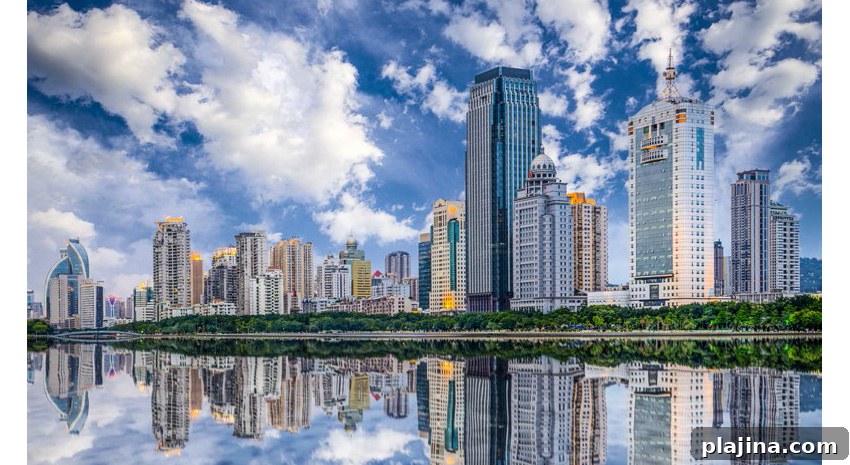
XIAMEN HAS ALWAYS BEEN a little bit different. Although many Chinese cities surpass it in population and industrial output, Xiamen stands out for its reputation and strategic importance.
The city’s economy emphasizes trade and finance rather than heavy industry. One immediate difference is the air quality: there is no constant pall of smog. Looking across from the mainland, the skyline is clear and sharply defined, unlike in many other Chinese cities where pollution can obscure visibility.
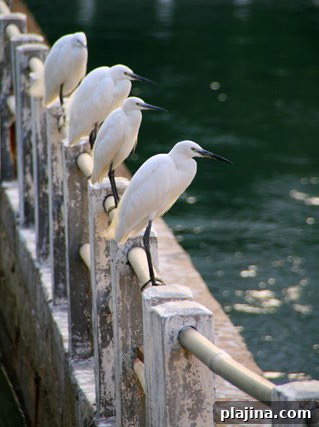
White egrets on the lake shore in Xiamen © KATOOSHA | DREAMSTIME.COM
Geography further distinguishes Xiamen: it is an island in a sheltered bay, connected to the mainland by causeways, bridges and tunnels. Its protected harbor and strategic location on Fujian’s coast—between Hong Kong and Shanghai—made Xiamen (historically known as Amoy) an early hub for foreign trade. In the 19th century it became one of China’s principal tea-exporting ports.
Colonial-era influences remain visible in the city’s architecture. Unlike many Chinese cities where colonial districts were altered or removed, Xiamen has preserved much of its waterfront heritage and the neighboring island of Gulangyu, where Portuguese, British, Dutch and French styles blend into a distinctive urban fabric.
Locals speak the Hokkien dialect, common in Taiwan, Singapore, Indonesia and Malaysia but less widespread across mainland China. Xiamen is the country’s largest Hokkien-speaking city, and that dialect has given the world words such as ketchup, tea and typhoon.
The waterfront district is a natural place to begin exploring Xiamen. The historic Lujiang Harbourview Hotel, a 1950s colonial-style building that was once the tallest in the city, remains prized for its location facing the water. Its top-floor Ocean-Observation Hall, with indoor seating and a terrace, is popular for business breakfasts. For a quick start to the day, downtown offers many cafés and coffee shops, including familiar international chains.
For upscale accommodations, the Kempinski Hotel Xiamen sits on the shore of Yundang Lake and remains a premier address for business visitors. Its lakeside setting and proximity to central venues make it a favored choice when you need to impress colleagues or clients.
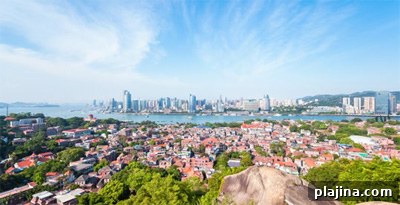
Aerial view from Gulangyu Island © CHUYU | DREAMSTIME.COM
The one-square-mile island of Gulangyu, where early foreign residents settled, is Xiamen’s top attraction. Local ferries from downtown make the crossing in about five minutes; visitors arriving from the Dongdu International Terminal take a 20-minute ferry. The island’s traffic-free cobblestone streets and alleys—where cars and bicycles are banned—create a tranquil atmosphere. Low-rise Victorian-style buildings with red-tiled roofs line the lanes, making Gulangyu one of the most picturesque districts in China.
Gulangyu offers numerous casual restaurants and cafés serving excellent Chinese food. For a more formal meal, Ludwig Restaurant at the Miryam Boutique Hotel—located near the island’s Sunlight Rock—serves international fusion cuisine under the direction of chef Tomer Biran and provides expansive views across to Xiamen.
Back on the main island, the Marco Polo Xiamen Hotel has long served as a venue for business meetings. Its Lobby Lounge is well suited for afternoon tea or evening drinks. For a relaxed coastal setting, Seaview Resort on the island’s southern shore provides a serene environment for informal meetings, with a terrace overlooking the Taiwan Strait and an on-site Jazz Bar.
For varied options in business entertainment, downtown offers lively venues such as craft breweries and international restaurants. Fat Fat Beer Horse is a popular craft-brewery spot with a lively atmosphere, while Portofino at the Millennium Harbourview Hotel is a reliable choice for refined international dining. When sampling local cuisine, it is often best to rely on your Chinese associates’ recommendations for authentic experiences.
Xiamen frequently ranks among China’s most livable cities for good reason: the pace is less frantic, the air cleaner, and the city feels more open and relaxed than many mainland centers. The qualities that attracted early foreign traders—natural beauty, strategic location and a pleasant living environment—still define Xiamen today.