
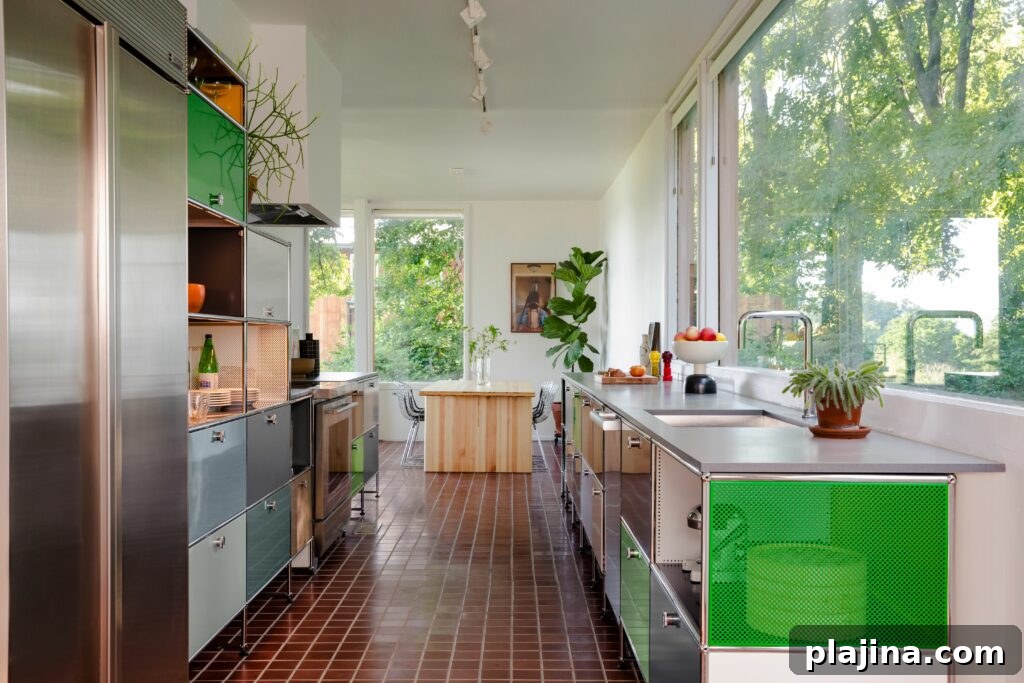
Wolfhouse, a Philip Johnson residence and curatorial center, has completed a thoughtful restoration that includes a unique collaboration with USM Modular Furniture: a sustainably built kitchen assembled from recycled and reused USM components.
© Chris Daniele/dirtandglass.net
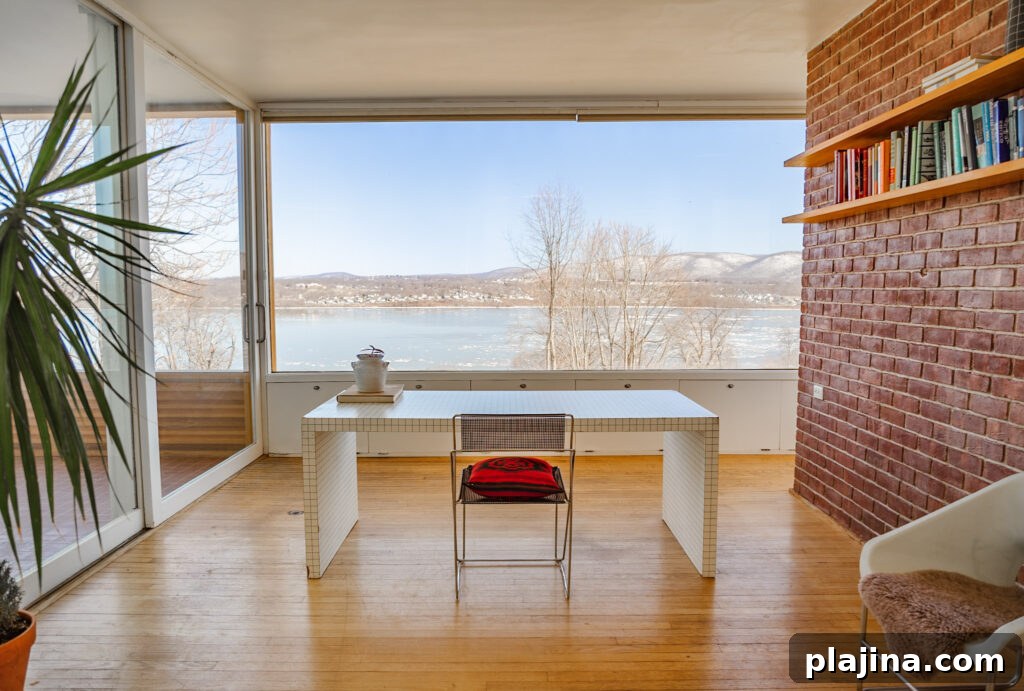
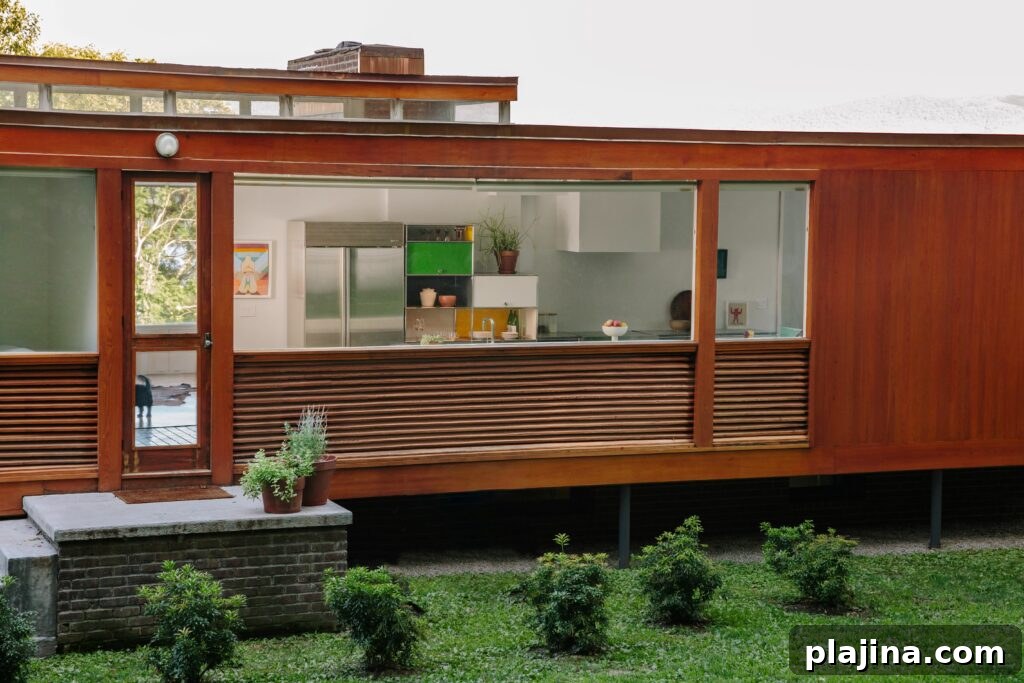
Built in 1949 for Benjamin V. Wolf, Wolfhouse is a classic example of mid-century modern architecture by Philip Johnson. Perched on a hillside north of the Newburgh–Beacon Bridge with sweeping views of the Hudson River, the house shares many design ideas with Johnson’s contemporaneous Glass House in New Canaan, Connecticut. Both homes reflect Johnson’s signature approach: open-plan interiors, fluid circulation, and expansive plate-glass walls that frame the surrounding landscape.
After purchasing the property in 2020, owners Jiminie Ha and Jeremy Parker undertook a meticulous restoration informed by the original floorplans to return Wolfhouse to its authentic condition. Throughout the renovation they balanced historical fidelity with contemporary needs, preserving the home’s architectural integrity while updating systems and finishes for modern use.
© Chris Daniele/dirtandglass.net
The kitchen offered room for creative interpretation. Seeking materials authentic to the mid-century period, the owners selected steel cabinetry and partnered with USM to design a kitchen that honors the home’s history while embracing sustainable practice. The finished kitchen uses a palette and detailing consistent with mid-century aesthetics but is entirely constructed from repurposed USM parts, demonstrating how reuse can achieve both beauty and durability.
Ha and Parker have positioned Wolfhouse as an inclusive cultural venue that supports year-round programming in arts, design, and architecture. Their vision includes exhibitions, artist residencies, public events, and lectures, making the house a gathering place for diverse audiences. As members of the BIPOC and LGBTQIA+ communities, they emphasize accessibility and representation in the programs they host.
© Chris Daniele/dirtandglass.net
When not serving as a curatorial space, Wolfhouse functions as a short-term rental sleeping up to six guests. Visitors can experience the restored interiors and modern amenities while enjoying the tranquil Hudson Valley setting, making it suitable for weekend getaways or longer stays focused on design and nature.
“We want to encourage people that the most sustainable building practice is preservation,” say Parker and Ha. They challenge the common association of sustainability with a single aesthetic—raw wood or earthy textures—by showing that sustainable strategies can adopt different visual languages. Their rehabilitation demonstrates that innovative design and reuse can produce refined, distinctly modern interiors while reducing environmental impact.
Wolfhouse is near Beacon, New York, a popular destination in the Hudson Valley known for its arts scene and seasonal appeal. The location offers easy access to cultural sites such as DIA: Beacon and nearby outdoor art destinations, along with the charming villages scattered along the river corridor. The restored house combines architectural significance, thoughtful sustainability, and a welcoming public program, making it a notable example of contemporary stewardship of a mid-century landmark.