
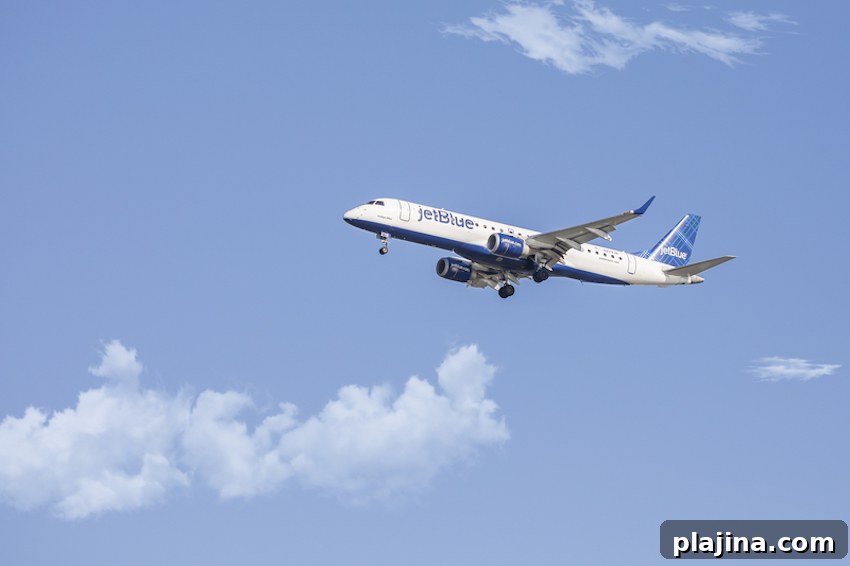
JetBlue has placed a major order with Airbus for 60 A220-300 aircraft, with initial deliveries scheduled to begin in early 2020. The agreement also includes options to acquire up to 60 additional A220-300s, exercisable starting in 2025, giving the airline flexibility to expand its fleet as demand and strategy evolve.
“We are evolving our fleet for the future of JetBlue, and the A220-300’s impressive range and economics offer us flexibility and support our key financial and operating priorities,” said JetBlue CEO Robin Hayes. As JetBlue nears its 20th anniversary, the carrier plans to integrate the A220 alongside its existing A321s and refreshed A320s to enhance the onboard experience and help meet long-term financial targets while pursuing disciplined growth.
The A220-300 delivers a number of passenger-focused improvements compared with the Embraer E190s currently in JetBlue’s fleet. Customers will benefit from wider seats, larger windows, and increased overhead bin capacity, creating a more comfortable cabin environment. From an operational and environmental perspective, the A220-300 achieves significantly better fuel efficiency: it consumes roughly 40 percent less fuel per seat than the E190, translating to lower emissions and reduced operating costs per passenger.
According to the airline’s rollout plan, deliveries of the A220-300s will commence in 2020 and continue through 2025. Concurrently, JetBlue will begin reducing its fleet of E190 aircraft starting in 2020, with a full phase-out of the E190 type planned by 2025. This transition supports fleet commonality goals and positions the carrier to operate a more efficient, modern fleet that aligns with its service and financial objectives.
Upgrading to the A220-300 also supports JetBlue’s strategic priorities in route planning and network flexibility. The aircraft’s range and fuel efficiency allow the airline to operate longer thin routes more profitably and to deploy capacity where demand is emerging without the higher operating costs associated with older regional jets. For passengers, that can mean more nonstops, improved schedule reliability, and a more consistent in-cabin experience across JetBlue’s single-aisle fleet.
Operational benefits extend beyond fuel savings. The A220 family features advanced aerodynamics, lightweight materials, and modern engines, all contributing to lower maintenance costs and improved dispatch reliability. These efficiencies help JetBlue manage unit costs and support competitive fares while maintaining service quality.
The decision to introduce the A220-300 complements the airline’s existing investments in cabin upgrades and fleet renewal. By pairing the A220 with its A321 and updated A320 aircraft, JetBlue is aiming to offer a cohesive passenger experience that emphasizes comfort and convenience, while also achieving the cost advantages of newer technology.
JetBlue’s A220-300 order represents a significant step in the airline’s long-term fleet strategy. The replacement of older E190s with a modern, fuel-efficient aircraft is expected to reduce carbon intensity per passenger and lower operating expenses, supporting the carrier’s sustainability and financial targets. As deliveries progress through 2025, travelers can expect to see the A220-300 increasingly integrated into JetBlue’s route network and cabin product.