
Jerusalem’s long and turbulent history reads like an epic: attacked 52 times, captured and recaptured 44 times, besieged 23 times and destroyed twice. The city’s oldest quarter was settled in the fourth millennium B.C., making Jerusalem one of the world’s oldest continuously inhabited cities. For more than 3,000 years its ancient walled area has endured, revered as a sacred place by Judaism, Christianity and Islam.
While religious and political dynamics shape much of the city’s character—including municipal projects, housing, security and daily life—Jerusalem also offers modern amenities that appeal to business travelers and meeting planners. The city features five-star hotels, cutting-edge meeting venues, rich Middle Eastern cuisine and compelling museums. Its unique light and landscape create an atmosphere that leaves a lasting impression on visitors.
Over the past decade Jerusalem has developed a vibrant high-tech and startup scene that rivals global innovation centers. Israel ranks among the top countries for tech companies listed on the NASDAQ outside the United States, and major acquisitions, such as Intel’s $15+ billion purchase of Mobileye and Google’s acquisition of Waze, have highlighted the country’s technological strengths.
Some 600 new startups are founded in Israel each year, many in Jerusalem. The area hosts roughly 307 multinational R&D centers within about an hour’s drive, including facilities for Intel, Google, IBM and Apple. Startup Genome, which tracks more than one million companies across 150 cities, estimates Jerusalem has 600–900 startups with combined revenues around $2.6 billion.
“Our international recognition is through the roof,” says Itzik Ozer, senior business development director at the Jerusalem Development Authority. The city’s recent growth followed a deliberate six-year strategy developed by the JDA and local partners to translate university talent and local expertise into a robust high-tech ecosystem.
Jerusalem’s startup community is expanding so rapidly that it now challenges Tel Aviv as an innovation hub. Ozer expects the roughly 18,000 people currently employed by Jerusalem startups to double in the coming years. As the sector grows, international conferences are increasingly choosing Jerusalem. In 2018 the city hosted approximately 180 international conferences, including high-profile events such as the American Jewish Committee Global Forum.
“Jerusalem is a high-tech and bio-med hub in Israel and is highly respected around the world. As mayor, I will continue to do everything I can to support this growth,” says Jerusalem Mayor Moshe Lion.
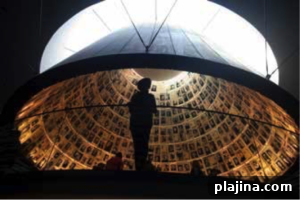
Hall of Names
PHOTOS: © YAD VASHEM
The International Convention Center, locally known as Binyanei Ha’uma and established in 1950 as part of a plan to create a new government and civic center, remains the city’s primary venue for international conferences, trade shows and large events. After multiple expansions and renovations, the ICC now offers some 130,000 square feet of event space with 27 conference halls capable of accommodating more than 10,000 attendees.
Visitors arriving from Ben Gurion International Airport—about a 45-minute drive—find convenient access to the ICC at the city entrance. The Crowne Plaza Hotel, formerly the Jerusalem Hilton and just a two-minute walk from the convention center, has 397 rooms and remains a popular choice for conference guests, vendors and families. The four-star property features dining options, indoor and outdoor pools, eight meeting rooms and easy access to the city’s Red Line light rail system.
Jerusalem also hosts numerous luxury hotels suitable for conferences and executive travel. The historic King David Jerusalem Hotel, flagship of Dan Hotels Corp., offers 233 rooms, several onlookingly overlooking the Old City, and upscale dining including La Regence and Kings Garden. The property provides wireless internet, private meeting spaces for up to 400 guests and large presentation screens.
The Waldorf Astoria Jerusalem, part of Hilton’s luxury portfolio, sits in a prime central location with spacious rooms, two restaurants and eight flexible meeting rooms. Its Grand Ballroom can host up to 600 guests, and the hotel is within walking distance of Jaffa Gate and a short drive from the ICC. In summer, the hotel’s rooftop Garden Terrace opens for cocktails and tapas.
Designed by architect Moshe Safdie, the David Citadel Hotel features 384 rooms in an 11-story U-shaped layout, a glass-domed lobby and suites with views of the Old City and the Tower of David. Opened in 2001, the hotel offers luxury accommodations, extensive dining, a full spa, meeting facilities and a panoramic garden terrace.
Also in the Mamilla neighborhood, the Mamilla Hotel—another Safdie design built on the site of a Herodian-era water reservoir—offers 194 beautifully designed rooms, a collection of contemporary art, and versatile meeting space. The hotel’s Rooftop Lounge & Restaurant overlooks the Old City and serves grilled meats, fish and salads. The property can host private gatherings up to 600 in its ballroom and 150 on the rooftop.
UNIQUE VENUES
THE ISRAEL MUSEUM
The Israel Museum is internationally recognized for its art and archaeological collections and offers distinctive settings for events. The museum’s restaurant, The Modern, is known for traditional Jerusalem cuisine and can seat up to 400 guests. For larger gatherings, event space may extend into the museum’s halls and gardens, with views overlooking the Valley of the Cross and the Knesset.
OLMAYA
Located in East Talpiot on a hill with views of the Old City, Olmaya opened in 2014 as a venue for private and corporate events. The compound can accommodate 300–800 attendees depending on season and layout. Highlights include the Glass Pergola, a transparent structure with a retractable roof that frames landscaped gardens and olive trees; the Inside Arches, which preserve original Gothic architecture; and a traditional stone and copper tabun oven used for Middle Eastern cuisine.