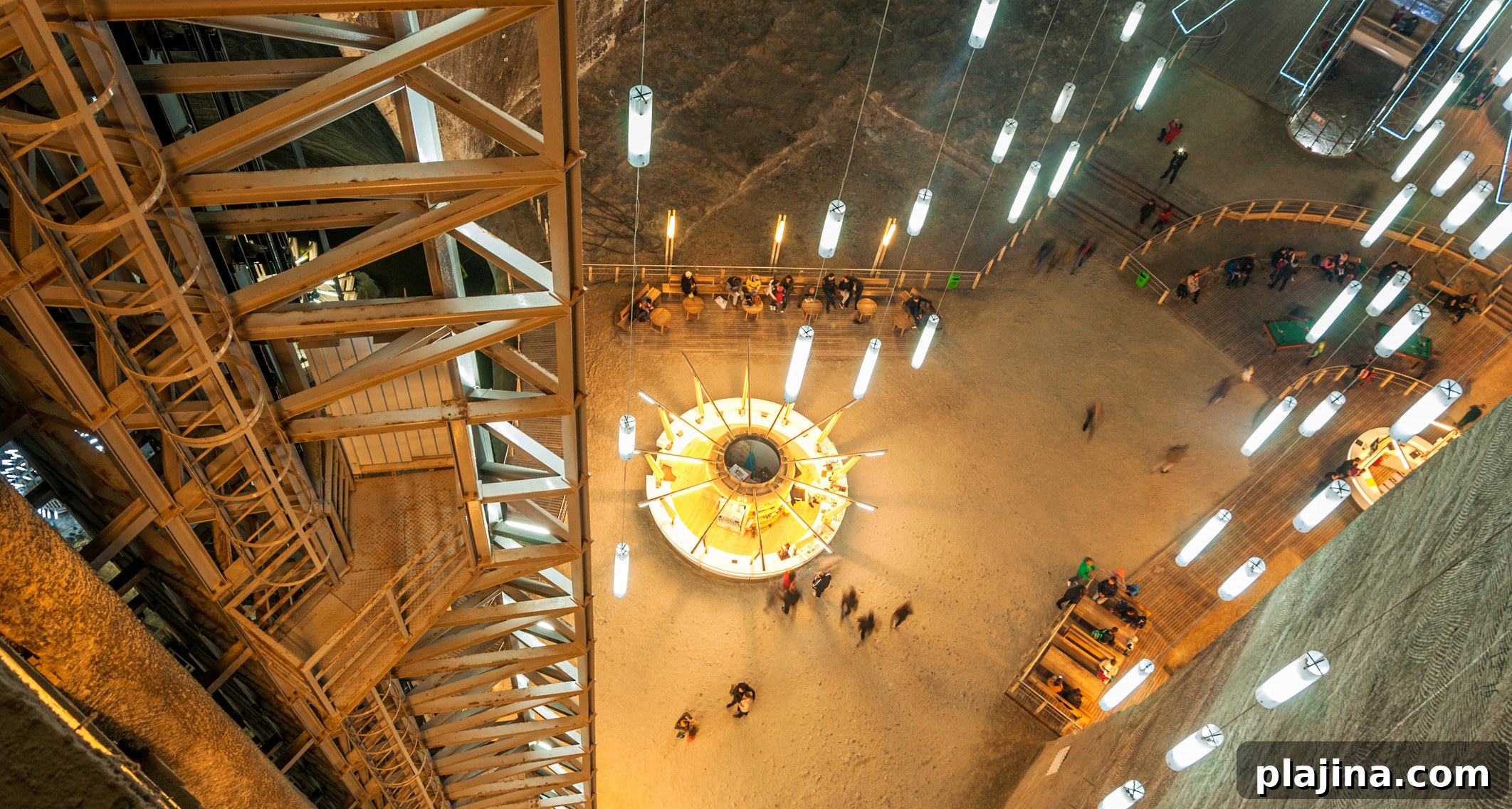
Salt has been extracted from this site since ancient times, and in 1992 part of the mine was adapted as a halotherapy center. In 2009 the space was transformed into a refurbished tourist attraction, drawing visitors with its vast, cavernous chambers and striking salt formations. Today the site is celebrated for its unique atmosphere, historical significance and variety of activities that make it a compelling destination for travelers interested in geology, history and wellness.
The restored complex preserves visible evidence of traditional mining techniques while offering modern amenities, interpretive displays and carefully maintained pathways that guide visitors through dramatic underground galleries. Lighting and design emphasize the natural textures and crystalline surfaces, creating an otherworldly sense of scale. The combination of cultural heritage and contemporary presentation has helped the attraction become a focal point for regional tourism.
Visitors can explore broad chambers where centuries of salt extraction are still on display, learn about the mine’s role in local industry and medicine, and experience the microclimate that made the site suitable for halotherapy treatments. Guided tours and informational exhibits explain how miners worked, how salt was processed and how the caverns evolved over time. The space is also used for cultural events and seasonal programming that highlight its acoustics and striking visual backdrop.
As a destination, the mine appeals to a broad audience: history enthusiasts appreciate the preserved mining infrastructure and archival information; wellness visitors come for the reputed health benefits of the salty air; photographers and nature lovers are drawn to the textures and light within the caverns; and families enjoy accessible pathways and curated activities tailored to younger guests. Careful restoration has kept the character of the site intact while making it safe and enjoyable for a high volume of visitors.
The project that converted the mine into a tourist site focused on conservation, creating interpretive content and improving visitor services without obscuring the authenticity of the location. Infrastructure improvements include signage, lighting, seating and pathways, along with climate controls in certain areas to protect both visitors and the delicate salt surfaces. The result is an educational, atmospheric experience that balances preservation with public access.
Overall, the site’s long history coupled with thoughtful refurbishment has made it a standout attraction in the region, welcoming millions of visitors who come to admire its cavernous beauty and to learn about the enduring human relationship with salt.