
I fell for Tuscany years ago, and that initial enchantment has only deepened. Among its many treasures, Florence holds a special place, and just above the city sits the hilltop village of Fiesole with its Roman theater and remnants of Etruscan walls. Perched here is Il Salviatino, a grand villa turned luxury hotel that began life as a modest 14th-century farmhouse surrounded by olive groves and vineyards.
Over the centuries the property evolved. In the 1500s the Salviati family, wealthy from the wool trade, purchased and restored the villa, adding lavish frescoes and artwork and giving it the name Il Salviatino. Later owners continued to shape the estate: the American Phelps Thomas added terraced gardens and commissioned architect Corinto Corinti to build the conservatories, the sweeping central staircase and the impressive Cinquecento portals. Art critic Ugo Ojetti and his wife Fernanda later expanded the house’s cultural footprint, installing a large library and filling rooms with art collected from around the world.
The current owners, hotelier Marcello Pigozzo and his son Marcello Pigozzo II, rescued Il Salviatino from decline and restored it as a refined retreat. Their renovations preserved the villa’s historic character while adding modern comforts and discreet luxury. One distinctive offering is the staff of international service ambassadors, a private butler–concierge team available around the clock to ensure personalized service.
On arrival I am greeted in the foyer by my service ambassador and offered a glass of Champagne. Rather than a conventional reception desk, I am escorted through the library and the grand hall to my room, a warm, home-like welcome that immediately replaces the standard hotel routine. It’s the sort of thoughtful touch that helps explain why the property received the Andrew Harper Award for Hideaway of the Year in 2011.
My room reveals exposed ancient stone in one corner and a soaring ceiling above large windows that frame the formal garden and a glittering Florence skyline, the Duomo’s dome glowing in the distance. The bathroom blends stone and history with modern luxury: a rain shower set into stone walls and an antique, narrow soaking tub tucked beside enormous windows. Il Salviatino’s bath amenities are equally distinctive—Balsamo, a light-scented line of organic Tuscan olive oil products created for the property. The collection includes rich hand and body soaps, olive oil–based hair care, body wash, lotion and a luxuriant face cream.
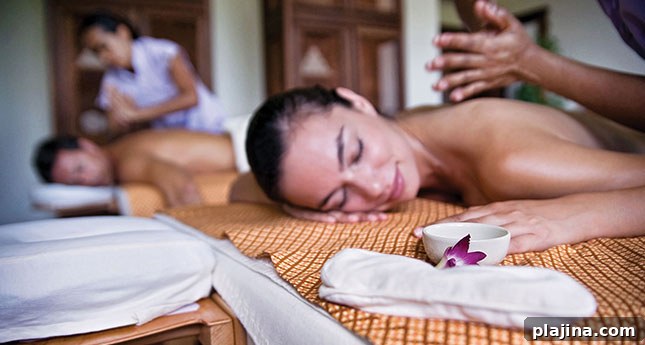
I wake to the Sunday chorus of Florence’s bells after throwing open the windows. On a walk down the drive toward the spa I discover a pleasant surprise: instead of a purely Tuscan spa, the owners chose to bring in Devarana Spa, offering holistic Thai therapies. Authenticity is emphasized: therapists are from Thailand, lending genuine interpretation to each treatment. Housed in a separate building, the spa’s name—Sanskrit for “garden in heaven”—is fitting. It features five generous treatment rooms with private changing areas and full bathrooms, and outside a tiered pool sits beside manicured gardens and tall cypress trees.
Tranquility is the defining mood. I opt for the Florentine Romance, a signature treatment that lasts two and a half hours. After a milk-and-rose soak, my therapist exfoliates me with a rose petal scrub and follows with Swedish massage strokes that relax muscles and work rose-scented oil into the skin. The ritual is soothing and indulgent, a sensory echo of the villa’s romantic setting.
Although a golf cart is available, I walk back to the main house to savor the gardens a little longer. Accommodations at Il Salviatino are varied and distinctive: light-filled, glass-walled Green House Suites beneath the garden, several Signature Suites, and unique rooms in the main house. The Ojetti Suite on the top floor stands out—the living room includes a see-through glass floor above a stained-glass stair tower ceiling. Guestrooms range from those with ancient stone bathing tubs and private rooftop terraces to frescoed rooms with oversized marble sinks, fireplaces and original art.
With Florence nearby, distractions are plentiful. The next morning I visit the vineyards of San Michele a Torri, a solar-powered estate producing Chianti, olive oil and artisanal meats. After a leisurely tasting, I head to the Uffizi to escape a spring shower and step into palatial galleries filled with masterpieces by Da Vinci, Botticelli, Titian, Michelangelo, Caravaggio and Raphael. Pausing before Botticelli’s The Birth of Venus, I study her serene expression as she arrives ashore—an image that invites reflection rather than explanation.
My final day is deliberately gentle: a long morning walk and another spa treatment. Today’s session, The Harmony of Tad Si, follows the Buddhist idea of balancing the body’s elemental forces—water, earth, fire and wind. Warm herbal compresses soaked in aromatic oils are applied to ease tension, then a traditional Thai massage blends stretching and pressure. At one point the therapist uses her body weight to release a stubborn shoulder muscle, a bold technique that leaves me feeling remarkably unburdened.
The experience is restorative, and I recall a comment from my Uffizi guide about how conservators restore a painting by carefully removing the layers of age—one deliberate layer at a time. The analogy fits: by the end of my stay I feel renewed, as if some gentle restoration has been completed. For a few blissful moments I indulge the notion that I too have achieved a very private Venus moment.