
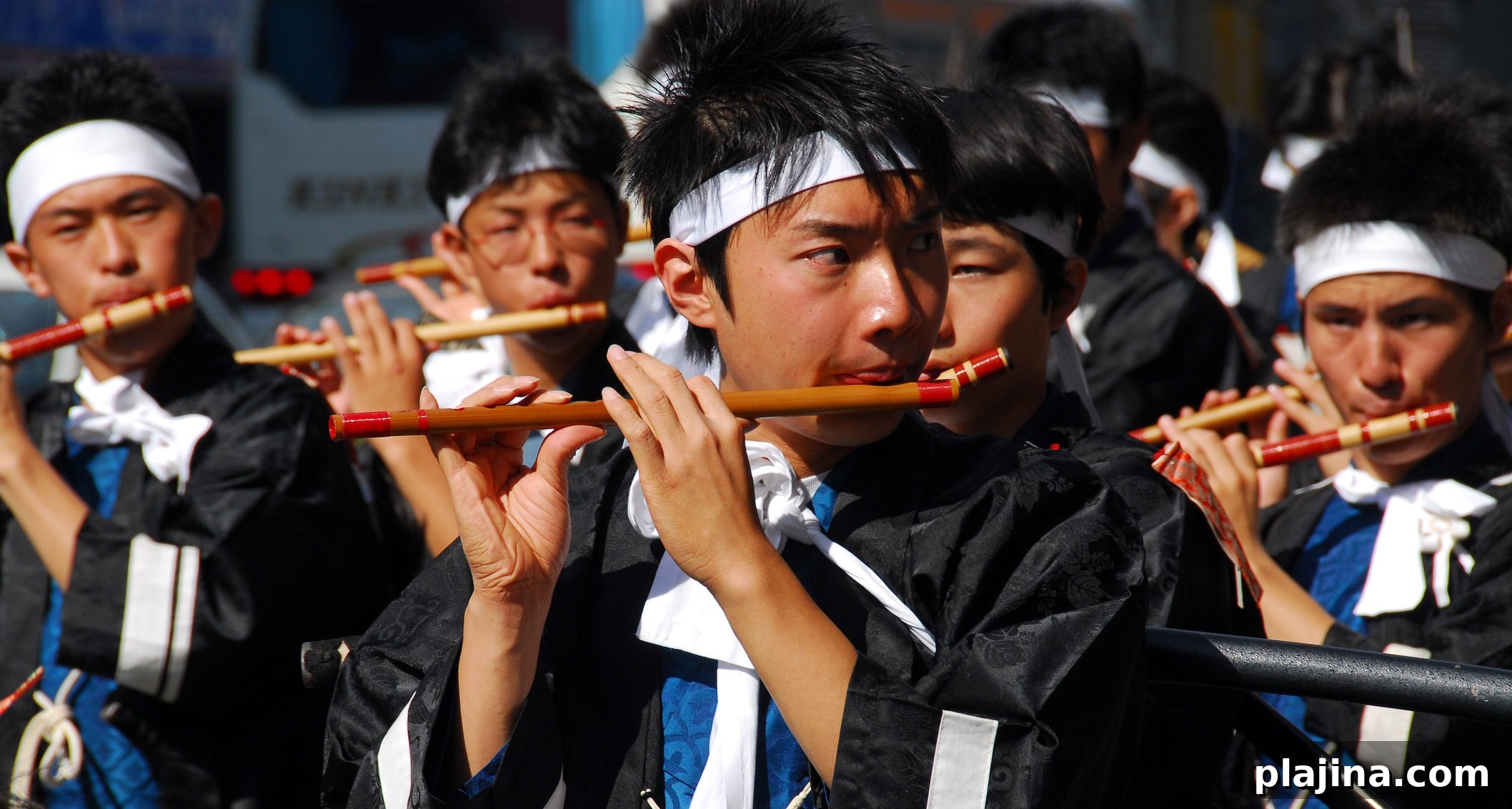
Kyoto is celebrated for its three major festivals: Aoi Matsuri, Gion Matsuri, and Jidai Matsuri. Held each year on October 22, Jidai Matsuri commemorates the transfer of Japan’s capital from Kyoto to Tokyo during the Meiji Restoration of 1868. The festival is a vibrant historical pageant that brings centuries of Japanese culture to life, featuring participants in authentic period costumes, traditional music, and carefully recreated scenes from various eras.
During Jidai Matsuri, the streets of Kyoto fill with long processions that trace the city’s history. Participants represent samurai, nobles, priests, and commoners from different periods, including the Heian, Kamakura, Muromachi, Azuchi-Momoyama, and Edo eras. Each costume is designed to reflect the clothing, weapons, and accessories of its time, allowing spectators to experience a living timeline of Japanese history.
The festival begins at the Kyoto Imperial Palace, where the procession gathers to honor the city’s imperial heritage. From there, the procession moves through central Kyoto toward Heian Shrine, which was built in 1895 to commemorate the city’s 1,100th anniversary. The route and ceremonies emphasize respect for tradition and for the people who shaped Kyoto’s cultural legacy.
Jidai Matsuri is not only a visual spectacle but also an educational event. Informative placards and guides often accompany parts of the procession, explaining the historical significance of costumes, figures, and rituals. For visitors and residents alike, the festival offers a unique opportunity to learn about Japan’s past in an immersive, engaging way.
Beyond the main procession, the festival includes related events such as reenactments, music performances, and displays of traditional crafts. Local artisans sometimes demonstrate techniques that have been passed down through generations, reinforcing Kyoto’s reputation as a center of craftsmanship and cultural preservation.
Attending Jidai Matsuri provides a chance to appreciate Kyoto’s deep historical roots and the continuity of its traditions. For travelers planning a visit, combining the festival with visits to nearby temples, shrines, and museums can create a rich cultural itinerary. The event draws both domestic and international visitors, so arriving early to secure a good viewing spot is recommended.
Overall, Jidai Matsuri stands as a testament to Kyoto’s enduring importance in Japanese history. Its combination of pageantry, historical accuracy, and communal celebration makes it a memorable experience for anyone interested in the cultural and political transformations that shaped modern Japan.