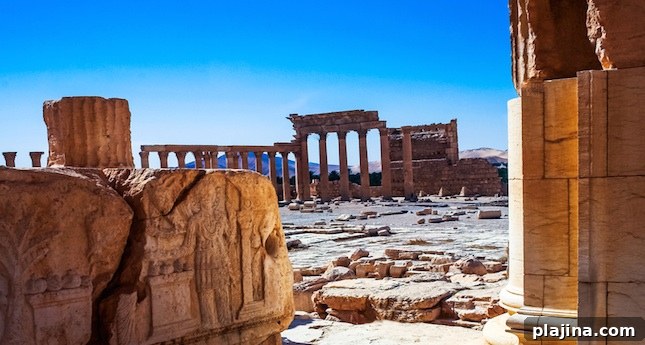
In war-torn Syria, invaluable but vulnerable archaeological sites face ongoing danger. Last month, a collection of 3D reconstructions of some of the country’s most significant monuments was published online as part of an effort to digitally preserve Syrian heritage and protect it, at least in virtual form, from further destruction.
The destruction of two first-century temples at the UNESCO World Heritage site of Palmyra last year prompted international outrage and accelerated a 3D digitization initiative led by French digital survey teams working with Syrian archaeologists. After more than five years of conflict, hundreds of important historical sites across Syria have been damaged or destroyed.
Using advanced 3D imaging, the project captures buildings and archaeological remains in high resolution, enabling detailed digital preservation. Among the models now archived are the Umayyad Mosque in Damascus, which dates to the eighth century and is regarded as one of Islam’s most important religious sites; the Roman theatre at Jableh; and the Phoenician ruins at ancient Ugarit. These digital records create accurate, long-term documentation of structures that have suffered deliberate targeting and neglect.
The initiative also extends to major museum collections. Extremist groups have targeted statues, shrines and other artifacts as symbols of idolatry, putting museum holdings and portable heritage at serious risk. Digitizing these collections aims to preserve their appearance, context and detail even if physical objects are lost or damaged.
Maamoun Abdulkarim, head of the Syrian Directorate General of Antiquities and Museums, described the effort as a means to “avoid an irreplaceable loss to humanity” given “the dramatic situation in our country.” He emphasized that digital preservation can give Syrian archaeological sites a chance for future restoration and ensures their memory will survive regardless of ongoing events.
By creating high-fidelity 3D records, the project provides researchers, conservators and the public with reliable documentation that can support restoration planning, scholarly study and educational use. While digital models cannot replace physical artifacts, they serve as an essential complement to conservation work and a safeguard against irreversible cultural loss.
Ongoing collaboration between international digital survey teams and local archaeologists helps combine technical expertise with on-the-ground knowledge of site histories and significance. That partnership improves the accuracy of the reconstructions and ensures that the databases reflect the cultural context of each monument.
As digital archives grow, they contribute to broader efforts to protect cultural heritage in conflict zones: raising awareness, informing international response, and providing resources for future reconstruction efforts. These virtual records preserve not only the shapes and surfaces of monuments but also the stories they embody, helping to maintain a connection between Syrians and their shared past during a period of profound upheaval.