
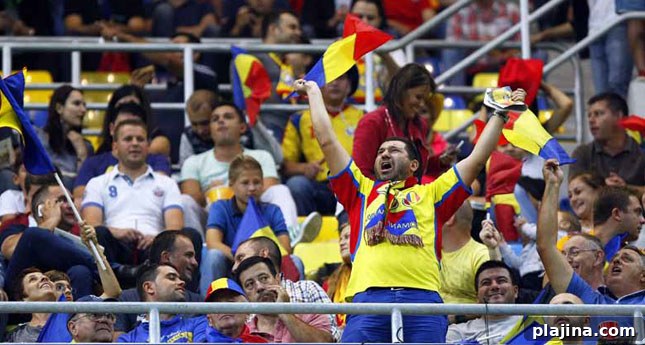
Boston is known for its passionate sports fans. I’m not one of the die-hards, but I’ve observed the emotional highs and lows that follow local team victories and defeats. A big win can spark ecstatic celebration; an unexpected loss can plunge a city into collective disappointment.
Still, I was taken aback by the intensity of a crowd I witnessed in Lisbon a few years ago. Staying at the Four Seasons Hotel Ritz with a room that overlooked Parque Eduardo VII and Marquês de Pombal Square, I watched from my balcony as traffic thickened and families arrived. What began as a small gathering swelled into a sea of people. Energy rippled through the plaza, amplified by rhythmic chanting.
I couldn’t immediately identify the cause. The scene was both intriguing and enigmatic. The next day I asked the concierge. “Fútbol.” Soccer. The world’s most fervent fans had assembled, drawn to a central spot to revel in the triumph of their team over a rival.
It’s likely many of those same soccer supporters will be traveling to Brazil this summer, where 32 of the world’s top national teams will meet in a series of matches that culminate with the crowning of the 2014 FIFA World Cup champion.
The modern FIFA World Cup has roots in early 20th-century efforts by French sporting organizers who sought to bring the strongest national football teams together to compete for a global title. The inaugural tournament took place in 1930, with Uruguay taking the trophy, Argentina finishing second, the United States third and Yugoslavia fourth. The trophy changed hands in the 1930s—Italy won in 1934 and France in 1938—until World War II interrupted the competition for 12 years. The World Cup resumed in 1950 in Brazil, where Uruguay emerged victorious.
In 2014 the tournament returns to Brazil for the first time in 64 years. Sixty-four matches will be contested across 12 Brazilian cities: Belo Horizonte, Brasília, Cuiabá, Curitiba, Fortaleza, Manaus, Natal, Porto Alegre, Recife, Rio de Janeiro, Salvador and São Paulo. The competition begins on June 12, with Spain entering as the defending champion, and runs through July 13.
When the tournament concludes, only one team will lift the iconic gold trophy and earn the title of 2014 FIFA World Cup champion.