
While Zürich is Switzerland’s commercial and cultural heart — and, with roughly 380,000 residents, the country’s largest city — it does not boast a skyline of flamboyant postmodern towers like London, Dubai or Shanghai. The city’s tallest building, Prime Tower, completed in 2011, rises 36 stories above the repurposed warehouses, galleries and restaurants of Zürich West, reflecting a restrained, practical Swiss approach to construction.
Zürich’s lack of a flashy skyline is intentional. Strict building codes and planning policies protect the city’s natural setting and historic districts, preserving a human-scale urban environment that many meeting planners consider an asset. Instead of trading glass-and-steel spectacle, delegates enjoy a clear freshwater lake and river, panoramic views of the nearby snowcapped Alps, and the political stability and safety associated with Switzerland.
The City of Zürich’s building regulations include explicit protections such as “the charm and the presence of the lake shall not be threatened by high-rise buildings” and restrictions that keep Old Town free of tall structures. Tight zoning and “lifestyle” rules translate into dependable, high-quality meeting venues, a genuinely historic Old Town known as Dörfli (“little village”), an efficient public-transport network and abundant green space — about 40 percent of the city. Those factors help explain why Zürich ranked second in the 2014 Mercer Quality of Living Survey, just behind Vienna.
Formerly gritty neighborhoods have been revitalized into fashionable quarters. Kreis 5 (Zürich West) now houses stylish restaurants, boutiques and cultural venues. An old shipbuilding complex, Schiffbau, became a theater, restaurant and jazz club; the Löwenbräu Areal transformed a beer factory into art galleries and upscale residences; and Im Viadukt, a 19th-century railway viaduct, shelters trendy shops beneath its arches.
High Swiss quality comes at a cost. The Economist’s 2014 Worldwide Cost of Living survey ranked Zürich as the fourth-most expensive city, and Business Travel News’ 2014 Corporate Travel Index placed Swiss cities among the priciest for business travel — Geneva at $547 per day and Zürich at $509. Still, for corporate and association planners seeking a Central European location with excellent service and distinctive off-site options, Zürich’s prices rarely deter bookings at the city’s top hotels.
Luxury hotels offer excellent meeting facilities and easy access. The historic Dolder Grand, opened in 1899, features 173 guestrooms and 13 conference rooms and sits on an elevated site with sweeping views of the city, Lake Zürich and the Alps. Recently renovated interiors and newly introduced Gallery Lounges provide flexible meeting spaces totaling about 3,700 square feet, each with floor-to-ceiling windows and south-facing terraces.
Other premium properties include the long-established Baur au Lac (1844) in the city center; the Park Hyatt in the financial district; the Zürich Marriott Hotel near Central Station; and the modern Renaissance Tower Hotel. Boutique lakeside options such as the Eden au Lac and the Steigenberger Bellerive au Lac suit smaller groups and intimate meetings.
Newer properties expand the city’s capacity. The Sheraton Zürich opened in Zürich West with nearly 200 guestrooms, dedicated technology facilities and multiple function rooms. The Kameha Grand Zürich, slated to open in spring 2015, promises 245 rooms, an event hall for up to 960 attendees, business suites and numerous meeting rooms, conveniently located between the city center and the airport.
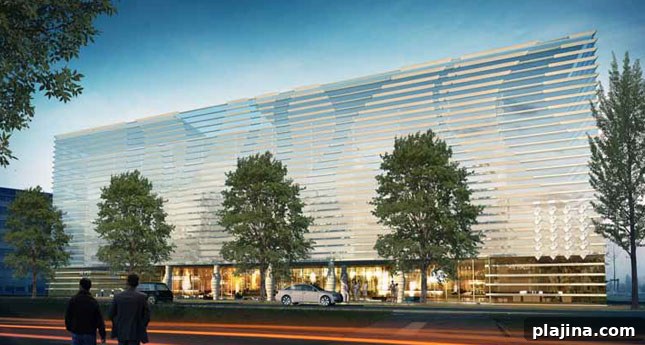
The Circle at Zürich Airport © Zurich Airport
The Circle at Zürich Airport, planned to open in 2018 beside the terminal buildings, will be one of the city’s largest mixed-use developments. It will combine high-end retail, corporate offices, dining and cultural amenities. Two hotels — Hyatt Regency and Hyatt Place — will add about 550 rooms and substantial convention and meeting space, strengthening Zürich’s appeal for international gatherings.
Zürich accommodates conferences of many sizes. Typical international meetings draw 500–800 participants, as seen with events such as the Nutrition Conference (690), the ACM International Joint Conference on Pervasive and Ubiquitous Computing (710) and the European Control Conference (870). Larger conventions, including the International Conference on the Physics of Semiconductors (1,160) and the International Conference on Software Engineering (1,300), use venues such as the Zürich Exhibition Center, Kongresshaus Zürich and Hallenstadion, Switzerland’s largest multipurpose arena, which can host up to 13,000 attendees. The city also stages major sporting events, including the European Athletics Championships.
Specialized venues expand options for meetings and events. ConventionPoint, located at the Swiss Stock Exchange, offers modular rooms for conferences, workshops and receptions with advanced audio-visual systems and capacities ranging from about 230 to 400. Komplex No. 457 provides a lively setting for entertainment-driven corporate events, with indoor and outdoor spaces adaptable for stages, dining and beverage service.
Cultural institutions work well as memorable off-site venues. Museum Rietberg, Kunsthalle Zürich (contemporary art), Museum Haus Konstruktiv (postmodern art) and Museum Mühlerama, a converted 19th-century grain mill, all host receptions and program elements that enrich meeting agendas with art, history and unique atmospheres.
Zürich’s status as an R&D and innovation hub also draws conference organizers. Major technology companies, including Microsoft, IBM and Google, have established large engineering centers in the city, joining numerous international corporate and academic research facilities. Proximity to the Swiss Federal Institute of Technology (ETH) — a renowned source of talent and speakers — and Switzerland’s multilingual environment and business-friendly framework make the city attractive for scientific, technical and industry conferences.
Beyond work, Zürich offers leisure and nightlife that event attendees appreciate. Easy rail and road access to the Alps, a vibrant dining scene, lively nightlife and a cosmopolitan, open-minded culture make the city appealing for delegates. Local event agencies, photographers and caterers provide professional support, ensuring that meetings and incentive programs run smoothly while offering memorable off-site experiences.