
Where is Zamoskvorechye in relation to the Kremlin—the point from which Moscow’s directions traditionally radiate? The answer is in the name: Za-moskva-rechye, meaning “across the Moskva River.”
Crossing the bridge from Red Square to the opposite bank, you might not immediately realize you have entered one of Moscow’s oldest districts. Zamoskvorechye was first settled in the 13th century. It survived invasions by Napoleon and Nazi Germany and escaped much of the large-scale remodelling imposed by Soviet planners. Whether it can withstand the pressure of modern development remains to be seen.
We walk along a broad road that brought us over from the Kremlin. For a short distance the route is framed by uninspired contemporary buildings, but soon we reach a bridge over a canal that was once dug to protect Zamoskvorechye from flooding. On the canal’s southern bank, pastel-painted facades and low-rise historic houses line the street. This is the neighborhood’s calmer, more atmospheric side.
Turning right after the canal, we approach the Kadashi Church, a 17th-century Baroque gem that has been at the center of recent preservation debates. In the years that followed, surrounding historic buildings were demolished to be replaced with luxury apartments, yet the church itself—with its ornate architecture and golden onion domes—remains standing.
Deeper into the quarter, the historic fabric is better preserved. Picturesque Baroque churches and Neoclassical mansions appear regularly, especially along Ulitsa Bolshaya Ordynka. On the parallel street, Ulitsa Malaya Ordynka, tucked behind a green garden, stands the 19th-century wooden house of playwright Alexander Ostrovsky. Now a museum, the house recreates a 19th-century domestic atmosphere: sheer curtains, creaking floorboards and old clocks ticking in quiet rooms. For the time you spend here, modern Moscow feels far away.
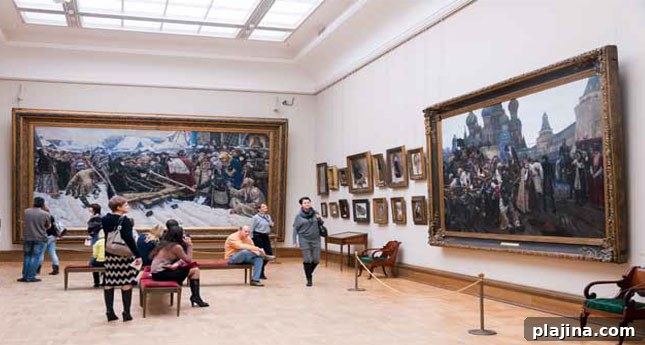
The neighborhood’s principal cultural draw is the Tretyakov State Gallery, which occupies several buildings near the heart of Zamoskvorechye. (The New Tretyakov, focused on modern and contemporary art, is at Krymsky Val on the Moskva’s bank, roughly a ten-minute walk away.) Entrance to the historic Tretyakov on Lavrushinsky Lane is around $13.50, with separate tickets required for some annexes and special exhibitions.
The Tretyakov houses the world’s premier collection of Russian art, numbering more than 130,000 works that span about a millennium. Highlights include 15th-century icons by Andrei Rublev and major 20th-century pieces by artists such as Kandinsky and Chagall, some of which are displayed in the New Tretyakov. The galleries contain many evocative portrayals of historic Moscow and its people. In Zamoskvorechye, the past remains visible in streets, churches and museums—an area where the city’s history still lives on.