
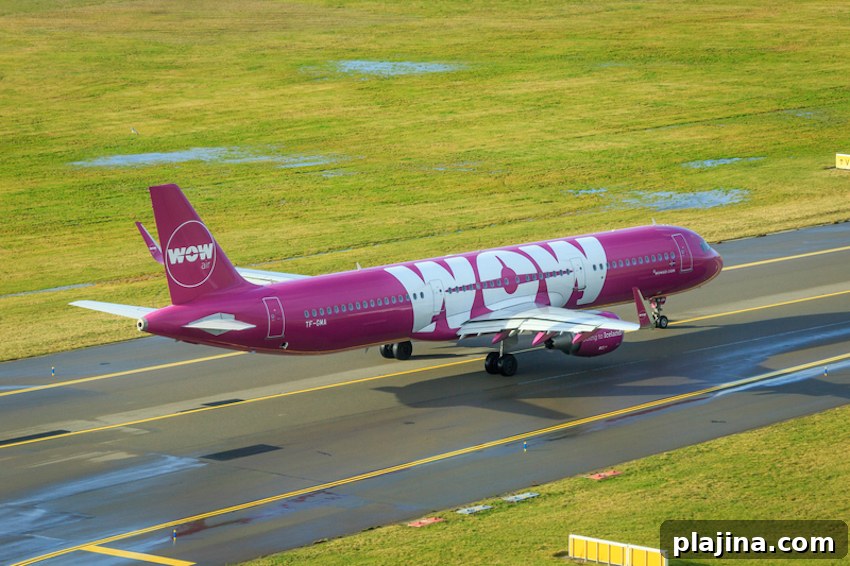
WOW air has ceased operations after failing to secure emergency funding, cancelling all remaining flights and leaving thousands of passengers stranded.
The Icelandic low-cost carrier was founded in 2011 by Skúli Mogensen and began commercial service in 2012. The airline’s budget fares and the rising popularity of Iceland as a destination helped WOW air expand rapidly. At its peak the carrier employed more than 1,000 people and operated a fleet of 11 aircraft. In the previous year it carried approximately 3.5 million passengers, building a reputation for very low transatlantic fares after public attention in 2015 for fares from Europe to the United States around £99.
A notice posted on the airline’s website stated: “End of Operation of WOW AIR. WOW AIR has ceased operation. All WOW AIR flights have been cancelled. Passengers are advised to check available flights with other airlines.” Passengers affected by the cancellations are advised to seek alternatives as soon as possible.
Passengers who purchased tickets with a credit card should contact their card issuer promptly to enquire about chargebacks or refunds, since reimbursement through the airline itself may no longer be available.
Travellers who bought WOW air tickets as part of a package — purchased through a travel agent within the European Economic Area that included flights plus accommodation or other bundled services — are likely covered by the EU Package Travel Directive. Those passengers should contact their travel agent or tour operator to arrange alternative travel or to discuss their rights under that protection.
For travellers needing immediate assistance, options include rebooking with other carriers, seeking help from travel agents or tour operators, and contacting consular services if stranded abroad. It is also advisable to review travel insurance policies for coverage of cancellations, missed connections and emergency expenses.
While the sudden shutdown has disrupted many itineraries, affected passengers can take practical steps: confirm current flight status, keep receipts for extra costs, document communications with the airline or agents, and pursue refunds through payment providers or consumer protection mechanisms where applicable.