
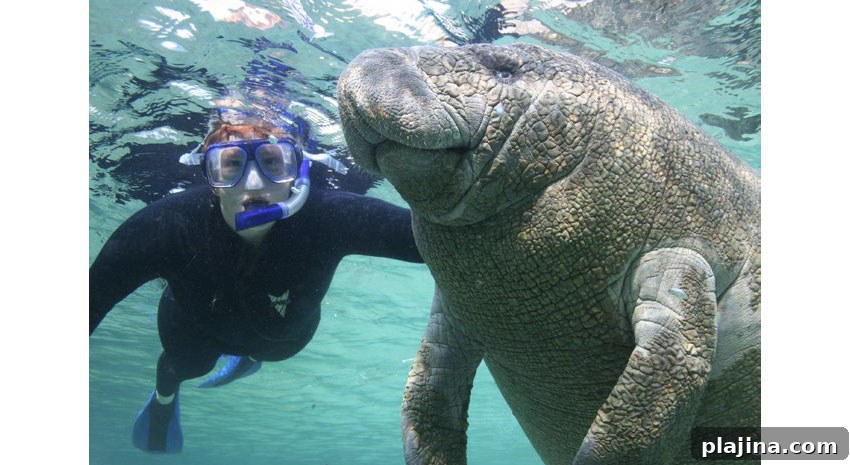
Even before we slipped into the 72-degree waters of spring-fed Crystal River on Florida’s west coast, a curious West Indian manatee popped its snout up to inspect the platform of our pontoon boat. Our group squealed with delight, and we knew we were in for a memorable morning of snorkeling with the manatees that gather in the natural springs each winter to stay warm.
West Indian manatees are protected under U.S. law, including the Marine Mammal Protection Act of 1972, the Endangered Species Act of 1973 and the Florida Manatee Sanctuary Act of 1978. These laws make it illegal to harass, hunt, capture or kill any marine mammal, including manatees, which is why responsible, regulated interaction is essential.
So how can people safely snorkel with manatees in Crystal River? The federal government permits passive, in-water observation in Kings Bay within Crystal River; it is the only area in Florida where face-to-face interactions are allowed under strict guidelines. Before boarding the pontoon boat, our tour with the Plantation Adventure Center at the Plantation on Crystal River included a short lesson and video about passive observation and a clear set of rules to follow in the water. The center’s staff balance creating exceptional guest experiences with a strong commitment to protecting manatees and their habitat.
Plantation Adventure Center’s conservation focus mirrors other emerging trends in sustainable travel. This July, Boulder, Colorado–based Natural Habitat Adventures will launch what it calls the world’s first zero-waste adventure on its Safari America: Yellowstone Country itinerary. The trip’s aim is to divert 99 percent or more of on-trip waste so that, at the end of the journey, participants’ waste fits into a single small container.
“There is a long-standing culture at Natural Habitat of innovation, sustainability and creativity when it comes to conservation,” says Court Whelan, Ph.D., director of sustainability and conservation travel programs. “This mindset is in our DNA, and we continually challenge ourselves and the industry to raise the bar on conservation.” He adds that through thoughtful actions and inspiration, travel companies can have an outsized positive impact.
Biosphere Expeditions, a nonprofit wildlife conservation organization with offices in Australia, France, Germany, Ireland, the U.K. and the U.S., offers hands-on trips that allow citizen scientists to work alongside researchers. Expeditions range from studying whales, dolphins and sea turtles in the Azores to surveying Arabian oryx and Gordon’s wildcats in the Dubai Desert Conservation Reserve, from observing elephants in Thailand to tracking snow leopards in Kyrgyzstan. These trips welcome participants of various ages and backgrounds, and Biosphere reports that two-thirds of contributions go directly to the conservation projects.
“What pays, stays” is a phrase often used at the intersection of wildlife conservation and tourism, says Dr. Matthias Hammer, executive director of Biosphere Expeditions. Tourism can deter poachers, chainsaws and other destructive forces, and in many cases tourism-supported projects have converted former poachers into committed conservationists.
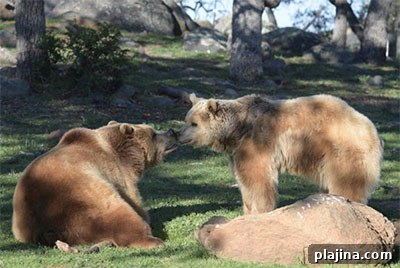
Rescued grizzly bear siblings Albert and Cherry © LIONS TIGERS & BEARS
Closer to home, Lions Tigers & Bears in San Diego rescues animals from the exotic animal trade, providing sanctuary and lifelong care. For safety, direct contact with most animals is not allowed, but visitors can join the Feed a Wild One experience to feed chosen animals and participate in behind-the-scenes tours that offer educational encounters. For a more immersive stay, guests can book the on-site two-bedroom suite overlooking a three-acre lion habitat.
“Education is the key to helping animals,” says Bobbi Brink, founder and executive director of Lions Tigers & Bears. “There is not enough sanctuary space in the world to save all the exotic animals in need. Improving the welfare of captive exotics relies on raising public awareness.” The organization also pursues legislation and advocacy to protect animals and limit private ownership of apex predators.
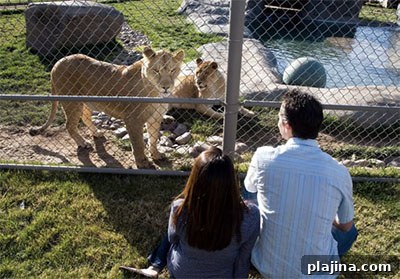
A behind-the-scenes tour © LIONS TIGERS & BEARS
Green Pearls, based in Germany, promotes eco-friendly destinations and accommodations, highlighting properties that prioritize animal welfare on land, in the air and in the ocean. In Thailand, Keemala Resort & Spa enforces a strict policy against animal exploitation and encourages guests to avoid attractions that harm wildlife. The resort offers culturally enriching and holistic activities that showcase local life while steering visitors toward sanctuaries and other ethical wildlife experiences.

Rescued buffalo at Keemala Resort & Spa in Thailand © KEEMALA RESORT & SPA
“Nature shapes everything at Keemala, from the surrounding forest to waterfalls and the rescued animals that call the resort home,” says Samornpun Somnam, executive director. “That connection led us to commit to environmental sustainability and ethical tourism. Guests who want to interact with wildlife are guided to meaningful alternatives, such as visiting sanctuaries where they can appreciate animals without causing harm—especially endangered species whose lives are already fragile.”
Consumers can also support conservation through mindful purchases. The Tiffany Save the Wild Collection, launched by Tiffany & Co., includes designs inspired by elephants, rhinoceros and lions, with profits donated to the Wildlife Conservation Network. The initiative underscores growing demand for luxury that makes a positive impact: companies and customers together can fund protection and restoration of wildlife habitats.
“For over 180 years, Tiffany & Co. has been inspired by the natural world, and we believe we have a moral imperative to protect it,” says Anisa Kamadoli Costa, chief sustainability officer at Tiffany & Co. Customers’ purchases help translate that value into concrete support for conservation.
Stefany Seipp, founder and CEO of Green Pearls, sums up the ethos behind conservation travel: “We owe this world to future generations. There is no ‘Planet B.’ Without healthy oceans and ecosystems, life as we know it cannot continue. It is our shared responsibility to protect and conserve the planet.”