
Sometimes an adventure cruise becomes far more memorable than anyone expected. On Christmas Day last year the expedition ship Akademik Shokalskiy, carrying 26 tourists, four journalists, 19 scientists, 22 crew members and the expedition leader’s wife and two children, became trapped in heavy sea ice off Antarctica. These passengers had signed up to retrace the route of famed Australian explorer Douglas Mawson to the South Pole, but they did not anticipate making international headlines when ice immobilized the vessel. Rescued and evacuated by helicopter nine days later, everyone emerged in good health, enjoying the ship’s comforts during their unexpected stay. “We’re in the ice like explorers of old!” one passenger posted, adding that all were well and spirits remained high.
Most expedition cruises avoid such dramatic incidents, although they can still deliver surprises. On a recent adventure cruise in Mexico’s Sea of Cortés, our group encountered powerful winter winds that rolled down from North America during an unusually stormy February. There were no icebergs here—Jacques Cousteau famously called this region “The Aquarium of the World”—but the weather forced us to adapt our plans. Sailing aboard an Un-Cruise Adventures yacht carrying 22 passengers, we hiked cactus-dotted cliffs, snorkeled with playful sea lions and sailed alongside blue whales. As conditions worsened, headwinds forced us into sheltered bays with white-sand beaches, and on the return trip we even assisted a few tourists stranded when flimsy kayaks were abandoned in rough surf.
Snorkeling with sea lions in Mexico’s Sea of
Cortés © Un-Cruise Adventures
Un-Cruise Adventures operates a small fleet of yachts and tiny ships that serve Mexico, Hawaii, Alaska, the Columbia and Snake rivers, and the coasts of Washington State and British Columbia. Vessels carry between 22 and 84 guests and follow the company’s motto — “luxury in the pursuit of adventure.” Guests can expect launch platforms, stand-up paddleboards, kayaks and skiffs, hot tubs, saunas, fitness equipment and massage tables. Many boats also carry a hydrophone for listening to underwater life. What you won’t find are theaters, casinos or buffet lines. The emphasis is on active exploration, with shore excursions and water-based activities that let guests engage closely with the environment. A highlight on our voyage was the open bridge policy that allowed passengers to chat with the captain while navigating the Sea of Cortés, a region Un-Cruise operates weekly during its seasonal sailings.
The modern era of adventure cruising took shape in 1964 when Lindblad Expeditions introduced small, shallow-draft vessels equipped with inflatable Zodiac landing craft and expedition teams. Lindblad emphasized education by including naturalists, scientists and guest lecturers on culture, history, ecology and geography. Today Lindblad, in partnership with the National Geographic Society, remains a leader in the field, operating small ships such as the 96-passenger National Geographic Endeavour and the 148-passenger National Geographic Explorer, which typically carries a National Geographic photographer. Cabins are compact and practical, and ships focus on destinations rather than onboard entertainment—no Broadway shows, no large spas, and modest dining compared with mainstream ocean liners. Itineraries include remote regions such as Antarctica, Iceland, Greenland, Patagonia, the Galápagos and parts of Australia, with occasional forays into West Africa and Borneo.
Quark Expeditions’ 50 Years of Victory, the world’s largest icebreaker © Quark
Expeditions
Some adventure lines concentrate on specific environments. Quark Expeditions, for example, specializes in polar travel and charters ships with ice-strengthened hulls. The company ran the first passenger vessel to circumnavigate Antarctica and regularly operates icebreakers to reach the North Pole. One of its most notable ships is the 132-passenger 50 Years of Victory, a powerful icebreaker designed specifically for polar conditions. Accommodations are comfortable and meals satisfying; with crews that often outnumber passengers, the focus is purely on exploration rather than onboard entertainment.
Hapag-Lloyd Expedition Cruises, based in Germany, dedicates two ships—the 175-passenger MS Hanseatic and the 155-guest MS Bremen—to expedition travel. These vessels offer service and amenities comparable to a polished four-star hotel, and operations are bilingual in English and German. Known for high service standards and refined cuisine, Hapag-Lloyd schedules expeditions to destinations such as Iceland, Greenland, the Northwest Passage, Brazil, Chile and Antarctica.
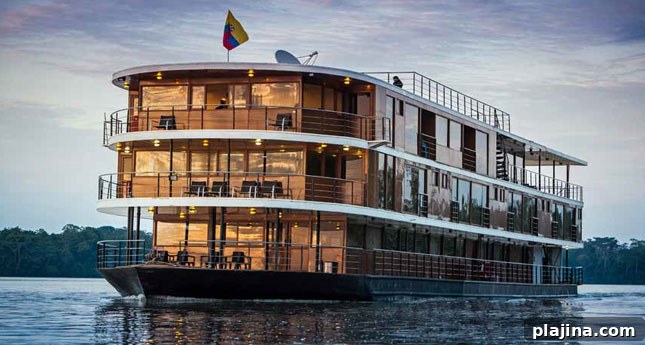
Many smaller regional operators and charter companies expand the range of expedition options worldwide. Zegrahm Expeditions charters multiple vessels for one- to two-week voyages led by company directors and naturalists, with itineraries that visit Indonesia, the Philippines, the Galápagos, the Amazon, Western Australia, Antarctica, the Black Sea, the Adriatic, the Azores and the British Isles. AdventureSmith Explorations arranges and charters expedition cruises globally and reports growing interest in Amazon river voyages, where bookings have surged in recent years. In the Amazon region, travelers can choose riverboats such as the 40-passenger Anakonda in Ecuador, which includes village-hosted meals, the 18-passenger motor yacht Tucano in Brazil exploring protected conservation areas, or the 31-passenger Amatista in Peru entering the Pacaya Samiria National Reserve.
Adventure cruising appeals to travelers seeking remote, less-traveled destinations and immersive wildlife and cultural experiences. Whether exploring polar ice, tropical rivers or rugged coastlines, expedition cruises prioritize hands-on discovery, expert-led programming and small-group experiences that bring passengers closer to the places they visit.