
WITH CITIES OLD ENOUGH to appear in the Bible and ancient ports tied to classical myths, Israel is a land of deep history. Yet its second-largest city is also a testimony to modernity and rapid progress. Though not the capital, Tel Aviv (officially Tel Aviv-Yafo) is Israel’s economic engine and the nation’s leading center for technology and creativity. Its dynamic economy and vibrant cultural life have made it the top destination for new residents in Israel for the past five years.
Only a decade ago, Tel Aviv’s economy was largely focused on serving domestic needs. Israel itself was still a comparably young nation, and many businesses operated primarily within local markets. Over time, however, Tel Aviv evolved into a global technology hub. The country invests a larger share of its GDP in civilian research and development than any other nation and ranks highly in scientific output, and Tel Aviv has become the city where that investment concentrates. Nicknamed “the startup city of the startup nation,” Tel Aviv hosts nearly 2,000 startups within a compact 20-square-mile area along the Mediterranean—by density, one of the highest concentrations of startups in the world. Most importantly, the recent transformation is toward global business: international firms and customers are increasingly part of the city’s ecosystem.
As the center of Israel’s creative and technological sectors, Tel Aviv attracts businesses that support innovation: accelerators, venture services, legal and financial firms, and specialized consultancies. Over the past several years more than 100 international research and development centers have established a presence in the city, reflecting the shift from a locally oriented economy to one with strong global ties. This influx has accelerated job creation and reinforced Tel Aviv’s reputation as an international innovation hub.
The expansion of tech and research centers has also drawn many newcomers, both from across Israel and abroad. The majority are young professionals, a demographic that fits well with the fast-paced startup culture. Tel Aviv’s social scene—renowned for its restaurants, bars and nightlife—complements the professional landscape, offering the cultural vibrancy that innovation-driven workers often seek. Local leaders have deliberately cultivated an environment that values youth and entrepreneurial risk-taking, encouraging bold ideas and rapid experimentation.
Many of Tel Aviv’s new residents are transient by design: tech careers and global mobility attract people who spend a few years in a city before moving on to new opportunities. This revolving population brings a steady flow of fresh perspectives, energy and international influences that fuel both business innovation and cultural renewal. The result is a mutually reinforcing cycle: a lively cultural scene helps attract talent, and that talent, in turn, stimulates cultural offerings. Despite challenges—regional geopolitics and pressure on infrastructure from rapid population growth—the city’s cultural appeal often outweighs these drawbacks for many temporary residents.
Culture is central to Tel Aviv’s attractiveness. Artists, chefs, musicians and entrepreneurs create neighborhoods and experiences that draw curious minds from around the world. Those cultural assets help sustain the skilled workforce that tech companies need, making the city attractive to both startups and established firms. The synergy between culture and industry has become a defining characteristic of Tel Aviv’s growth, enhancing its reputation as both a place to live and a place to do business.
CHECKING IN WITH EYTAN SCHWARTZ
CEO, Tel Aviv Global & Tourism
Why is Tel Aviv experiencing such a surge in tourist attention right now, and how will it capitalize on the momentum? Hosting the 2019 Eurovision Song Contest introduced Tel Aviv to tens of millions of viewers worldwide and delivered a major boost to the city’s tourist profile. Building on that exposure, the municipality has pursued a strategy to attract large international events, conferences and trade shows. To support this goal, the International Convention Bureau was established in 2018 as a collaboration among the Greater Tel Aviv Hotels Association, Expo Tel Aviv and Tel Aviv Global & Tourism, creating a coordinated effort to bring more global gatherings to the city.
What types of tourism products is the city presenting to these new visitors? Tel Aviv’s appeal rests on three complementary pillars: the ancient port and historic alleys of Old Jaffa; the modern urban vitality of Tel Aviv proper; and the city’s beaches along the Mediterranean. The municipal strategy prioritizes initiatives, attractions and services that enhance and promote these three pillars, offering visitors a balanced experience of history, contemporary city life and seaside leisure.
Culturally, what’s happening in the city right now? This year Tel Aviv marks 100 years of Bauhaus architecture with the grand opening of the White City Center. Founded by the Tel Aviv-Yafo Municipality, the Tel Aviv Foundation and the German government, the center celebrates the city’s remarkable collection of International Style buildings—more than 4,000 of them. The concentration of these structures led UNESCO to list Tel Aviv’s White City as a World Heritage site in 2003. The White City Center will serve as an educational and cultural resource for both residents and visitors, offering exhibits and programs that highlight this architectural heritage.
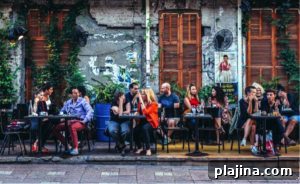
PHOTO: © FOTOKON – DREAMSTIME.COM
DIVERSIONS
Explore the winding stone alleys of Old Jaffa, one of the world’s oldest port cities with ties to biblical and classical stories. The nearby Jaffa Port now serves as a lively recreational and dining area. Visit the White City Center on Idelson Street to learn about Tel Aviv’s Bauhaus legacy, then stroll through the surrounding White City neighborhood. Discover Sarona, a restored Templar compound now turned into a vibrant shopping and dining district, and browse the city’s many food and craft markets for fresh flavors and handmade goods. Finally, enjoy one of Tel Aviv’s beautiful beaches—essential to the city’s seaside character.
COMING AND GOING
U.S. citizens should hold a passport valid for at least six months beyond the date of entry. No visa is required for stays up to 90 days.
OFFICIAL LANGUAGES
Hebrew and Arabic
LODGING
THE DRISCO HOTEL TEL AVIV
Set in classical architecture, this five-star property combines modern interiors with the site of the city’s first grand hotel outside Jaffa’s old gates.
4-6 Auerbach St. $$$$
THE JAFFA TEL AVIV
A Luxury Collection hotel located near top attractions including the Mediterranean, Jaffa Port, flea markets, museums and shopping.
2 Louis Pasteur St. $$$$$
THE SETAI, TEL AVIV
Housed in historic Ottoman buildings with a restored Turkish hammam and rooftop infinity pool, this five-star hotel blends past and present.
22 David Raziel St. $$$$$
JUST THE FACTS
Time zone: GMT +2
Phone code: Country code: 972, City code: 3
Currency: Israeli new shekel
Key industries: High-tech, manufacturing, diamonds, agriculture, tourism, transportation
DINING
MASHYA
Located in the Mendeli Street Hotel, Mashya emphasizes fresh, local ingredients and culinary creativity inspired by nearby markets.
Mendeli Street Hotel, 5 Mendeli St. $$$
OASIS
A chef-driven dining experience focused on seasonal ingredients and carefully crafted dishes that may change nightly.
17 Montefiore St. $$$$
SHILA
Known for a la plancha preparations and locally sourced meat and seafood, Shila is a favorite in Tel Aviv’s upscale dining scene and features an extensive wine list.
182 Ben Yehuda St. $$$$
INFO TO GO
Ben Gurion Airport is Israel’s primary international gateway. Taxi dispatchers at arrivals often charge fixed but high rates, so many travelers choose private car services instead. Trains connect the airport with the city, but stations sit on the outskirts and may require an additional bus or taxi to reach central hotels; note that trains do not operate during Shabbat (Friday evening through Saturday evening). Shared shuttles provide 24-hour door-to-door service and can be booked in advance. When departing Israel, arrive at the airport well in advance of your flight—security procedures can be lengthy and may include detailed interviews and screening.