
Straddling the Danube River, Hungary’s capital is divided into two distinct areas: Buda and Pest. Buda lies on the river’s west bank, where historic buildings cling to steep, green hills. Pest sits on the flatter east bank, home to broad boulevards, busy squares and many of the city’s main attractions.
Until 1873 the two sides were separate municipalities; that year they officially merged to become Budapest. The city’s 19th-century growth coincided with the Austro-Hungarian Empire, and much of its grand architecture reflects that imperial past. The 20th century brought Soviet influence for nearly five decades, and many Communist-era sculptures were later relocated to a sculpture park on the city’s outskirts, leaving the central areas to showcase earlier and more recent layers of history.
Budapest is famous for its thermal baths fed by natural hot springs, and the spa culture is an essential part of visiting. Most international travelers arrive at Budapest Ferenc Liszt International Airport, roughly 45 minutes from the city center by taxi or public transport.
The compact, walkable layout makes on-foot exploration rewarding, but the public transport network is efficient and affordable. Buses, trams and metro lines operated by Budapest Közlekedési Központ cover the whole city; the operator’s app helps plan journeys and shows connections. In summer, river boat services add a scenic option for crossing or touring the Danube.
© GIOVANNI GAGLIARDI | DREAMSTIME.COM
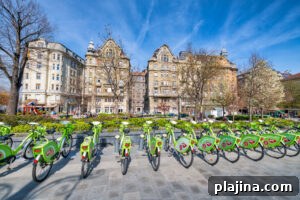
Short-term bike rentals are convenient via the MOL Bubi bike-share system, with green docking stations across the city offering low-cost rides. Reputable taxi companies operate widely, and ride-hailing app Bolt is available; Uber no longer serves Budapest. Rental cars from international firms can be found at the airport and some hotels, though a car is unnecessary for most visitors unless you plan daytrips beyond the city.
© PÁRISI UDVAR HOTEL BUDAPEST
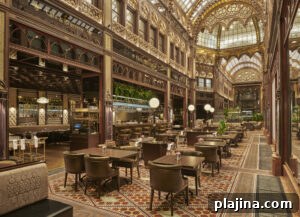
For a memorable breakfast setting, Párisi Udvar Hotel Budapest serves morning meals beneath a stunning glass-covered arcade, complete with mosaic floors and ornate staircases. Another impressive choice is Four Seasons Hotel Gresham Palace, which overlooks the Chain Bridge and offers both buffet and à la carte options in Kollázs brasserie, where 1920s-inspired décor complements the food.
If you need a private space for a business lunch or a quiet meeting, several hotels and restaurants provide elegant options. Callas House, located beside the opera, features a private dining room for up to 25 guests. Virtu restaurant offers a larger private dining area for about 50 guests and smaller rooms for more intimate gatherings. For fine dining with a contemporary touch, SPAGO, part of Wolfgang Puck’s restaurant group, is another strong choice.
When entertaining guests or enjoying an evening out, the Anantara New York Palace’s Poet Bar delivers an intimate, club-like atmosphere with rich furnishings and classic style. For panoramic city views, Bar 360’s rooftop terrace is exceptional; in colder months heated igloos maintain a cozy experience. A distinctive venue for concerts and dining is A38, a repurposed ship moored near Petőfi Bridge that houses a restaurant and large event space. Cocktail enthusiasts should visit Boutiq’Bar for inventive drinks crafted by skilled bartenders, while craft beer lovers will enjoy Élesztő, a former factory now serving around 20 local beers on tap in an eclectic setting.

PHOTO: © RIGMANYI | DREAMSTIME.COM,
Before you leave, consider visiting Memento Park to see many of the statues removed after Communism. City Park (Városliget) is another highlight, home to the iconic Széchenyi Baths, the picturesque Vajdahunyad Castle and Budapest Zoo, all set in pleasant green surroundings ideal for walking and relaxation.
If you want to extend your itinerary beyond Hungary, Vienna is about 2.5 hours away by train, and Bratislava is a similar distance. A fast connection from Vienna to Bratislava takes under an hour, which makes it feasible to visit three capitals—Budapest, Vienna and Bratislava—on a single trip with efficient planning. Each city has a unique character and cultural identity, and Vienna offers numerous long-haul flight connections to major international hubs.