
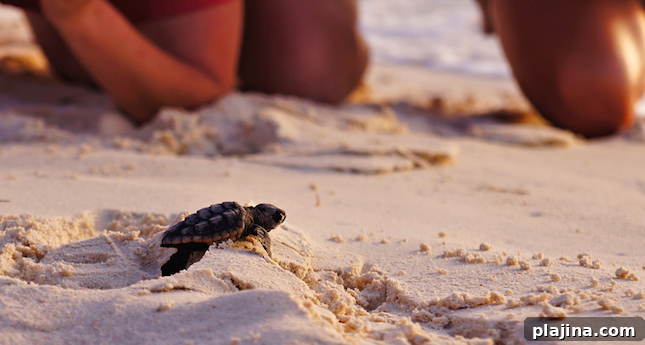
Need a quiet moment during a hectic travel day? Tune into a live, high-definition Turtle Webcam for a calming glimpse of nature. Mounted on a beach in the Florida Keys, the webcam provides an up-close view of a loggerhead sea turtle nest and, when the timing is right, footage of hatchlings as they emerge and make their way toward the ocean.
Daytime viewing relies on natural light to capture clear, detailed images. After dark, infrared lighting gently illuminates the nesting area without disturbing the turtles, allowing 24-hour observation while respecting the animals’ natural behavior. Several species nest on Florida beaches, including loggerhead, green, leatherback, hawksbill and Kemp’s ridley sea turtles. These species are protected and are classified as threatened or endangered, highlighting the importance of conservation efforts.
The Turtle Webcam is funded by the Florida Keys Tourism Council and operates with approval from the U.S. Fish & Wildlife Service and the Florida Fish & Wildlife Conservation Commission. This project is part of a broader Florida Keys initiative to educate the public about sea turtles, their nesting habits, and the critical role beach protection plays in their survival.
Watching the webcam offers both an educational experience and a peaceful escape—viewers can observe nesting behavior, incubation, and hatchling emergence, while learning about the seasonal cycles that influence sea turtle reproduction. The stream is designed to minimize human impact, using remote monitoring to reduce disturbances on nesting beaches.
For travelers, wildlife enthusiasts, and families alike, the Turtle Webcam provides an accessible way to connect with coastal wildlife in real time. It raises awareness about the challenges sea turtles face—such as habitat loss, light pollution, and climate impacts—and encourages viewers to support conservation measures like responsible beachfront lighting, beach cleanups, and mindful coastal recreation.
Whether you watch a single nest or follow a season of activity, the live feed offers a rare, intimate view of a fragile life stage for a vulnerable group of marine animals. Observing these moments can deepen appreciation for sea turtle conservation and inspire simple actions that help protect nesting beaches for future generations.