
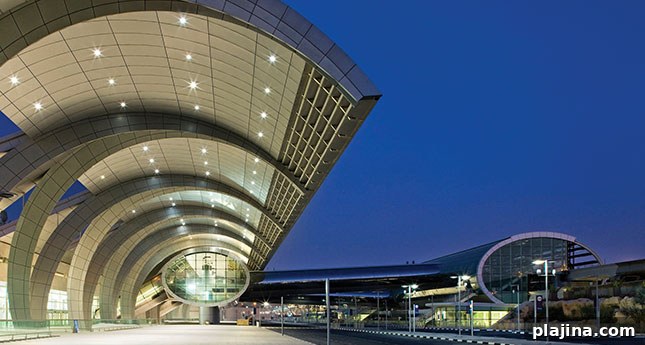
Construction activity is transforming the three major airports across the Persian Gulf. Dubai International continues to expand while plans move forward for an entirely new airport. Doha will begin replacing its existing facility with the New Doha International Airport in the coming years. Abu Dhabi is implementing a master plan that includes a Midfield Terminal Complex and other upgrades aimed at handling growing passenger demand.
Dubai International Airport (DXB)
Dubai International Airport serves the emirate of Dubai and acts as a major gateway for the Middle East and East Africa. In 2004 DXB hosted more than 100 airlines flying to over 160 destinations, and projections once estimated annual traffic could grow to around 60 million passengers by 2010. The airport remains a central hub for international travel in the region.
A new airport, Al Maktoum International (part of Dubai World Central), is planned as a long-term expansion to support the emirate’s growth. Designed to accommodate the Airbus A380 and future capacity needs, the project envisions multiple parallel runways and separate terminals to serve Emirates, other major carriers, and low-cost airlines.
At the existing Dubai International, Terminal 3 opened to serve Emirates and quickly became one of the world’s largest airline terminals. The terminal is located beneath taxiways and aprons, placing boarding gates closer to aircraft. Passenger flows are supported by internal transport systems including automated people movers and travelators. Terminal 3 features extensive baggage handling with numerous carousels, landscaped Zen garden areas near food courts, and dedicated first- and business-class facilities.
Premium services in Terminal 3 include expansive first- and business-class lounges with spa facilities and live kitchens. The airport also hosts a full-service medical center operating 24 hours and a variety of lounges across terminals for passengers seeking quiet, private or premium amenities.
On the arrivals level of the Sheikh Rashid Terminal, the Dubai International Hotel provides 24-hour services for guests with a selection of rooms and suites that cater to transit and overnight travelers.
Meet-and-greet and assistance services are available through Marhaba Services, operated by Dnata. Marhaba offers expedited processing, access to dedicated lounges in Terminals 1 and 3, and additional services such as visa and transit support for passengers taking short city visits during stopovers.
Ground transport options at DXB include an extensive airport bus network that links major city corridors and many hotels, providing an alternative to taxis and limousines for passengers traveling to central Dubai.
A new Executive Flights Centre (EFC) was opened to serve business aviation customers, offering dedicated immigration and customs, a business and conference center, multiple private lounges and vehicle services. The facility expanded the airport’s ability to cater to private and VIP movements and is among the largest dedicated business aviation terminals in the region.
Dubai International Airport is managed by the Dubai Department of Civil Aviation, while Emirates is owned by the Dubai government.
Doha International Airport (DOH)
Doha International Airport is Qatar’s primary commercial airport and the main hub for Qatar Airways. Serving millions of passengers annually, the airport links Doha with global destinations through a mix of national and international carriers.
The airport provides a range of passenger amenities, including free WiFi in premium lounges, an extensive duty-free shopping area, medical services with an emergency trauma room, and multiple prayer facilities. Nearby hotels support travelers arriving or departing through the airport.
First- and business-class lounges at DOH offer full hospitality services, including in-house chefs and sommeliers, shower and changing rooms, business amenities such as computers and fax, sleeper chairs, and printed international newspapers. Additional paid services provide meet-and-assist options with plane-side greeting, fast-track immigration, baggage support, and escorts through customs.
Oryx Lounge access is available for purchase and provides comfortable seating, reading materials, and meal service throughout the day, along with complimentary WiFi.
To address capacity constraints, Qatar has advanced construction of the New Doha International Airport (NDIA). The multibillion-dollar development includes two parallel runways, a multi-level passenger terminal with a 100-room hotel, and a phased gate rollout to scale capacity over time. The project is being built to replace the existing terminal and accommodate future growth in passenger traffic.
Abu Dhabi International Airport (AUH)
Abu Dhabi International Airport, located outside the capital city of the United Arab Emirates, is the primary hub for Etihad Airways and serves numerous international carriers. The airport connects the emirate with destinations across Europe, North America and Asia and has seen significant passenger growth over recent years.
The airport’s master plan centers on the Midfield Terminal Complex, intended to substantially expand capacity and modernize passenger processing. New runways and terminals have been introduced in phases, with Terminal 3 adding additional gates, including capacity for large wide-body aircraft such as the A380.
Other infrastructure investments have included a new air traffic control tower, expansion of cargo facilities, and the creation of a dedicated business and logistics park. These improvements aim to enhance operational resilience, improve cargo handling and support commercial development around the airport.
Operational upgrades have also targeted all-weather capability. Improvements to runway systems and procedures have enabled enhanced low-visibility operations, reducing weather-related disruptions and increasing reliability for scheduled flights.
Abu Dhabi International offers a broad range of passenger services and premium lounges. VIP and corporate lounges provide private Majlis areas and hospitality suites, while other lounges offer internet access, showers, dining and workspace facilities. The on-site five-star airport hotel supplies rooms, a mosque and fitness amenities, along with food and business services for transit and overnight guests.
The airport’s Golden Class service gives travelers access to dedicated check-in counters, fast-track security lanes, lounge access and business center services, with additional perks such as preferred limousine rates and concierge options.
Opened in 1982, Abu Dhabi International is owned and operated by the Abu Dhabi Airports Company and remains a key component of the emirate’s transport infrastructure and economic development plans.