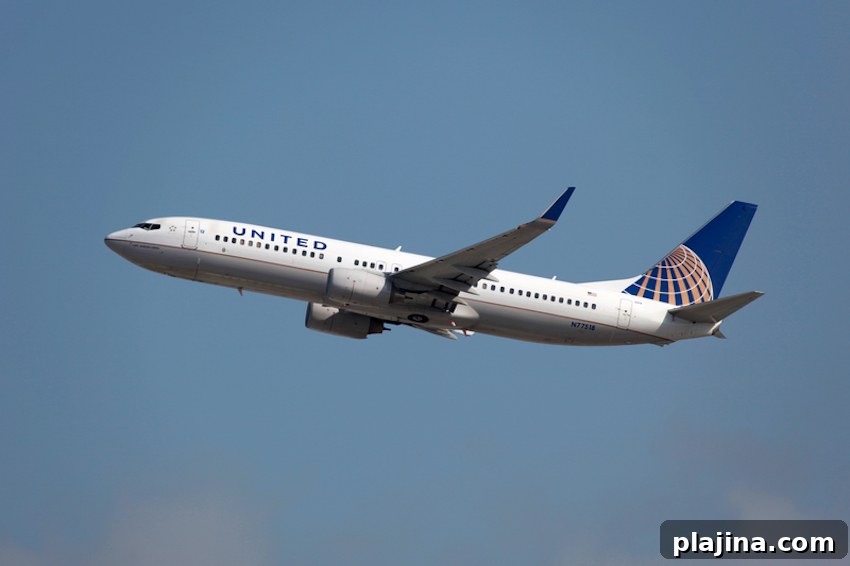
United Airlines has renewed its supply agreement with Boston-based World Energy to purchase up to 10 million gallons of commercial-scale sustainable aviation biofuel over the next two years. The deal extends a relationship that began in 2016 and reflects United’s ongoing commitment to reduce the climate impact of its operations.
United already uses this biofuel to help power every flight from its Los Angeles hub. On a lifecycle basis, those flights achieve more than a 60 percent reduction in greenhouse gas emissions when the biofuel is blended into jet fuel, offering a measurable carbon benefit compared with conventional jet fuel.
The original 2016 agreement made United the first airline worldwide to use sustainable aviation biofuel on a continuous basis. Today, United remains the only U.S. carrier to integrate biofuel into regular operations, positioning the airline as an early adopter and industry leader in practical decarbonization measures.
World Energy’s fuel is produced from agricultural waste and has received sustainability certification from the Roundtable on Sustainable Biomaterials. The company recently announced a $350 million investment to convert its Paramount, California facility to produce renewable diesel and sustainable aviation fuel. Once the conversion is complete, that site’s capacity will exceed 300 million gallons per year, contributing to World Energy’s network of six low-carbon fuel manufacturing plants.
Scott Kirby, United’s president, noted that investing in sustainable aviation biofuel is among the most effective steps a commercial airline can take to lower its environmental footprint. He emphasized that United and World Energy are demonstrating how collaboration between industry innovators can accelerate progress for customers, employees and local communities.
Gene Gebolys, chief executive officer of World Energy, said the company is proud to renew its commitment to United and to support the airline’s efforts to move toward a lower-carbon future. The extended agreement helps expand access to certified low-carbon fuels and supports increased production at commercial scale.
By continuing and expanding these biofuel purchases, United and World Energy aim to increase practical, scalable options for reducing aviation emissions. Greater production capacity, sustainable feedstocks such as agricultural waste, and long-term commercial partnerships are key components of a strategy to deliver carbon reductions across airline operations while the industry advances additional technologies and efficiency measures.