
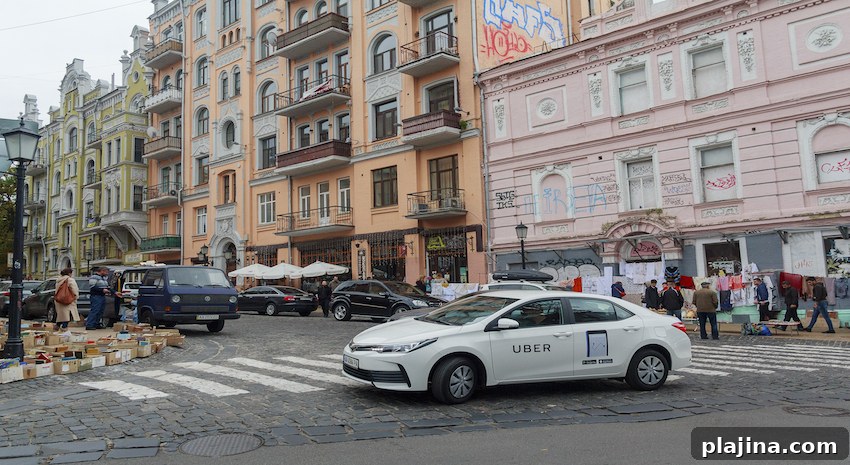
Uber has reached an agreement to buy a large number of Volvos as part of its plan to expand a fleet of self-driving vehicles.
The deal calls for the purchase of 24,000 Volvo XC90 SUVs to be delivered between 2019 and 2021. Uber will fit these vehicles with its own sensors and autonomous driving software after delivery. The transaction is valued at approximately $1.4 billion.
“This new agreement puts us on a path toward mass-produced, self-driving vehicles at scale,” said Jeff Miller, head of auto alliances at Uber. “The more people working on the problem, we’ll get there faster and with better, safer, more reliable systems.”
Uber already operates self-driving XC90s in Arizona, Pittsburgh and San Francisco. The vehicles from this agreement are intended for a later generation of autonomous cars that will not require a human safety driver onboard.
In addition to the vehicle purchase, Uber announced updates aimed at improving the pick-up experience for riders. New features include live location sharing during pick-up and distinct windshield colors to make autonomous cars easier to identify.
“The rendezvous point between rider and driver is one of the most stress-inducing parts of the trip,” said Nundu Janakiram, product lead at Uber. “Often you’re standing on the street in the cold or in the dark, trying to describe a GPS point. Riders told us they wanted clearer, simpler ways to find their car.”
By combining a large-scale vehicle order with updated rider-facing tools, Uber is positioning itself to scale autonomous ride-hailing while focusing on usability and safety. The approach pairs automaker manufacturing capacity with Uber’s sensor and software stack, allowing the company to integrate its hardware and systems into production vehicles.
Operationally, moving to cars that can operate without a safety driver requires rigorous testing, regulatory approvals and further refinement of perception, decision-making and redundancy systems. Uber’s statement emphasized collaboration and iteration as keys to achieving reliable, widely deployed self-driving service.
The live location feature is intended to reduce confusion at pick-up by sharing the vehicle’s precise position in real time, while visible windshield color cues should help riders recognize their assigned car more quickly. Together, these changes aim to shorten wait times and lower the stress of meeting an autonomous vehicle on the street.
Uber’s Volvo order represents a significant investment in autonomous mobility and signals continued industry momentum toward fleets of production vehicles modified for self-driving operation. As deployment progresses, the company says it will continue improving passenger experience and safety through both hardware and software updates.