
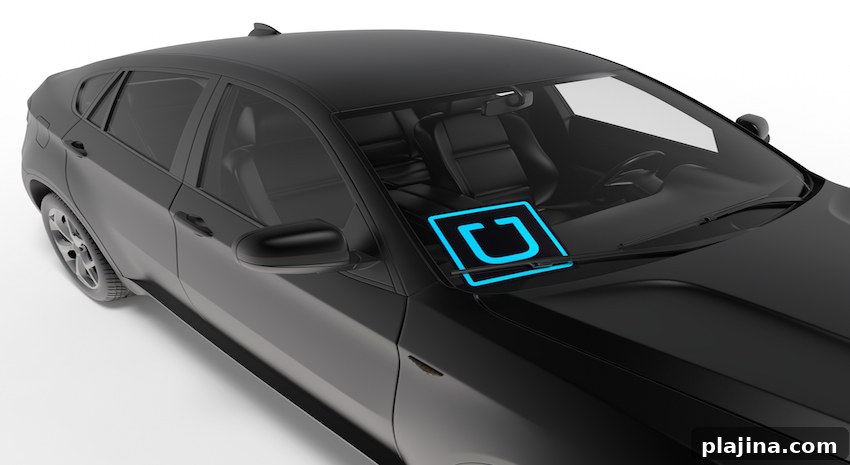
Uber announced a strategic acquisition that advances the company’s development of self-driving vehicle technology.
In late 2016, Uber acquired Geometric Intelligence and integrated the team into a new division called AI Labs. This group will focus on applying artificial intelligence across Uber’s products and services.
Jeff Holden, speaking for Uber, noted that AI already influences many aspects of the platform: choosing optimal routes, estimating arrival times for rides and UberEATS orders, and matching riders for uberPOOL. He emphasized that the same capabilities extend to training autonomous machines to navigate safely—whether those machines are cars on the road, aircraft in crowded airspace, or other robotic devices.
The New York Times analyzed the acquisition and highlighted why Geometric Intelligence stood out. Rather than relying on a single approach such as deep learning, Geometric Intelligence brought together researchers using a variety of techniques, including Bayesian methods and evolutionary algorithms, to tackle AI problems from multiple angles.
Uber’s investment in AI and self-driving technology aligns with its long-term goal of reducing dependence on human drivers. Deploying autonomous vehicles could lower operating costs and provide a competitive edge in the ride-hailing market, while enabling new services and efficiencies across the company’s platform.
By combining established operational systems with a research-driven AI team, Uber aims to accelerate innovations that improve user experience—faster matching, more accurate ETAs, improved routing—and to lay the groundwork for safely scaling autonomous transportation in the future.