
Hurtling through the pitch-dark countryside, the 1980 Chevrolet Impala taxicab hugged the two-lane road, swerving around slow-moving trucks. I rode in the back seat, and if I crouched low enough my view of both the speedometer and the road disappeared. That, along with lively conversation with my backseat companions — Gwen, an expatriate sailboat owner, and Margo, an American journalist living in Germany — probably kept me from panicking. My husband, who later declared our driver to be “a good, if fast, driver,” tried to chat with him despite the man speaking only Turkish.
We had met just minutes earlier at Dalaman Airport (DLM) and were quickly ushered into the waiting cab. Our destination was Marmaris on the Mediterranean coast, where our Turkish adventure would begin aboard Gwen’s custom 75-foot sailboat, Hellem Nooh.
The cab skidded to a halt, gravel flying against the undercarriage, as we pulled up to Albatros Marina. The smiling driver hauled our bags from the trunk and we walked down the dock toward the boat.
After stowing our gear below in the cabins, we gathered on the aft deck. We sank into comfortable captain’s chairs as warm Mediterranean breezes brushed our necks and stars twinkled above. The lights of Marmaris glimmered in the distance, framing the swaying mast. We raised our champagne flutes and agreed: it couldn’t get any better.
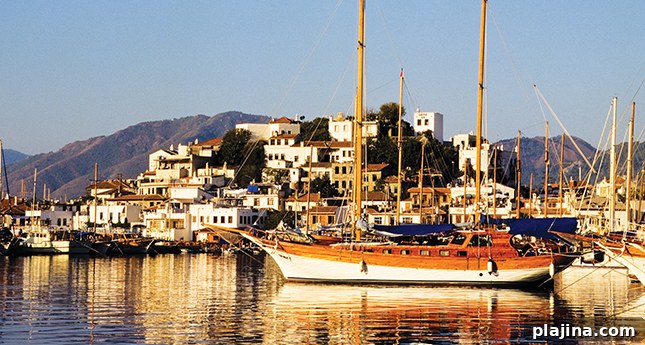
At dawn I climbed onto deck to look around. Wooden fishing boats drifted by as the sun climbed the hills, turning the sky pale orange. From the bow, whitewashed hillside homes appeared to tumble into the sea. The view felt like a picture of coastal Turkey.
To introduce us to local flavors, Gwen served a traditional Turkish breakfast: homemade yogurt, fresh fruit, warm Turkish bread, cherry jam and local white cheese. The only concession to home was the music — classic hits from the 1960s and ’70s.
When the crew came aboard we set sail. Our skipper was Richard, a red-bearded New Zealander; his first mate, Arzu, was a lively Turkish woman Margo promptly nicknamed “our own little Turkish delight.” They readied the boat while we relaxed in deck chairs and admired the unfolding scenery.
We were cruising along the Turquoise Coast, and the name made perfect sense when we reached Dalyan Bay for lunch. The water was a translucent turquoise, so clear I could see the color of my toenail polish beneath the surface during a quick swim.
“Okay, into the dinghy,” Gwen called. “Time to pick up lunch.” With Richard at the tiller we squeezed into the small boat and headed for an inviting stretch of beach.
It might not look like a fish market to outsiders, but locals know this is the place for freshly caught blue crabs. A sun-browned woman arrived with crab traps full of catch. After Arzu translated and a price was agreed, she pointed to a man seated cross-legged under a shade tree — smoking and drinking tea — who clearly ran the operation and would take the payment.
Back on board, Gwen boiled the crabs with dill, parsley and lemon. We dug in, eating with our hands and savoring every bite.
The next morning we sailed through a light drizzle; by lunchtime the sun broke through and we anchored in a sheltered cove across from Gemiler Island. From the boat we could see cliffside ruins nearly hidden by trees: a Byzantine village that flourished in the fifth and sixth centuries but remains largely off the tourist radar.
Curious, we landed the dinghy on Gemiler’s rocky beach and climbed a steep path to the island’s summit. The view from the top revealed a cove dotted with sailboats and a landscape peppered with ruins. An impressive basilica retained part of its dome and a visible cross, and fragments of mosaic peeped from the earth, waiting to be uncovered. We explored stone-arched corridors and wondered why this treasure trove was so little known.
Dolphins escorted us into a place Gwen nicknamed “Rickety Tickety” because of its improvised dock constructed from painted boards, tree limbs and weathered planks. The dock shared space with gulets — broad-beamed, two-masted wooden charter boats popular with tourists and usually motor-assisted. Though larger than our craft, gulets are a staple along this coast.
We wandered to the ruins of what locals call Cleopatra’s Bath House, linked by legend to a hot spring in the bay. That evening Gwen took a break from cooking and we dined at an outdoor taverna. Under a canopy of stars we ate cold eggplant and tomato appetizers on hot bread, followed by grilled tuna, spicy meatballs and stewed tomatoes, washed down with cold beer.
The next morning we accepted a hike and climbed to a lookout over a white-sand beach rimmed by pure turquoise water. Our route led over gray shale, through a pine forest, and down into a red-soil valley dotted with olive trees until we reached the ruins of Lydae (also called Chydae). The site, a mix of Byzantine and Roman remains, sits on a headland watching the open sea — perfect for spotting seaborne threats. Ruins of two mausoleums, an agora and numerous houses hint at the town’s former life, and scattered Corinthian columns, sarcophagi and inscriptions made the exploration feel like stepping back in time.
Over the following days we sailed up the coast. Margo and I copied Gwen’s recipes for dishes such as imam bayildi (swooning imam, a stuffed eggplant) and boregi (baked phyllo parcels filled with cheese, vegetables or meat), while my husband read and soaked up the sun. Each night we dropped anchor in quiet coves and ate by lantern light beneath the stars.
On our final day we returned to Marmaris marina. Stepping onto the dock, the bustle of the town hit me: a hub for boaters and nightlife, teeming with visitors. We settled at an outdoor table, sipped cold beer and watched masts sway in the harbor breeze.
Refreshed, we explored the bazaar’s maze of stalls and shops. Bargaining with persistent vendors is part of the experience; we picked up souvenirs and gifts, then visited a carpet shop. After buying a small rug my husband treated himself to a traditional Turkish shave: hot towels, shaving cream applied with a brush, a straight-razor shave and the dramatic finishing touch of ear hair singeing. Margo and I sipped hot mint tea while we watched.
All too soon it was time to return to the airport. As we climbed into the taxi I felt the familiar tug of mixed emotions: gratitude for the memories, and the wistful thought that this particular adventure had ended, perhaps forever. Still, I carried home a trove of moments — turquoise coves, ancient ruins, fresh crab on the deck, and the quiet pleasure of sailing beneath a Mediterranean sky.
Diversions
Marmaris boasts one of the world’s largest natural harbors, making it a favorite for sailors. The waterfront is lively with open-air restaurants and an active nightlife; bars can be energetic late into the night. The castle that overlooks the harbor dates to the 16th century and now functions as a museum. Families and thrill-seekers will find Atlantis Waterpark with slides, pools, a bowling alley and an Internet café.
The covered bazaar near the seafront is a sensory delight even if you’re not an avid shopper. With a bit of bargaining there are good deals on handicrafts, carpets, leather and jewelry. For those driving inland, the Mountain of Roses olive farm in Datça is worth a visit: a 100-acre olive grove producing oils, olives and beauty products, plus a small guesthouse.
Boating Trips Along The Turquoise Coast
Although Gwen later retired from cruising, several outfits offer similar itineraries along the Turquoise Coast. Companies provide a range of options from multi-day cruising and walking tours to private charters and cabin cruises, with schedules and prices varying by season and group size.
Dining
Ceasar Restaurant
A strong choice in the marina with a covered patio and friendly service. The eclectic menu includes seafood linguine, regional dishes and international options. Yacht Harbour, Mugla.
Natalie’s Steak House
A destination for meat lovers, featuring generous steaks and an extensive wine list. The restaurant offers harbor views and a hearty menu. Uzunyalı Blvd. 32, Marmaris.
Ney Restaurant
Tucked up a short flight of steps in a 200-year-old house, Ney offers an open-air patio and traditional Turkish specialties such as boregi and mucver (zucchini pancake). 26 Sokak 24, Marmaris.