
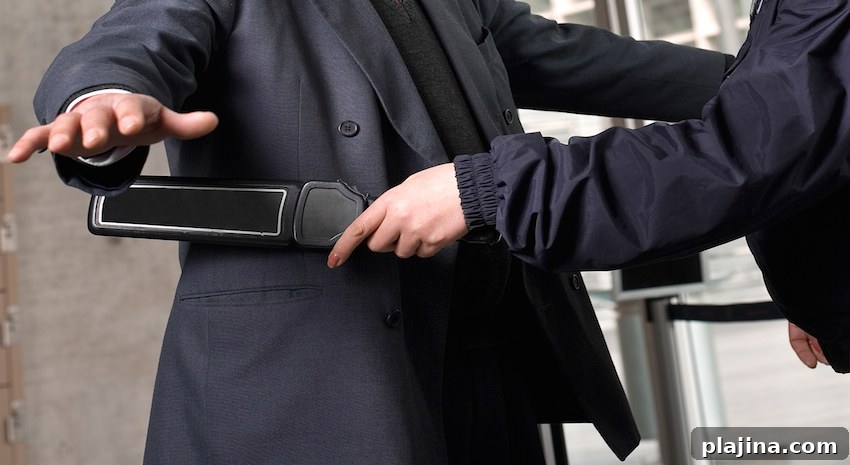
Travelers passing through security now receive a standardized pat-down from Transportation Security Administration officers as part of routine screening.
Until recently, TSA officers used five different pat-down procedures depending on the reason a passenger was selected for additional screening. Those procedures have been consolidated into a single, uniform method. As a result, the search can be more thorough than before and may include use of the front of the hand in some areas instead of only the back of the hand.
“A pat-down may include inspection of the head, neck, arms, torso, legs and feet,” the TSA explains. “This includes head coverings and sensitive areas such as breasts, groin and the buttocks. You may be required to adjust clothing during the pat-down. The officer will advise you of the procedure to help you anticipate any actions before you feel them. Pat-downs require sufficient pressure to ensure detection.”
The updated protocol applies in several common scenarios: when screening equipment alarms, when passengers are randomly selected for secondary screening, and when a traveler opts for a hand search instead of passing through advanced imaging or x-ray systems.
According to the TSA, officers generally use the back of the hand for pat-downs over sensitive areas. “In limited cases, additional screening involving a sensitive area pat-down with the front of the hand may be needed to determine that a threat does not exist,” the agency states.
Officers conducting pat-downs will be of the same gender as the passenger, and travelers retain the right to request a private screening area. If you have concerns about the process, you may ask officers to explain steps before they occur or request further assistance from supervisory personnel.