
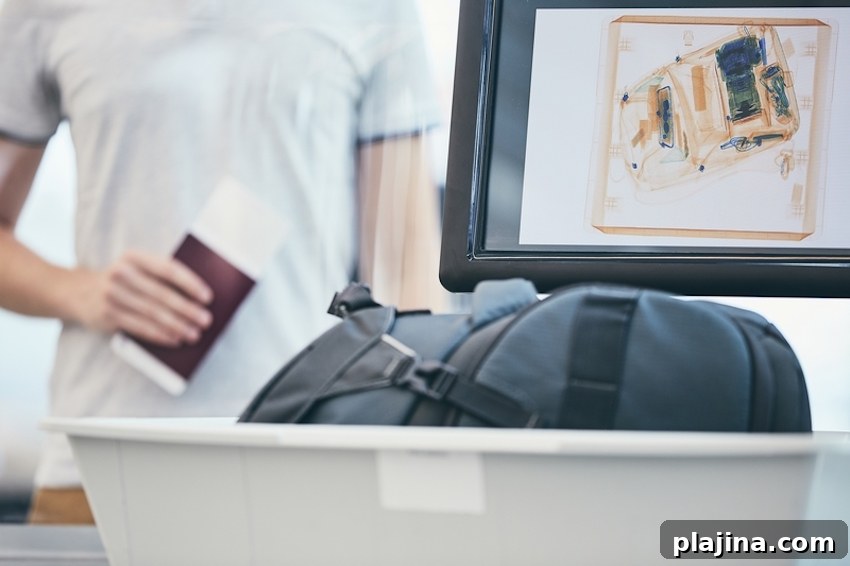
The longstanding rule requiring travelers to remove liquids and laptops from carry-on bags at airport security may soon be phased out. The Transportation Security Administration is introducing advanced 3-D computed tomography (CT) scanners at U.S. airports to speed up screening and reduce the need for passengers to unpack items.
Beginning this summer, the TSA will deploy the new CT machines at 14 airports nationwide, including the original pilot sites in Boston (BOS) and Phoenix (PHX), where the technology was first tested. These scanners create detailed, three-dimensional images of carry-on contents, enabling officers to rotate views and inspect individual items on screen without opening bags.
Because the CT scanners provide higher-resolution images and allow for better image manipulation, TSA officers can identify potential threats more reliably. As a result, passengers will not routinely be asked to remove liquids or laptop computers from their carry-on luggage during screening at checkpoints equipped with the new technology.
The rollout begins this summer and is scheduled for full deployment in 2020. Once implemented across the planned locations, the upgraded screening process should reduce wait times, minimize bag handling, and make security checkpoints more efficient and less disruptive for travelers.
Beyond traveler convenience, the new technology aims to enhance security by giving officers clearer, more actionable information and reducing the need for manual inspections. Travelers should still follow current TSA guidelines and be prepared for variable procedures during the transition period, as some airports and checkpoints adopt the scanners sooner than others.
Overall, the shift to 3-D CT screening represents a significant modernization of airport security procedures, promising quicker, simpler experiences for passengers while maintaining strong screening standards.