
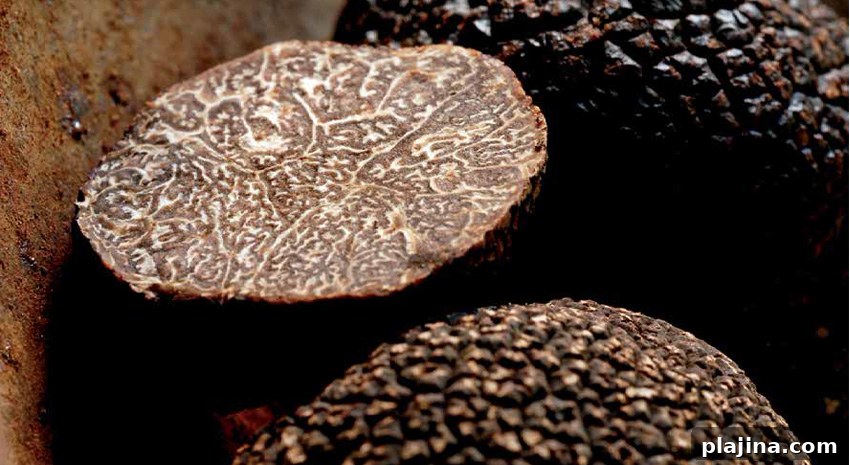
TRUFFLES. You’ve savored them—stirred into scrambled eggs, layered with foie gras, thinly sliced over pizza and folded into the stuffing of a perfectly roasted fowl prepared by a chef who seems to have stepped out of a culinary postcard. Yet that gilded experience is only part of the story. The truffle’s true character reveals itself when it’s lifted from the earth by a French truffle hunter: a misshapen, soil-specked fungus presented in a rough palm, a hefty knife at the ready and a proud, truffle-finding dog at his side.
Near Narbonne in the Languedoc, where the Mediterranean’s briny scent drifts across scrubby limestone garrigue dotted with rosemary and lavender, I join Gerard Bertrand, former professional rugby player and owner of family vineyards, to celebrate pruning season. His neatly ordered vines, bordered by cedar and oak, are framed by the hotel Château L’Hospitalet behind us and the distant sea on the horizon. But today wine is secondary: we follow a dog and his handler, Philippe Barriere—official truffle inspector for the Languedoc—through the hills.
Skirting the uneven ground, the dog abruptly stops at a tree, barks and begins to dig with urgency. In moments the animal produces a black truffle the size of a lemon, dropping it into Barriere’s hand in exchange for a treat. “We had to stop using pigs here in France,” Barriere explains. “They crave truffles so much they’d rarely give them up. Dogs just want their biscuit!” Holding the truffle, breathing in its musky aroma and imagining the savory depth it promises, I empathize with those truffle-seeking pigs.
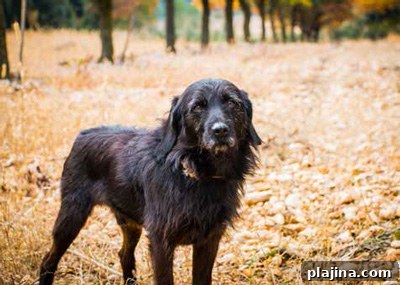
A truffle-finding dog takes a break © CHARLES KNOBLICH | DREAMSTIME.COM
Using trained dogs is also kinder to the landscape than raking, an older practice in which hunters used iron rakes to tear away soil around tree trunks, damaging the forest floor and its ecology. To protect the environment and support a recovering sector, the French Federation of Truffle Growers commits to planting at least 300,000 trees each year—efforts that aim to rejuvenate truffle habitats and counter declines some attribute to climate change.
Truffles are nature’s underground sculptures: tuberous fungi usually found six to eight inches below the surface near tree roots, appearing in varied shapes and sizes. Humans have tried to domesticate them for centuries, yet truffles largely grow on their own timetable. The most prized black truffle—subtle, prized since Renaissance courts and long associated with aphrodisiac lore—thrives in France and parts of Europe. The white truffle, with its more pungent profile, stands out in Italian cuisine, especially in Piedmont and Alba. Both command high prices; rare finds can fetch extraordinary sums at auction.
Back in the kitchen at Bertrand’s hotel, our haul lies on the counter like black gold. Though the dog did the digging and Barriere confirmed our find, we gather around, sipping Bertrand’s organic wine—a balanced blend of Chardonnay, Viognier and Sauvignon Blanc—excited by the discovery. Barriere gently washes the truffles and slices them wafer-thin. He offers me a slice, advising a drizzle of olive oil and a pinch of sea salt. The first bite, unadorned, is startlingly crisp—an echo of apple—and carries the fresh, rain-soaked aroma of earth. Paired with Bertrand’s Domaine de Cigalus White, the experience feels like an expression of l’art de vivre: simple, profound and utterly persuasive.
In France, the heartland of truffle culture is the Périgord—now known as the Dordogne—though truffles also flourish in Provence and the Languedoc. For gourmands, there is unmatched pleasure in joining a truffle hunter and dog for a field-to-fork outing. While truffle hunting was never meant to be a tourist spectacle, many regional hotels and local outfitters now arrange guided searches. Culinary farms and tour companies often conclude the hunt with a tasting, offering visitors a chance to savor the fruit of the soil they helped unearth.
France Info to Go
Travelers heading to Provence can fly into airports such as Avignon (AXN) or Nice (NCE). For the Languedoc, Montpellier (MPL) provides convenient access, and Toulouse (TLS) serves as a gateway for the Dordogne. France’s efficient rail network is another option; high-speed TGV trains connect Paris Charles de Gaulle Airport directly to Avignon, making regional exploration straightforward.