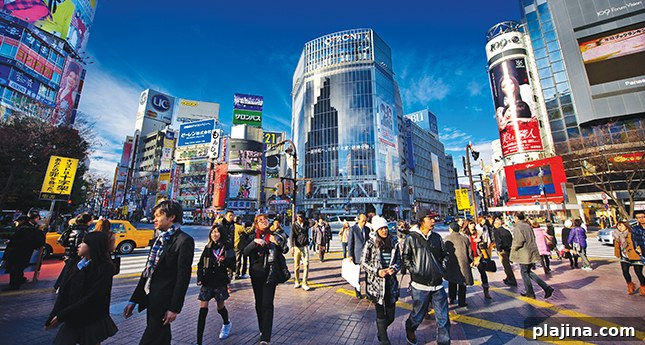
Tokyo is a city of contrasts. On the surface it feels impeccably ordered: trains run on time, streets are spotless and people move through their days with quiet reserve. Yet beneath that calm lies a history of extraordinary destruction and recovery.
In 1923, a massive earthquake devastated Tokyo, killing approximately 140,000 people and leveling large swaths of the city. During World War II, firebombing destroyed vast areas and created an inferno comparable in scale to the atomic blasts that struck other Japanese cities. More recently, in 2011, a powerful earthquake and tsunami struck the region to the north; the subsequent Fukushima nuclear crisis cast a long shadow over the capital as residents faced the threat of radiation.
Time and again Tokyo has rebuilt itself stronger. The city now benefits from some of the world’s most advanced disaster-prevention infrastructure, and that engineering resilience is matched by a stoic determination in its people.
At first glance Tokyo can feel uniform. Japan has not experienced mass immigration, and its population remains largely homogenous, which can make the metropolis feel like a single continuous sprawl. Streets and neighborhoods sometimes blur into one another, leaving newcomers uncertain where to begin.
But look closer and Tokyo reveals itself as a mosaic of distinct neighborhoods, each with a unique character. These differences reflect social and cultural nuances rather than a wide ethnic mix. Understanding the city by its neighborhoods makes it far easier to explore.
Shinjuku centers on the world’s busiest train station and features the highest concentration of skyscrapers in Tokyo. After dark the area transforms into a neon-lit maze of bars and clubs frequented by office workers and late-night revelers.
South of Shinjuku, Shibuya attracts a younger crowd. Its streets hum with video game arcades and pachinko parlors—pachinko being a highly addictive pinball-like pastime—while the famous Shibuya Crossing funnels hundreds of thousands of pedestrians daily.
Akihabara, known as “Geek Central,” is the destination for electronics, gadgets and manga. It’s where hobbyists and office workers alike browse the latest components and comics.
Ueno offers leafy relief from the urban rush. A short detour off the main sidewalks leads to peaceful ponds, wooded parkland that blossoms with cherry trees in spring and the city’s 35-acre zoo.
Asakusa, on the Sumida River’s west bank, preserves echoes of the Edo period, when shoguns governed and daily life centered on Buddhist temples. A handful of historic temples and shrines survive amid carefully tended gardens.
Roppongi once carried a seedier reputation as a nightspot popular with foreign visitors and stationed servicemen, but recent investments—most notably Roppongi Hills and Tokyo Midtown—have repositioned the district with high-end mixed-use developments.
Odaiba, an artificial island connected by the Rainbow Bridge, has been transformed over the past two decades into a leisure and entertainment hub. Its waterfront attractions include a large Ferris wheel and several family-friendly museums.
Ginza is Tokyo’s global-facing shopping district, where luxury boutiques and department stores line elegant streets. Remove the Japanese signage and the atmosphere could feel like any major international city.
Move southeast from Ginza, however, and the atmosphere shifts again. Men in rubber boots pushing trolleys of polystyrene boxes signal you’ve entered the Tsukiji neighborhood, home to the world’s most famous fish market. The scene there—fishmongers hustling, crates of seafood stacked and auctions in full swing—is uniquely Japanese.
Tsukiji Central Fish Market has faced plans to relocate in recent years, while large-scale redevelopment proposals for the original site remain contentious. Meanwhile, a new landmark has already reshaped Tokyo’s skyline: the Tokyo Skytree in the Sumida district. At over 2,000 feet, it is the tallest communications tower in the world and offers sweeping views from its observation decks.
From high above, Tokyo’s paradoxes can be harder to see. How does a nation famed for minimalist architecture also produce the visual cacophony of Shibuya Crossing, where giant screens, billboards and neon signs surround crowds of commuters? How do Zen-influenced cultural traditions coexist with busyness and modern spectacle?
A bronze statue of Hachiko—a dog who waited every evening at Shibuya Station for his owner and kept vigil there for years after his owner’s death—still watches over a corner of the plaza. The statue’s quiet devotion is a reminder that beneath the metropolis’s disciplined surface are countless personal stories and private passions.
What looks like a single, unified city of 13 million people is, in reality, a collection of neighborhoods where individuals live distinct lives and bring their own hopes, fears and histories to the streets.
Diversions
Jet lag can be an opportunity. Early risers can head to Tsukiji on the Sumida River to experience the Tsukiji Central Fish Market at its most intense. From about 3 a.m. fishing boats arrive and seafood—some still alive—is moved through the market toward stalls and the auction hall. The famed tuna auctions begin after 5 a.m.; a small viewing area requires queuing but offers an unforgettable glimpse of fish sold for thousands of dollars. Activity in the main halls continues until around 8 a.m., with octopuses writhing in containers and large tuna being sawed into portions. The sights, sounds and smells are vivid, and when the market winds down, nearby backstreet restaurants serve some of the freshest sushi you can find.
For a broader perspective, visit Tokyo Tower. Modeled after the Eiffel Tower, it offers an outdoor stairway up to a main observation deck with a full 360-degree panorama, and an elevator to a higher Special Observatory that, on clear days, reveals Tokyo Bay and Mount Fuji. The newer Tokyo Skytree now dominates the skyline and provides even more elevated views.
To understand Tokyo’s history, the Edo-Tokyo Museum offers detailed reconstructions and scale models that trace 500 years of the city’s past. The Tokyo National Museum houses one of the finest collections of Japanese art in the world, with samurai armor, ceramics and historic paintings on display.
At the city’s center stands the Imperial Palace, rebuilt after World War II. While the palace itself is not open to the public, you can join a free guided tour of the grounds for picturesque views; tours are bookable in advance.
Sensoji Temple in Asakusa, also reconstructed after wartime destruction, feels authentically historic when approached along Nakamise Dori, a pedestrian street lined with stalls selling traditional souvenirs—a scene reminiscent of old woodblock prints.
Tokyo rarely clings to the past for its own sake. Since 1945 the city has continuously reinvented itself, eagerly adopting new technologies and trends. Odaiba exemplifies this forward-looking spirit with multiple museums and visitor centers showcasing innovation.
Miraikan, The National Museum of Emerging Science and Innovation is a hands-on science center with interactive exhibits offered in both English and Japanese. The Panasonic Center Tokyo presents the company’s latest consumer technologies and includes a mock-up Eco Ideas House. RiSuPia focuses on science and mathematics, while Megaweb celebrates Japan’s automotive history and features nostalgic displays in its History Garage.
CHECKING IN WITH MING LEONG
International consultant and frequent visitor to Tokyo
YOU WERE IN TOKYO JUST TWO WEEKS AFTER THE EARTHQUAKE AND TSUNAMI IN MARCH. WHAT WAS THE CITY LIKE?
I toured the city with my Japanese wife and found people calm and continuing their daily routines. Public transportation was running. The main visible restriction was limits at convenience stores on bottled water purchases, as residents stocked up amid concerns about radiation from Fukushima. Despite that, Tokyoites were out shopping and enjoying spring blossoms on the weekend—it felt as if life continued, perhaps because they’re accustomed to living with risk.
HOW HAS TOKYO CHANGED IN THE TIME YOU HAVE KNOWN IT?
Over 15 years I’ve visited, I’ve seen many new developments but no single dramatic transformation. One notable change is Odaiba, which has grown into a major entertainment and shopping hub.
WHAT ARE THE MAIN CULTURAL CHALLENGES FOR FOREIGN VISITORS IN TOKYO?
First-time visitors can be overwhelmed by Tokyo’s energy. However, exposure to Japanese culture abroad has lessened culture shock for many travelers. Business etiquette differences remain important; understanding local customs helps when doing business in Japan.
WHAT ARE YOUR FAVORITE PLACES IN TOKYO? WHEN IS THE BEST TIME TO VISIT?
Tsukiji Fish Market is my favorite spot to eat and explore—fresh sashimi and grilled tuna cheeks are highlights. I enjoy the vibrant nightlife of Shibuya and Shinjuku, especially at night. The first week of April is particularly special when cherry blossoms (sakura) bloom across the city. For a day trip outside Tokyo, the hot-spring resorts of Hakone offer excellent views of Mount Fuji.
Info To GoInternational flights typically arrive at Narita International Airport (NRT), about 36 miles east of downtown. The Narita Express train takes roughly 55 minutes to Tokyo Station. Airport limousine buses are a lower-cost option but can take longer depending on traffic. Limited service is available to Haneda Airport (HND) from some airlines. Check with your carrier for details and schedules. |
Just The FactsTime Zone: GMT +9 |
LodgingPARK HYATT TOKYO SUKEROKU NO YADO SADACHIYO THE WESTIN TOKYO |
|
Dining@HOME CAFÉ DAIWA SUSHI BAR PETER |
|