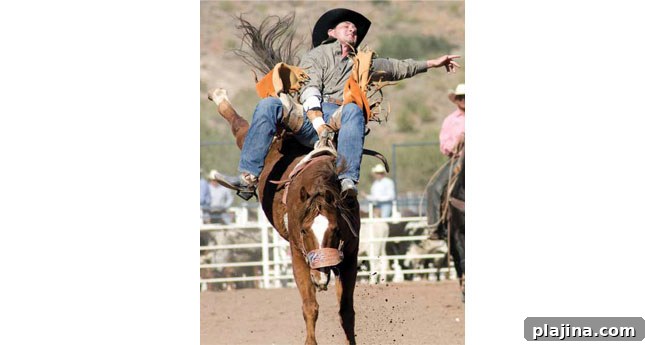
These are the people who helped build America. They forged the trails that opened the West, herded cattle that fed railroad camps and pioneer settlements, and roamed the open range, sleeping beneath the stars.
Where would the country be without cowboys? Their influence is stitched into the fabric of American culture — in denim, Stetsons and cowboy boots. A thousand Hollywood Westerns elevated their legend and embedded elements of the cowboy spirit deep in the national imagination.
The heyday of the cowboy was relatively brief. The first major cattle drives began in the 1860s, and within three decades the open range had been parceled into fenced ranches. Barbed wire, rail transport and later trucks changed how cattle were moved to market, bringing an end to the era of long trail drives.
Many cowboy traditions persisted, however. The rodeo — originally a round-up — began as a practical way for ranchers to sort cattle and identify ownership. An annual roundup was required by ranch custom and law in many areas, and cowboys from across the region took part. Those gatherings offered a rare break from the isolation of life on the trail and a chance to measure skills against fellow ranch hands.
By the 1870s traveling fairs began to borrow rodeo activities such as calf roping, bronco busting and bull riding, turning them into public entertainment. For some cowboys, this became an alternative livelihood: a circuit of fairground rodeos that provided work and camaraderie. Others remained on the ranch, where many still live today, preserving practices that form a continuous thread through American history. Far from towns, cowboys still follow remote routes, guiding herds across landscapes where little has changed.
Rodeos evolved alongside society and technology. Each year, the National Finals Rodeo — widely regarded as the pinnacle of professional rodeo competition — draws competitors and fans for a multi-day championship. For decades it was held in Oklahoma City, but since 1985 Las Vegas has hosted the event, bringing a high-profile, commercial spectacle to the tradition.
The juxtaposition is striking: neon-clad Las Vegas hosting a sport born on the backcountry plains. For a short stretch every year, horses and livestock are transported into the city and into arenas where even the soil — a specific sand-and-clay mix often called “special dirt” — is trucked in. The modern presentation includes spotlights, sound systems and theatrical effects to entertain large audiences.
That spectacle has not been without controversy. Some viewers and animal welfare advocates object to events in which calves are roped and animals appear stressed by the environment. Investigations and reports have raised concerns about mistreatment in isolated incidents, and critics call for stronger protections and oversight to safeguard animal welfare in competitive settings.
Still, rodeo endures because it connects to a simpler heritage: skilled riders and handlers testing their abilities against proud animals in demanding conditions. When the lights and theatrics are stripped away, the core contests reflect practical skills once essential to ranch life — horsemanship, roping, and animal handling.
Outside the cities, where neon gives way to darkness, the landscape that shaped the cowboy still exists. Around a campfire beneath a star-filled sky, where the sounds are those of wind and hoofbeats rather than traffic and music, the legacy of the cowboy remains alive. That countryside, and the people who work it, are part of the living history of the nation.