Exploring the world’s most beautiful hot springs is about more than relaxation. It’s about visiting places where geothermal forces have shaped extraordinary landscapes, where local cultures turned natural heat into long-standing wellness traditions, and where soaking in mineral-rich waters creates a deep connection to the natural world. From forest pools in South America to historic American bathhouses, thermal retreats are destinations in their own right, and the globe offers countless remarkable examples.
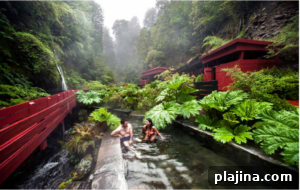
PHOTO: © SERNATUR LOS RÍOS
TERMAS GEOMÉTRICAS, CHILE
Entering the Termas Geométricas complex, tucked into Chile’s Villarrica National Park, feels like stepping into a hidden sanctuary. Architect Germán del Sol created nearly two dozen slate-lined thermal pools that blend with the surrounding forest, connected by a dramatic network of red wooden walkways that contrast with the deep green vegetation.
The water emerges from the ground at more than 176°F and cools as it flows through the series of pools, so each pool offers a different temperature and scenery along the walk toward the waterfall at the top. The waterfall itself is not warm and provides an intense cold-plunge experience in winter, but the cascading route to it is enchanting and well worth the walk even if you skip the icy finish.
Visit early in the morning or late afternoon to avoid larger crowds. Rainy or misty weather enhances the atmosphere as fog weaves through the walkways, making the site feel even more magical. Bring water shoes or sandals—wooden paths can be slippery year-round and cold during cooler months.
Beyond the springs, Villarrica National Park offers excellent hiking, including trails with views of the active Villarrica Volcano. The region is also home to Mapuche communities, where local crafts, cuisine and cultural encounters can enrich your visit.
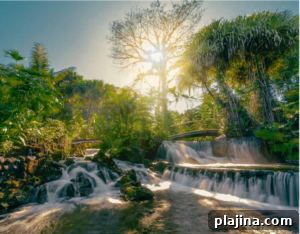
PHOTO: © TABACÓN THERMAL RESORT & SPA, COSTA RICA
TABACÓN THERMAL RESORT & SPA, COSTA RICA
Set beneath the Arenal Volcano, Tabacón Thermal Resort & Spa showcases how natural thermal activity and thoughtful design can coexist. Rather than artificial pools, Tabacón features a naturally heated river that cascades through a series of pools and waterfalls nestled in rainforest. Winding paths continually reveal new vignettes, making it easy to lose track of time as you explore the grounds.
The mineral-rich waters are credited with enhancing circulation, reducing stress and supporting skin health. Lush tropical vegetation frames every pool, and the sounds of wildlife and rushing water create a serene atmosphere. For deeper relaxation, book a spa treatment in one of the resort’s private bungalows to enjoy volcanic mud wraps, coffee exfoliations and other treatments in an open-air setting.
Day visitors can access the springs without staying overnight, though guests have added perks such as exclusive access to the adults-only Shangri-La Gardens. The resort’s location also makes it a convenient base for exploring the broader Arenal area.
After soaking, Arenal National Park offers activities like zip lining, white-water rafting, and hiking on lava trails with volcano views, along with canopy walks and hanging bridges through the forest. Nearby La Fortuna provides lively dining options showcasing local dishes and fresh tropical juices.
HAKONE, JAPAN
Japan’s volcanic geology supports thousands of onsens, and Hakone stands out for variety and accessibility. Just about 90 minutes from Tokyo, Hakone offers historic bathhouses, modern onsen resorts with Mount Fuji views, and traditional ryokans with open-air baths—soakers can choose the experience that suits them best.
Staying in a ryokan gives one of the most authentic onsen experiences, often including open-air baths that let you relax in natural hot spring water while enjoying surrounding mountain views. Options range from contemporary resorts with infinity-style baths to rustic public bathhouses with stone pools and cascading water features.
Hakone also features cultural and scenic attractions: the Hakone Open-Air Museum integrates art and landscape, boats on Lake Ashi provide perspectives of Mount Fuji on clear days, and the Owakudani geothermal valley offers unique culinary curiosities, such as eggs boiled in sulfuric springs.
Respect onsen etiquette: wash thoroughly before entering communal baths, most onsens do not permit swimsuits, and some facilities restrict entry for guests with visible tattoos—check policies before visiting.
PHOTOS:
© MNSTUDIO | DREAMSTIME
TERME DI SATURNIA, ITALY
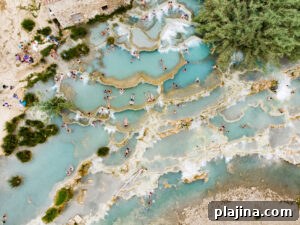
In the rolling hills of Tuscany, Terme di Saturnia’s thermal waters have been celebrated for millennia. According to local legend, the springs were created by a strike of the god Saturn, and today they flow at a consistent 99.5°F, rich in sulfur, carbon and other minerals valued for therapeutic benefits.
The destination includes a refined spa resort as well as the free, natural pools known as the Cascate del Mulino. Limestone terraces shape bright blue, steaming pools that sit dramatically in the countryside. While the resort provides amenities and controlled access, the wild pools of the Cascate del Mulino remain an unforgettable experience. Note that mineral-rich water can discolor swimwear and leave a light scent on the skin, so consider a dark swimsuit and rinse thoroughly after soaking.
Nearby Saturnia is a medieval town with cobblestone streets, traditional trattorias and regional wines—perfect for a post-soak meal or tasting. The surrounding Tuscan landscape also invites leisurely drives and vineyard visits.

PHOTO: © VISIT HOT SPRINGS
HOT SPRINGS, ARKANSAS
Hot Springs, Arkansas, offers a different kind of thermal appeal. Rather than dramatic natural settings, the springs emerge within a historic urban context along Bathhouse Row inside Hot Springs National Park. The site’s value is in its architectural elegance, cultural history, and the enduring spa traditions that developed here in the late 19th and early 20th centuries.
Restored bathhouses such as Buckstaff Bathhouse and Quapaw Baths & Spa provide traditional thermal baths, steam treatments and hydrotherapy that recall earlier wellness practices while also offering modern spa services. The Fordyce Bathhouse, now a visitor center, showcases ornate mosaic floors and a stained-glass dome amid Renaissance Revival and Spanish-influenced design.
Beyond the bathhouses, the park allows visitors to see springs where hot water reaches the surface. The Grand Promenade runs behind Bathhouse Row for scenic walks, and nearby overlooks provide panoramic views of the Ouachita Mountains. Hot Springs blends heritage and nature to create a distinctive thermal destination worth exploring.