
Rancid, air-cured shark meat. A pudding made from sheep’s “pluck” (heart, liver and lungs). And “mountain chicken” — actually one of the world’s largest frog species — which many say tastes remarkably like poultry.
These specialties, which can seem off-putting to outsiders, are a few of the more unusual national dishes from around the globe. What may be unpalatable to visitors often embodies something essential and unique — and frequently delicious — about the homelands that cherish them.
Not every country, however, can claim a single, undisputed national meal. Some nations are vast, ethnically diverse, or shaped by histories that resist a single culinary identity. Would a New Englander abandon clam chowder for New Orleans gumbo? Would Beijing set aside Peking duck for Hong Kong dim sum? Would Burgundy shrug off beef bourguignon in favor of Provence’s ratatouille?
The answer, for most places, is no.
Some celebrated foods — like French foie gras or Russian beluga caviar — are emblematic of fine dining traditions but don’t qualify as national dishes. They are often expensive, served on special occasions, and prized by gourmets.
A true national dish is typically simple, hearty and rooted in everyday life. Think of El Salvador’s pupusa: a thick corn tortilla stuffed with ground pork, soft cheese and refried beans. Or Vietnamese pho: a beef and rice noodle soup commonly prepared by street vendors and enjoyed for breakfast, lunch or dinner. The finest pho is often said to come from northern Vietnam, where bones simmer for hours with ginger, cloves, star anise and cinnamon to create a deeply savory broth.
Street vendors matter. In Thailand, for example, most locals expect to eat som tam — shredded green papaya salad — from a hawker who can tailor the dish with lime, bird’s-eye chilies, fish sauce and palm sugar to the diner’s taste.
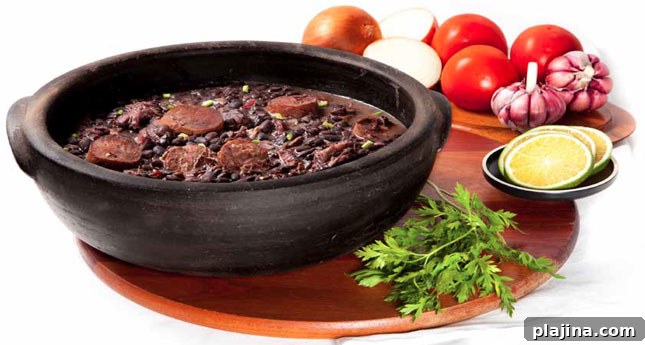
Weekend rituals shape national tastes. In Brazil, a typical Saturday meal is feijoada: black beans slow-cooked with bacon, chorizo and linguiça, plus salted beef, served over rice and often followed by a nap. Botswana, a major beef exporter, has an even simpler favorite: seswaa. Beef is boiled for hours in salted water, then fried or shredded and served over polenta or cornmeal porridge.
Geography influences cuisine. Cambodia, home to the Tonlé Sap — Southeast Asia’s largest lake and a prolific freshwater fishery — celebrates amok trey, steamed curried fish. Snakehead or other freshwater fish are coated in coconut milk mixed with kroeung (a Khmer spice paste of lemongrass, turmeric, garlic, dried chili and shallots), wrapped in banana leaves and steamed into a fragrant, mousse-like entrée.
Hainanese chicken rice © Tae208 | Dreamstime.com
Singaporeans swear by Hainanese chicken rice, brought to the island by Chinese immigrants and now sold at every hawker center. The dish is straightforward: poached chicken, ginger-infused rice and essential dipping sauces — chili and soy-sesame oil — that elevate the flavors. So beloved is it that Singapore Airlines has served it in-flight.
National dishes can also serve political and cultural purposes. Edwin Frank, a Grenadian tourism officer and cook, recalls how a Middle Eastern-influenced dish called pelau was once popular in parts of the Caribbean. After Grenada gained independence from Britain in 1974, officials selected Oil Down as the island’s official national dish. Oil Down is a communal, one-pot meal of breadfruit, dasheen (taro leaves), vegetables, salted beef, chicken, coconut milk, turmeric and spices. The name refers to the oil released from the coconut milk during the long cooking process. Traditionally made in a large, three-legged pot over a wood fire, Oil Down is central to gatherings — beach parties, cricket matches, reunions and even funerals — and the cooking itself is a social event.
Breadfruit, now common throughout Caribbean islands, has its own backstory: varieties collected by William Bligh during his voyages were introduced to the region in the late 18th century as a potential staple. Although initially not widely accepted by enslaved people accustomed to plantains and cassava, breadfruit eventually became integrated into local cuisine. It appears in dishes such as Grenada’s Oil Down, St. Vincent’s roasted breadfruit with fried jackfish, and as a side across many islands.
Another translocated crop, the ackee, arrived in Jamaica aboard an African slave ship and was named Blighia sapida in honor of William Bligh. When boiled and ripe, ackee resembles scrambled eggs and is sautéed with salted cod and tomatoes to create Jamaica’s national dish.
Almost every Caribbean island boasts a signature plate: the Bahamas favor cracked conch with peas and rice; Barbados prizes cou-cou (cornmeal and sliced okra) with fried flying fish; Dominica historically served mountain chicken — the Leptodactylus fallax frog — though the species is now critically endangered and protected. The frog survives now mostly in name, appearing on Dominica’s coat of arms rather than on menus.
Colonial histories left lasting marks on cuisine. Mozambique still favors frango à portuguesa, a stew of fried chicken with onions, garlic, tomatoes, crushed red pepper and sherry, reflecting Portuguese influence. Macau cherishes the Portuguese pastel de nata (egg tart), now so popular that it appears in fast-food franchises across East Asia.
Cape Malay bobotie © Mikefoto | Dreamstime.com
South Africa’s bobotie demonstrates the mix of cultures at the Cape: an Indonesian-style minced-meat casserole flavored with curry and topped with an egg custard, often garnished with chutney, fruit and nuts. Brought by settlers and exiles from Batavia (now Jakarta), bobotie has become a national favorite.
On the Dutch-influenced islands of Aruba and Curaçao, keshi yena was born in slave kitchens. Cored Gouda or Edam rinds were filled with chicken, vegetables, olives, raisins, capers and Scotch bonnet peppers, then baked until the cheese melted. Today it remains a signature dish of the Dutch Antilles.
Some national dishes spotlight offal and traditional thrift. Scotland’s haggis mixes sheep’s pluck with minced onion, oatmeal, suet and salt, stuffed into a sheep’s stomach and simmered for hours. Celebrated in Robert Burns’ 1787 poem “Address to a Haggis,” the dish is traditionally enjoyed with Scotch whisky.
Other specialties seem almost designed to challenge the palate. Lutefisk, enjoyed in Norway and Sweden, is dried cod rehydrated and treated with lye over many days before being cooked. Its preparation is lengthy and its texture unusual, and reactions range from affection to revulsion.
Iceland’s hakarl is even more extreme. Greenland shark flesh is poisonous until processed; traditionally the carcass is beheaded, gutted, buried in a gravelly beach to ferment for months, then air-cured further before being cut into cubes and served, usually with strong spirits such as akvavit. The smell and taste are sharp and ammonia-like, yet hakarl endures as a cultural touchstone, honoring ancestors who survived harsh coastal winters.
Food opinions vary widely: chef Anthony Bourdain famously called hakarl “the single worst, most disgusting and terrible-tasting thing” he had ever eaten, while others insist it must be tasted to be understood.
Whether comforting and familiar or challenging and strange to outsiders, national dishes reveal histories, environments and values. They are living expressions of culture — and an invitation to try something new. Bon appétit!