
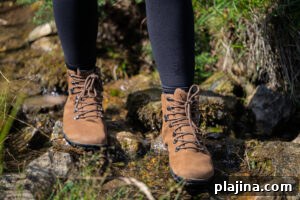
Water, bear spray and good navigation are essential for a long hike, but none of that matters much if your boots make every step miserable. Ill-fitting hiking boots — stiff uppers, heels that rub, or toe boxes that squeeze — can ruin a trip. Often the problem isn’t simply padding or materials but how the footwear forces your foot to move unnaturally. That’s where modern barefoot-style shoes come in: not the flimsy, open-toed sandals of decades past, but durable, well-made footwear that supports your journey while letting your feet move naturally and comfortably across varied terrain.
Andrew Jackson, founder and CEO of U.K.-based Freet Barefoot Shoes, draws on years of experience in performance footwear and a lifetime of outdoor activity to build shoes for the kinds of walks and hikes that test both person and product. A veteran of the hiking-boot industry who has logged miles during military service and extended treks, Jackson — together with his daughter Daisy Jackson, Freet’s sales and marketing director — shared the thinking behind their trail-ready designs and why those choices matter for anyone who spends time on their feet outdoors.
© Freet Footwear
Global Traveler: What inspired you to leave the mainstream footwear industry to step out on your own?
Andrew Jackson: After many years of playing sports, spending long stretches in the military and getting outdoors whenever possible, I developed persistent knee pain. I had worked in the footwear industry for a long time and tried some of the best boots available, but the discomfort made me question whether conventional designs were doing the right thing for the body. Discovering barefoot-style footwear felt like a revelation: it aligned with how feet and lower limbs are meant to function. Rather than piling on structures that change how the foot works, I wanted to craft footwear that protects from rough ground while enabling the foot to move, flex and strengthen naturally.
GT: From your industry background, what design elements did you decide were essential to make footwear that better matches how humans actually walk?
AJ: My time in the industry taught me that better footwear isn’t about adding features for the sake of it; it’s about adding what truly matters. For us that means focusing on durability, secure traction, protection where you need it, and immediate comfort — all while allowing the foot to function naturally. Key elements include a wide toe box that gives toes room to splay, a flexible sole construction, and a zero-drop profile that keeps the heel and forefoot level to preserve natural posture. Every design choice answers one question: does this help the foot move more naturally while still performing in real-world conditions? If not, it doesn’t make the cut.
© Freet Footwear
Daisy Jackson: That principle guides everything we do. As a family-run business, we personally wear and test every new model across different environments — mountain trails, urban streets, travel and everyday use. That hands-on testing feeds back into incremental improvements, so the shoes reflect real-world performance rather than lab-only specs.
GT: Some people equate “barefoot” with minimal protection and inadequate support, especially for rough hiking. How does Freet balance natural movement with protection?
AJ: That’s a common misconception. Barefoot-inspired footwear doesn’t mean walking directly on the ground unprotected; it means allowing the foot to move naturally while still shielding it from hazards. At Freet we engineer grip, abrasion resistance and impact protection exactly where they’re needed, and we avoid unnecessary structure that restricts natural motion. A roomy toe box, a zero-drop sole, and a sole that flexes with the foot all allow the foot to sense ground and respond naturally, which reduces strain and improves comfort over long distances.
We also avoid a one-size-fits-all outsole. Our range includes purpose-built outsoles and midsole constructions tailored to specific uses. For everyday urban walking we use compounds tuned for comfort and longevity; for mixed terrain we deploy tread patterns and rubber compounds that balance traction and flexibility; for demanding mountain routes we use more aggressive lugs and durable rubber to handle rock, mud and steep gradients. Matching outsole and midsole construction to the intended activity delivers the right mix of ground feel, shock absorption and protection while maintaining the barefoot philosophy of natural movement.
© Freet Footwear
GT: Any final thoughts you’d like readers to take away?
DJ: We’re seeing more people rethink what they want from footwear. Many consumers now prioritize long-term comfort and the ability to move naturally over simply adding thick cushioning or rigid control features. Our goal has always been to combine natural movement with practical protection and durability. Being a family business lets us stay close to every stage — design, development and real-world testing — which helps us remain true to that mission. Ultimately, the best footwear is the kind that keeps you comfortable, confident and capable wherever your adventures take you, whether that’s a city commute, a long-distance trail or a local loop in the hills.