
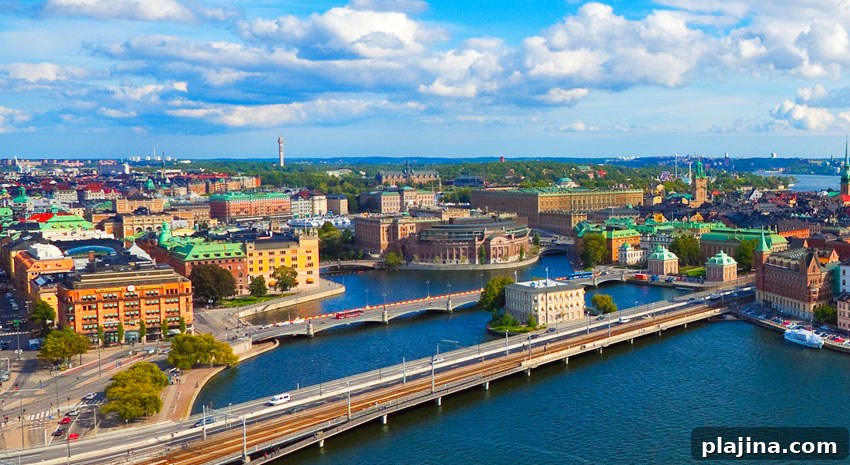
On a coastal archipelago in Scandinavia lies a dynamic capital where wrought-iron spires puncture the characteristically gray skies and crisp Nordic air defines much of the year. Despite the long winters, Stockholm pulses with innovation: cutting-edge technology, progressive social policies and the ubiquitous Swedish coffee that fuels the city’s ambitions.
After Silicon Valley, the Stockholm region ranks second globally for the number of billion-dollar companies and leads Europe in startups per capita, including numerous “unicorns” — privately held companies valued at over a billion dollars. The European Commission named the region Europe’s most innovative. In SparkLabs Group’s annual ranking of startup ecosystems, Stockholm tied with Los Angeles for fourth place. Anticipating a 30 percent population increase by 2040, the city introduced “Vision 2040: A Stockholm for Everyone,” a plan promoting sustainability across social, economic and democratic spheres.
At the close of 2017 Stockholm’s markets welcomed 96 new listings, 71 of them initial public offerings. Investments in Swedish startups that year reached $1.2 billion, supporting 442 new companies. Stockholm also aims to be at the forefront of connectivity: plans are underway to introduce Europe’s first 5G service powered by Ericsson, Telia and Intel.
The city’s rising global profile has attracted companies establishing satellite offices or relocating headquarters to Stockholm. Vistra, a global administrative and financial services firm, recently expanded into the market, drawn by Stockholm’s strong financial sector and concentration of asset managers. Major tech firms are also investing in local infrastructure: following Facebook’s data center investment, Amazon Web Services plans three data centers in the surrounding region.
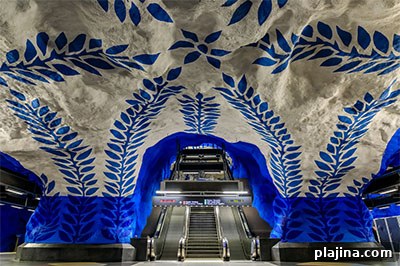
Stockholm Tunnel Rail art © SVETLANA DAY | DREAMSTIME.COM
Stockholm already hosts influential startups such as Spotify and Lifesum. Spotify, the world’s second-largest music streaming service, consistently adds more new subscribers daily than most competitors and recently relocated its headquarters to Urban Escape, a mixed-use complex of offices, residences, restaurants and hotels.
Urban Escape and the city’s broader vision encourage entrepreneurship. Residents who start businesses retain social benefits and health coverage, reducing the personal risk of launching new ventures. Successful entrepreneurs often reinvest in the ecosystem, creating funding and mentorship opportunities for others; the Norrsken Foundation is a notable example of a local organization that invests in tech for social good worldwide.
Stockholm’s innovation extends beyond business: the city pledged to become a global leader in eHealth and digitalization by 2025. Officials aim to modernize healthcare systems, beginning with a complete overhaul of electronic health records. Several startups develop mobile tools that let patients book appointments, view test results and access doctors’ notes. KRY is one example of a digital health platform offering virtual consultations and streamlined access to medical care.
Workplace wellness is also a priority in Stockholm’s corporate culture. Many companies integrate physical activity into the workweek; for example, sportswear brand Björn Borg requires employees to attend a one-hour fitness class each Friday at a nearby gym. Research from Stockholm University in 2014 found that mid-day exercise increases alertness and reduces sick days, supporting workplace policies that promote employee health and productivity.
Travel and infrastructure developments continue to support Stockholm’s growth. This summer, Lithuanian carrier Small Planet Airlines began seasonal service from Arlanda Airport to destinations in Albania, Croatia, Greece and the Canary Islands. Meanwhile, Swedavia, Sweden’s airport and real estate company, sold an Arlanda-adjacent hotel to investors who plan a new 215,000-square-foot, 503-room hotel under the Nordic Choice Hotels brand. Scheduled to open in 2019, the 14-story property will be the Nordic region’s largest airport hotel and part of Arlanda’s future Airport City, a development that will include shops, restaurants and enhanced transport links. With a 56 percent increase in passenger traffic since 2010 and several new intercontinental routes added in recent years, the airport expansion supports Stockholm’s emergence as a major business and travel destination.
CHECKING IN WITH PETER JANGBRATT
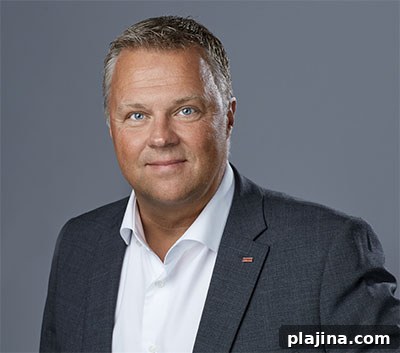
Peter Jangbratt © PETER KNUTSON
Country Managing Director in Sweden, Scandic Hotels
How has tourism in Stockholm changed in the past five to 10 years? What has been the catalyst for these changes?
Swedes travel more now than a decade ago, which has altered domestic travel habits — weekend trips to Stockholm are increasingly common. The city also draws many visitors from neighboring Nordic countries, and in recent years international tourists have discovered Stockholm as an appealing destination. Factors include travelers’ desire to explore beyond major European capitals, an expanding hotel market capable of serving international guests, and global interest in Scandinavian design.
What effect will the new Downtown Camper Hotel have on Stockholm’s tourism sector?
Open only a few months, Downtown Camper has quickly become popular with international guests. It blends urban energy with elements of nature, serving as a practical and welcoming base for exploring the city and recharging between activities.
How do the Downtown Camper Hotel’s amenities and services contribute to the wellness and health of its guests?
The hotel promotes a sustainable lifestyle by offering activities such as running clubs, yoga and kayaking, along with spa rituals and rooftop wellness treatments. Menus emphasize healthy and plant-based options alongside comforting global cuisine, supporting guests’ physical and mental well-being.
What makes the Downtown Camper Hotel stand out from other Stockholm hotels?
Scandic focuses on inclusive design and accessibility integrated into the hotel experience rather than added on. Features like subtle guiding lines for visually impaired guests and electric scooters for those who prefer not to walk long distances help more visitors enjoy the city comfortably.
Things to Do in Stockholm
Stockholm’s historic charm is best experienced in Gamla Stan, the medieval Old Town. This compact island hosts the Royal Palace, the Nobel Museum and several churches with towering bell towers. Narrow alleyways and colorful façades invite leisurely exploration.
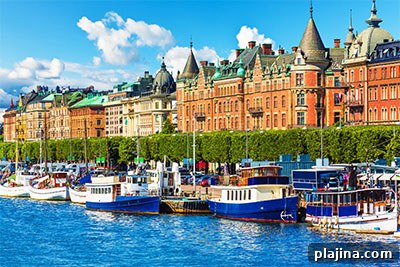
Old Town (Gamla Stan) © SCANRAIL | DREAMSTIME.COM
Nearby, the Vasa Museum is Scandinavia’s most visited attraction, showcasing the almost entirely reconstructed 17th-century warship Vasa, which sank in 1628.
Art is woven into Stockholm’s urban fabric: the city’s skyline, contemporary museums and the underground rail system all feature artistic design. Ninety of the tunnel rail’s 100 stations are individually decorated by artists, making the 60-mile network one of the world’s longest public art galleries. For concentrated collections, Moderna Museet on the island of Skeppsholmen houses modern and contemporary works by Swedish and international artists.
Stockholm: Just the Facts
Time zone: GMT +1
Phone code: Country code: 46 City code: 8
Currency: Swedish krona
Key industries: Timber, hydropower, iron ore
COMING AND GOING
U.S. citizens must hold a passport valid at least six months beyond their planned stay and do not need a visa for trips up to 90 days.
OFFICIAL LANGUAGE
Swedish
Stockholm Info to Go
Stockholm has two major airports: Bromma Airport near the city and Stockholm Arlanda Airport about 20 minutes north. From Bromma, Flygbussarna coaches run to the city center every 15 minutes; the journey takes about 20 minutes. From Arlanda, the Arlanda Express and regional buses connect directly to Stockholm Centralstation, offering quick access to the city.
Where to Stay in Stockholm
HOTEL AT SIX Start the day with a traditional Swedish breakfast and use the hotel’s broadcast and podcast studio. Evenings feature a cocktail bar hosting Tipsy Tea time. Hotel At Six, Brunkebergstorg 6, Norrmalm $$$
DOWNTOWN CAMPER HOTEL A central lifestyle hotel with a dedicated concierge and a rooftop wellness center that includes a pool and sauna. Brunkebergstorg 9, Norrmalm $$$
HOTEL RIVAL A stylish, creative hotel with a cozy bistro, meeting rooms and a 700-seat theater/event space. Mariatorget 3, Södermalm $$$
Restaurants in Stockholm
LILLA EGO Inventive Scandinavian dishes such as sturgeon caviar, kalix bleak roe and Arctic char presented with creative flair. Västmannagatan 69, Vasastan $$$$
OPERAKÄLLAREN Dine in an elegant, historic setting with refined, theatrical cuisine served by staff in formal attire. Opera House, Karl XII’s Square, Norrmalm $$$$
TAK A rooftop restaurant combining Japanese cuisine, panoramic city views and an expert saké selection; recognized for its high-quality business dining. Brunkebergstorg 4, Norrmalm $$$$