
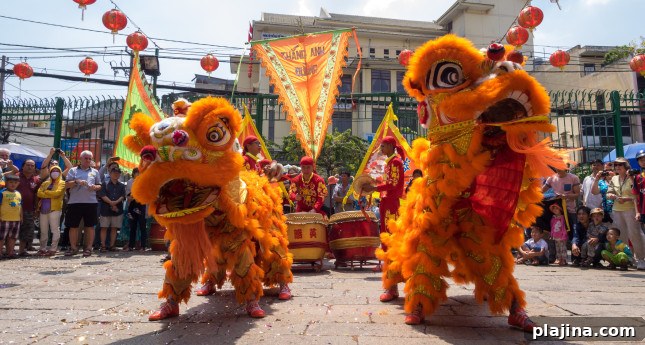
In traditional Vietnamese culture, Tết Nguyên Đán celebrates the arrival of spring and the beginning of the lunar New Year. The name literally means “Feast of the First Morning of the First Day,” reflecting its role as the most important holiday in Vietnam when families reunite, honor ancestors, and welcome new beginnings.
Observed according to the lunar calendar, Tết usually falls between late January and mid-February. Preparations begin weeks in advance: homes are cleaned and decorated, debts settled, and special foods prepared. Common traditions include giving lucky money in red envelopes to children and elders, displaying peach or apricot blossoms and kumquat trees, and presenting elaborate ancestral altars to invite prosperity and good fortune for the year ahead.
Food plays a central role in Tết celebrations. Among the most iconic dishes is bánh chưng (square sticky rice cake) in the north and bánh tét (cylindrical sticky rice cake) in the south, both made with glutinous rice, mung beans, and pork, wrapped in green leaves and boiled for hours. Families often gather to make these cakes together, turning the process into a meaningful communal ritual.
Many Vietnamese return to their hometowns for Tết, creating one of the largest annual migrations in the country as people travel to spend the holiday with family. Visits to relatives and friends are an important part of the festivities, marked by polite greetings, best wishes for health and prosperity, and the exchange of small gifts. Public celebrations include lion dances, fireworks, and cultural performances that showcase traditional music, costumes, and customs.
Tết is also a time for reflection and renewal. Customary practices encourage letting go of past grievances and starting the year with a clean slate. Important first visits of the year—known as “xông đất” or “first-footing”—are often planned carefully, as the first person to enter a home after midnight is believed to influence the household’s fortune for the coming year.
While modern life has introduced new ways to observe Tết, many families continue to uphold ancestral rites and long-standing customs, blending tradition with contemporary practices. This combination helps preserve the holiday’s deep cultural meaning while allowing it to remain relevant for younger generations.