
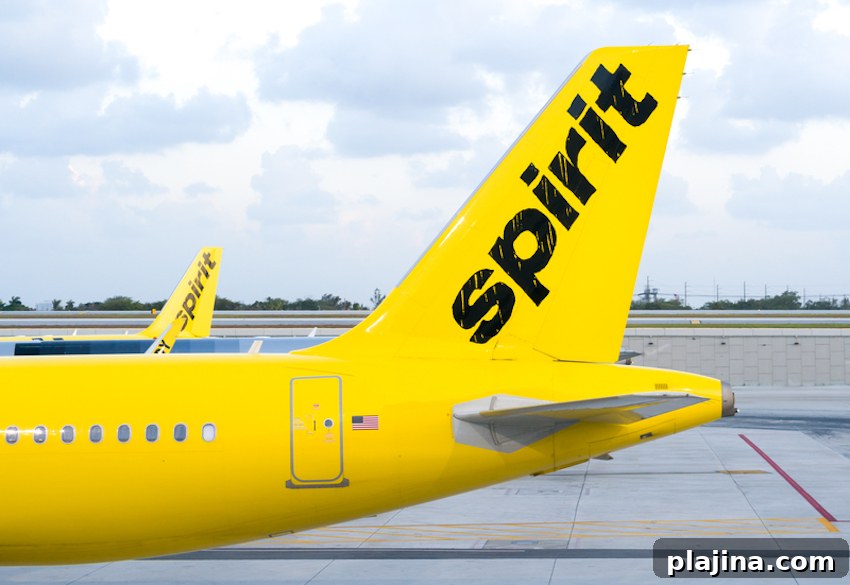
Low-cost carrier Spirit Airlines often gets a poor reputation, but one area where it has been excelling is punctuality. As of October, Spirit reported that only 11 percent of its flights were delayed, giving the airline the top spot for on-time performance and surpassing long-time leader Hawaiian Airlines, which dropped to second place. Delta Air Lines ranked third.
At the other end of the spectrum, Frontier Airlines had the weakest performance, with just 68.2 percent of its flights arriving on time. Spirit’s punctuality also outperformed larger legacy carriers such as American Airlines, whose on-time rate stood at 78.8 percent.
“We’ve been evolving over the last couple of years to transform our airline, so I’m really excited for our team to get a No. 1. Going back three or four years ago it was a different story,” said Greg Christopher, vice president of operations control center at Spirit Airlines, in comments to Simple Flying.
This turnaround marks a significant reversal for Spirit. In 2016 the carrier was rated worst for on-time performance for eleven consecutive months, but the airline’s leadership shifted priorities under CEO Bob Fornaro, making timely arrivals a focus and tying improvements to employee incentives and bonuses.
Improvements in on-time performance typically reflect a combination of operational changes: streamlined scheduling, better crew and aircraft allocation, enhanced ground operations, and proactive communication with air traffic control and airport partners. For an ultra-low-cost carrier like Spirit, maintaining punctuality can improve customer satisfaction and reduce costs associated with delays, such as crew overtime and aircraft repositioning.
While these gains are notable, on-time performance can fluctuate seasonally and in response to external pressures like weather, air traffic congestion, and maintenance issues. Continued attention to operational discipline and investment in processes will be necessary for Spirit and other airlines to sustain higher reliability over the long term.