
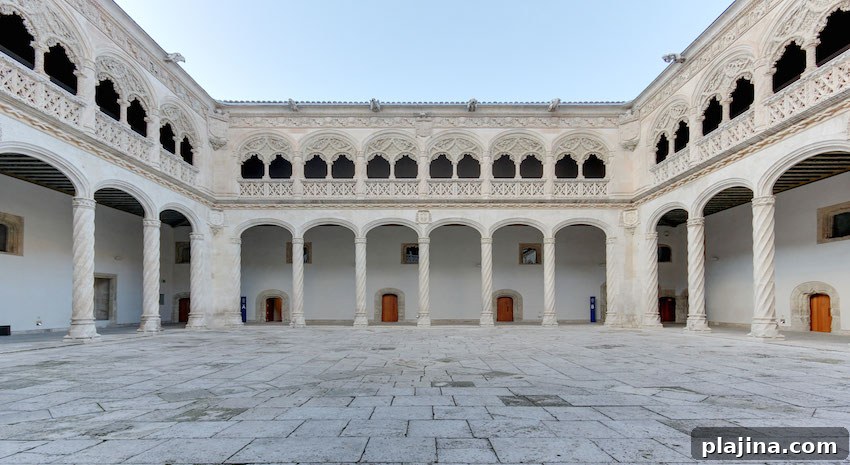
Spain is renowned for its rich history and artistic heritage, and the National Sculpture Museum offers a focused, compelling perspective on Spanish sculpture from the Middle Ages through the 19th century. The museum’s varied holdings include works in wood, bronze, stone, clay and ivory, with notable examples such as choir stalls, processional figures, altarpieces, funerary monuments and strikingly lifelike polychromed wooden statues.
© Museo Nacional de Escultura. Valladolid.
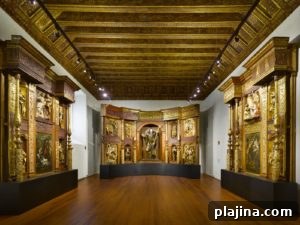
The museum highlights the work of prominent sculptors such as Juan de Juni, Alonso Berruguete and Gregorio Fernández, each presented in dedicated galleries that explore their techniques, themes and historical context. Among the collection’s standout pieces is Berruguete’s 16th-century Main Altarpiece of San Benito, a monumental work that demonstrates his sculptural innovation and dramatic composition. Another remarkable work is a 15th-century altarpiece depicting Christ’s Descent from the Cross, attributed to an anonymous master and notable for its expressive realism.
In addition to original sculptures, the museum displays pieces from the former National Museum of Artistic Reproductions, expanding the narrative of sculptural practice and reproduction techniques. The National Sculpture Museum is spread across several historic buildings, including the Villena Palace and the Casa del Sol, while the principal museum occupies an impressive 15th-century building. That main structure originally served as a training center for mystics, inquisitors and theologians, providing a distinctive architectural setting that enhances the visitor experience.
Visitors can expect a thoughtfully arranged collection that traces stylistic developments, devotional practices and technical advances in Spanish sculpture. Galleries emphasize both devotional and secular commissions, offering insight into how sculpture shaped religious life, civic identity and funerary traditions. Exhibition labels and gallery layouts guide viewers through chronological and thematic groupings, making it accessible for newcomers while still engaging for specialists.
Practical details: the museum’s various buildings maintain separate collections and display strategies, so allow time to explore more than one site if possible. The main museum complex is closed on Mondays, and visitors should check opening hours and any temporary exhibition schedules before planning their visit. Overall, the National Sculpture Museum provides an exceptional overview of Spain’s sculptural legacy, combining masterworks, intimate devotional pieces and a dramatic historic setting.