
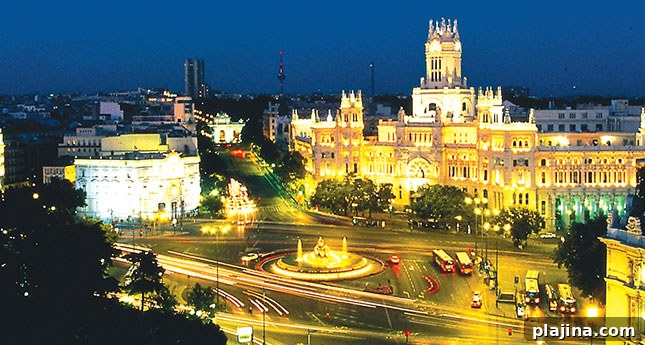
Bordered by the River Manzanares and located at the heart of the country, Madrid is Spain’s vibrant capital and the nation’s center for government, finance and business. As Southern Europe’s financial hub, the city hosts the headquarters and major offices of many of Spain’s largest companies. With a metropolitan population exceeding six million and a highly educated workforce, Madrid’s strong work ethic is reflected in its patron saint, Isidro the Laborer.
Madrid is home to some of Europe’s top business schools, including IE, IESE and ESADE, each regularly ranked among the world’s leading institutions. Major Spanish companies across food and beverage, pharmaceuticals, manufacturing, electronics, textiles, aviation and automotive industries base their operations here. Multinational firms have also established a significant presence: more than 4,500 foreign companies operate in Madrid, including research and development centers and offices for global names such as Lilly, Pfizer, Sanofi-Aventis, GlaxoSmithKline, Merck, Boeing, Hewlett-Packard, Siemens, Motorola, IBM, Telefónica and Vodafone.
Part of Madrid’s appeal to businesses lies in its supportive legal framework, competitive labor costs and advantageous tax incentives. Regional policies streamline administrative procedures, reduce paperwork and shorten waiting times, making it easier for entrepreneurs and foreign investors to establish operations. The Madrid City Council’s economic development agency, Madrid Emprende, specifically promotes foreign investment, while the Investors Support Office provides practical assistance—helping identify commercial and industrial spaces, offering temporary office facilities, guiding administrative processes and advising on legal, financial and family relocation matters such as schooling.
Tourism has grown rapidly in recent years and is now a major engine of Madrid’s economy. The city has launched targeted initiatives to attract visitors from key international markets. A new partnership with Tokyo focuses on increasing cultural and leisure travel between the two capitals, complementing existing tourism exchange programs with São Paulo, New York, Buenos Aires and Mexico City. The Tokyo collaboration is particularly valuable because Japanese visitors spend considerably more per day—on average around 230 euros compared with the international average of about 96 euros.
Beyond business, Madrid offers a high quality of life. The city enjoys a pleasant Continental-Mediterranean climate, an excellent public healthcare system, diverse educational opportunities and abundant cultural and outdoor attractions. It is consistently ranked among the safer major European cities to live in, making it an attractive choice for residents and expatriates alike.
Diversions
Exploring Madrid on foot is rewarding, with the Metro de Madrid providing efficient connections for longer distances. Must-see historic landmarks include Puerta de Alcalá, the decorative gate at Plaza de la Independencia, and Casa de Cisneros at Plaza de la Villa, a refined palace now linked to the Town Hall.
The city showcases remarkable architecture and churches. La Capilla del Obispo (Bishop’s Chapel) in Plaza de la Paja, dating to 1535, is a notable example of Gothic-influenced design. The Basilica de San Francisco el Grande on Carrera de San Francisco impresses with its grand dome, six side chapels and an art collection that includes works by Zurbarán and Goya.
Palacio Real on Calle Bailén offers guided tours through rooms filled with art, tapestries and frescoes, set amid elegant parkland near Plaza de Oriente. Madrid’s world-class museums display both contemporary works and masterpieces from Spanish greats such as Dalí, Goya, El Greco and Picasso. Highlights include Museo Nacional del Prado, Reina Sofía and CaixaForum, each presenting important national and international collections.
No visit is complete without experiencing flamenco. Tablaos—traditional flamenco clubs—typically begin performances late in the evening, so reservations are recommended. Notable venues include Las Carboneras and Cardamomo, where authentic shows capture the passion of the art form. Some venues offer dinner with the performance.
For other cultural spectacles, Madrid offers bullfights at the historic Plaza de Toros Las Ventas during the season from March to October, usually on Sundays. Football fans can attend matches at Real Madrid’s Santiago Bernabéu Stadium when tickets are available. For opera and grand performances, Teatro Real, opposite the Palacio Real, hosts top international artists; its Café de Palacio on the sixth floor provides panoramic views of the palace and La Almudena Cathedral during intermission.
Just The Facts
Time Zone: GMT + 2
Phone Code: 34 Spain, 91 Madrid
Currency: euro
Entry/Exit Requirements: U.S. citizens must have a passport valid for at least three months beyond the period of stay and may remain up to 90 days without a visa.
Official Language: Spanish
Key Industries: Textiles, food and beverages (including fruit and wine), metals and metal manufacturing, chemicals, shipbuilding, automobile production, machine tools, tourism, ceramics and refractory products, footwear, pharmaceuticals and medical equipment.
Info To Go
Metro de Madrid Line 8 links Madrid-Barajas International Airport (MAD) to the city center in about 30 minutes (around 2 euros), with stations serving Terminal 4 and another serving Terminals 1, 2 and 3. The EMT (Madrid Municipal Transport Company) provides regular bus service from the airport to the city center.
Lodging
Hospes Madrid
A modern boutique hotel with 41 rooms and a full-service Bodyna Spa, located adjacent to Parque del Retiro and facing Puerta de Alcalá. Plaza de la Independencia 3, tel 34 91 432 2911.
Hotel Ritz, Madrid
An elegant, historic hotel within walking distance of the city center, the Prado and the Thyssen Museum. Plaza de la Lealtad 5, tel 34 91 701 6767.
Radisson Blu Hotel
Situated near CaixaForum and opposite the Prado, this property offers boutique-style rooms designed by leading Spanish designers. Calle Moratín 52, tel 34 91 524 2626.
Dining
Bistro Madrigal 14
Chef Andrés Madrigal offers refined takes on regional comfort dishes. Closed Sunday and Monday; reservations recommended. Calle del Arte 14, tel 34 91 384 6807.
Le Cabrera
A popular tapas bar spread over two levels with an extensive wine selection. Closed Sundays. Calle Bárbara de Braganza 2, tel 34 91 319 9457.
DiverXO
Contemporary Spanish-Asian fusion in minimalist surroundings; signature dim sum combines Spanish ingredients with creative presentation. Closed Sunday and Monday evenings. Calle del Pensamiento 28, tel 34 91 570 0766.
Checking In With Miguel Ángel Villanueva
Madrid City Councilor and Head of the Municipal Department of Economic Affairs, Employment and Citizen Participation
What Is The Most Exciting Area Of Economic Growth In Madrid?
Tourism stands out as one of Madrid’s most dynamic sectors. Despite global economic challenges, foreign tourism has shown strong growth, with a notable increase in international visitors over the previous year.
Has There Been Any Downside To The City’s Economic Growth?
Maintaining and creating employment remains a top priority. Although Madrid’s employment figures have fared better than the national average, some sectors—particularly construction and real estate—experienced significant job losses during the economic downturn. Social Security registrations declined, but recent monthly trends show the rate of job losses slowing, and the labor market is beginning to stabilize.
How Does Madrid’s Comparatively Low Minimum Wage Reconcile With Its High Cost Of Living?
While average Spanish wages are below the EU mean, the minimum wage applies to a relatively small portion of the workforce and is not the best indicator of general living standards. Purchasing power is a more relevant measure: Madrid’s purchasing power in recent years has been significantly higher than the national average and well above the EU average, reflecting the city’s economic strength and competitive cost of living compared with other leading global cities.
What Is Madrid’s Business Outlook For 2011?
The global economic landscape presents both challenges and opportunities. Madrid’s diversified, service-based economy—where services account for more than four fifths of economic activity—helps buffer the city. Supported by active local economic development policies, the presence of global companies and steady tourism, Madrid anticipated a modest recovery and positive GDP growth after a period of contraction.