
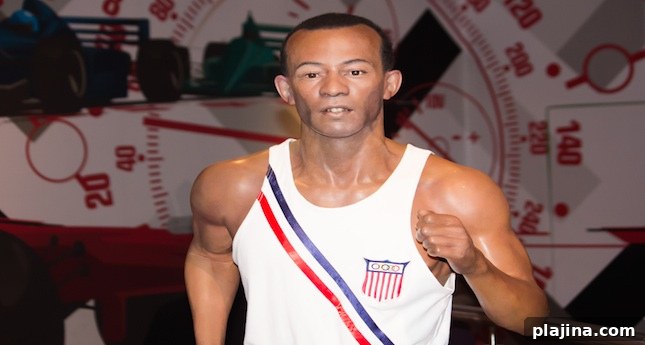
Through Aug. 28, The Illinois Holocaust Museum & Education Center in Skokie presents Nazi Olympics: Berlin, 1936. The year 2016 marks the 80th anniversary of the 1936 Olympic Games, which the Nazi regime used as a global platform to promote ideas of racial supremacy. This exhibition examines the political and cultural controversies surrounding the Games, celebrates the achievements of athletes who competed, and honors the legacy of Olympians Jesse Owens and Ralph H. Metcalfe Jr.
The display includes historical photographs and film footage from the 1936 Games, as well as personal testimonies from athletes who were excluded because of their ethnicity. Together, these materials illuminate how sports were manipulated for propaganda, and they give voice to those whose opportunities were denied.
Several public programs accompany the exhibition. On March 6, Breaking Barriers: Equality in Sports features a conversation with two-time Paralympian Susan Katz and Hudson Taylor, an All-American wrestler and founder and director of Athlete Alley, who has worked to raise awareness about challenges faced by LGBT athletes, including during the Sochi 2014 Winter Olympics. On April 17, students from Northwestern University will present a live performance of excerpts from the musical Gold, which reflects on themes connected to the exhibition.
On July 28, the museum hosts a screening and discussion of the documentary Liga Terezin, the story of a group of Jewish soccer players who organized teams and played matches in the Terezin ghetto as an act of cultural resistance and survival. This program highlights the role sports played in preserving dignity and community under extreme oppression.
The exhibition and its programs together offer historical perspective and encourage reflection on the intersections of athletics, politics, and human rights. Visitors can expect a thoughtful presentation of archival material and contemporary commentary that connects the 1936 Games to broader issues of discrimination and inclusion in sports.