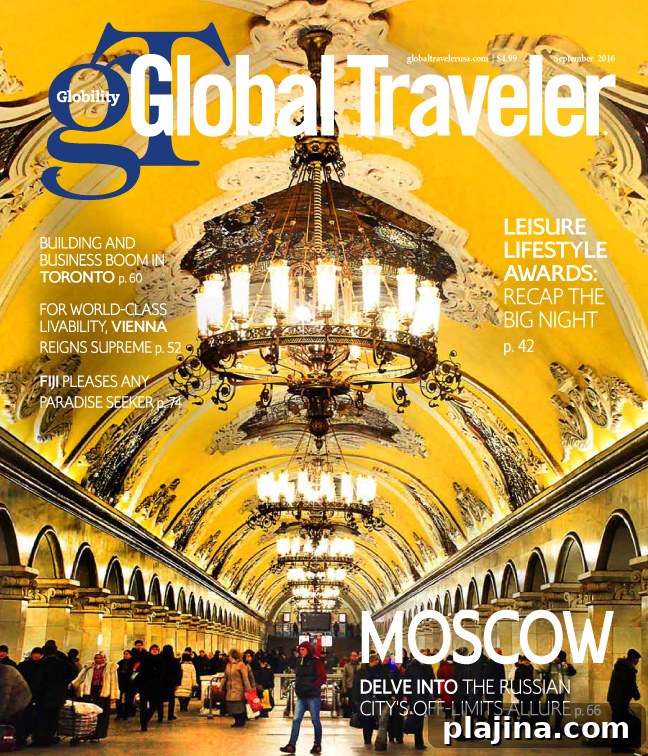
MOSCOW METRO © JULIA161 | DREAMSTIME.COM
Exploring the Moscow Metro: History, Design, and Everyday Life
The Moscow Metro is more than a transport system; it is a living museum of Soviet and Russian history, an architectural showcase, and a vital part of daily life for millions. Opened in 1935, the network has grown into one of the world’s busiest and most extensive subway systems. Its stations range from modest functional stops to grand halls decorated with sculptures, mosaics, chandeliers, and reliefs, reflecting the periods and ideologies during which they were built.
Originally intended to demonstrate the achievements of the Soviet state, many of the early stations were designed as “palaces for the people.” Architects and artists collaborated to create richly adorned spaces that celebrated labor, military victory, and socialist ideals. Materials such as marble and bronze, elaborate lighting fixtures, and figurative artwork were common, giving stations a monumental character that still impresses visitors today.
Architecture and Artistic Features
The variety of architectural styles across the system illustrates changing tastes and priorities over decades. Early stations exhibit Stalinist grandeur with ornate detailing, high vaulted ceilings, and extensive ornamentation. Later additions from the Khrushchev and Brezhnev eras reveal a shift toward more utilitarian design, prioritizing efficiency and cost-effectiveness while still incorporating decorative elements where possible.
Many stations feature themed artwork that honors notable events, professions, or cultural achievements. Sculptures of workers and soldiers, mosaics depicting historical scenes, and bas-reliefs are woven into the station fabric, creating a narrative of collective memory. Ceiling frescos and chandeliers lend a sense of ceremony to platforms, while stained glass and ceramic panels add color and texture.
Engineering and Practical Design
Beyond aesthetics, the Moscow Metro is a feat of engineering. Deep-level stations serve as bomb shelters and were constructed to withstand air raids, a reflection of Stalin-era concerns about wartime threats. The system’s tunnels and pylons follow complex underground geography, and its rolling stock and signalling have been continuously upgraded to handle heavy passenger volumes.
Despite the grandeur of some stations, the system is designed for high throughput. Wide platforms, multiple entrances, and efficient transfer corridors help move commuters quickly. Modernization projects have focused on accessibility, safety, and passenger information systems, bringing technology such as digital displays and automated announcements into older stations while expanding capacity with new lines.
Everyday Experience and Cultural Significance
For Muscovites, the Metro is an integral part of daily routine. Commuters rely on tightly scheduled services, predictable connections, and a dense network that reaches into suburban areas. During peak hours, trains arrive at short intervals, and platforms can become extremely crowded, yet the system’s organization and discipline ensure relatively smooth flows.
The Metro also functions as a cultural landmark. Tourists often include a station-hopping itinerary when visiting Moscow to admire the most ornate halls and artistic installations. Photography and guided tours highlight stations like Komsomolskaya, Mayakovskaya, and Ploshchad Revolyutsii, where statues and mosaics serve as reminders of different chapters in Russian history.
Preservation and Modern Challenges
Preserving historic stations while meeting contemporary needs poses a continual challenge. Renovation projects must balance conservation of original artworks and architectural details with upgrades for fire safety, accessibility, and operational efficiency. Budget constraints and the need to minimize disruption to daily commuters require careful planning and phased works.
Expansion plans aim to extend coverage and reduce congestion, with new lines and stations designed to integrate modern aesthetics and materials while respecting the heritage of older parts of the network. Efforts to improve signage, lighting, and passenger amenities are part of a broader strategy to make the Metro both functional and welcoming.
Conclusion
The Moscow Metro remains a distinctive urban institution where transportation, history, and art intersect. Its stations tell stories of political eras and cultural values, while its daily operation supports millions of commuters. Whether appreciated as architectural masterpieces, urban infrastructure, or historical artifacts, the Metro continues to occupy a central place in Moscow’s public life.