
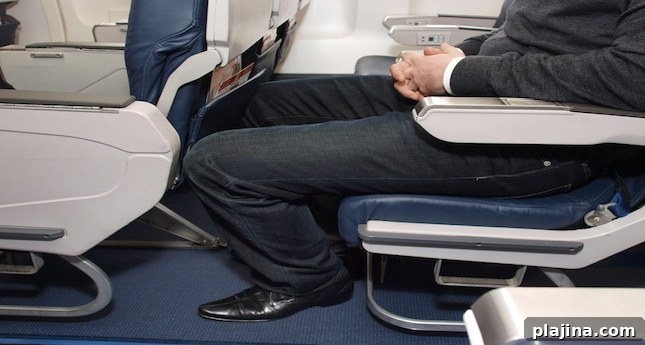
Economy-class passengers had hoped for relief from shrinking legroom, but last month the U.S. Senate rejected a proposal from Senator Chuck Schumer that would have directed the Federal Aviation Administration to set minimum seat-space standards. The amendment would also have required U.S. airlines to publish seat dimensions on their websites. The proposed rules would have applied only to American carriers.
The measure was introduced as an amendment to the FAA reauthorization bill and failed on a 42–54 vote, according to Travel Weekly.
Similar efforts have surfaced before. In February, Congressman Steve Cohen proposed comparable requirements, but his bill was also blocked. Cohen noted that average legroom (measured as seat pitch) has fallen over the decades—from about 35 inches in the 1970s to roughly 31 inches today—while seat width has narrowed from around 18 inches to about 16.5 inches since airline deregulation.
Airlines continually adjust cabin configurations to increase capacity and reduce costs, experimenting with tighter seating arrangements and different layouts. Without federal standards, those changes are left to carriers’ discretion, leaving passengers to compare offerings and choose flights based on comfort, price and schedule rather than any guaranteed minimum seating dimensions.
Advocates for regulation argue that minimum standards and transparent disclosure of seat measurements would help consumers make informed choices and could curb the trend toward ever-smaller seats. Opponents counter that such rules could raise fares or limit airlines’ flexibility to innovate in cabin design.
For now, the industry continues to balance economics, safety and passenger experience on its own terms. Whether future legislation will succeed or if market pressure from travelers will prompt airlines to standardize or improve seating remains uncertain.