
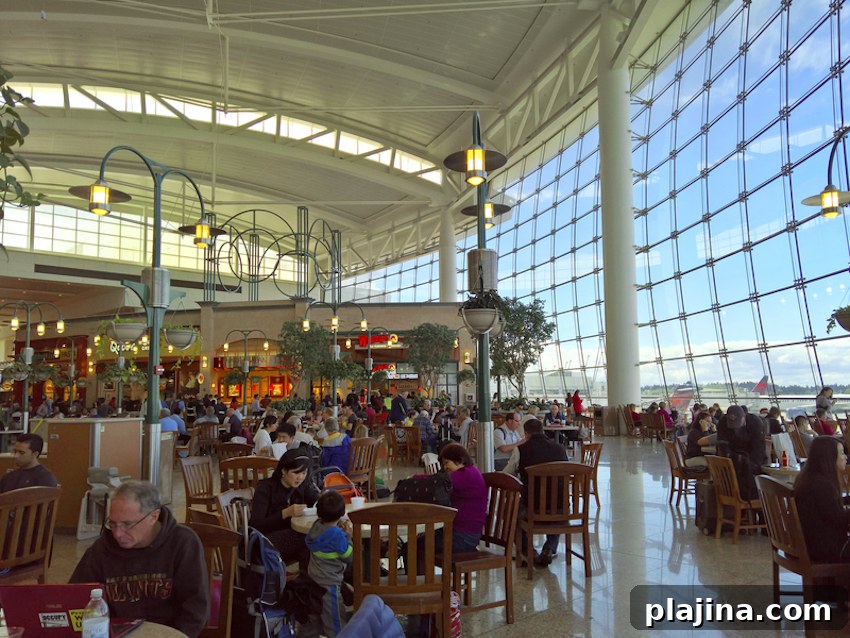
Seattle-Tacoma International Airport tested a pilot program that permitted visitors without boarding passes to access the post-security areas of the terminal.
The SEA Visitor Pass program gave non-traveling guests the opportunity to attend events, dine, shop, and enjoy airport amenities beyond the security checkpoint without needing a flight ticket.
“It’s been 17 years since anyone without a ticket has been able to enjoy areas of the airport beyond security. And yet some of the airport’s best features are there — great restaurants, live local musicians in the concourses, and outstanding views of aircraft with Mt. Rainier and the Olympic Mountains as a backdrop,” said Ryan Calkins, commissioner of the Port of Seattle. “Airport staff continues to explore ways to enhance the customer experience, both for airport enthusiasts and for families who want to spend time together. This is a pilot program for now, but we’re eager to learn whether the public supports making it a permanent option.”
The pilot ran from Nov. 8 through Dec. 14. During that period, the Port of Seattle evaluated the program’s operational feasibility, safety implications, and public interest to determine whether it should be extended or implemented on a permanent basis.
Feedback collected during the pilot helped airport officials assess how visitor access affects security workflows, passenger flow, concessions and dining operations, and overall customer satisfaction. The Port balanced enthusiasm for increased community access with the need to maintain efficient security screening and uninterrupted service for ticketed passengers.
If adopted permanently, a visitor pass program could allow local residents and out-of-town guests to experience airport amenities and events without traveling. Potential benefits include increased revenue for airport retailers and restaurants, enhanced community engagement, and opportunities to showcase local culture within the terminal. Any long-term plan would be developed with input from Transportation Security Administration partners and other stakeholders to ensure safety and minimal disruption to daily operations.
For now, the Port’s pilot represents a cautious step toward expanding public access to SEA’s post-security spaces while gathering the data and public input needed to make an informed decision.