
Earlier this year, Seattle launched a playful campaign suggesting it might be Mother Nature’s favorite city — and with good reason. The city protects more than 6,000 acres of parkland, maintains a 28 percent tree canopy, offers more than 200 miles of shoreline and frames its skyline with distant, soaring mountains. Those natural assets draw travelers: a recent study found both leisure and business visitors cite Seattle’s abundant outdoor offerings as a key reason to plan a trip to the Pacific Northwest.
“Seattle is well-suited to meet travelers’ desires to be in nature while still being in a thriving city,” said Stephanie Byington, chief marketing officer and senior vice president of Visit Seattle.
Seattle’s nickname, the Emerald City, reflects the deep integration of sustainability into city life — from transit systems and public spaces to the convention center, hotels and private homes. The region relies heavily on hydroelectric power, supplying about 90 percent of the electrical grid and making Seattle’s utility the first recognized carbon-neutral utility in the United States. The city aims for all city-owned buildings to run on renewable energy by 2035. In addition, Seattle requires households and businesses to compost food and yard waste, a policy that reduces landfill use and supports soil health.
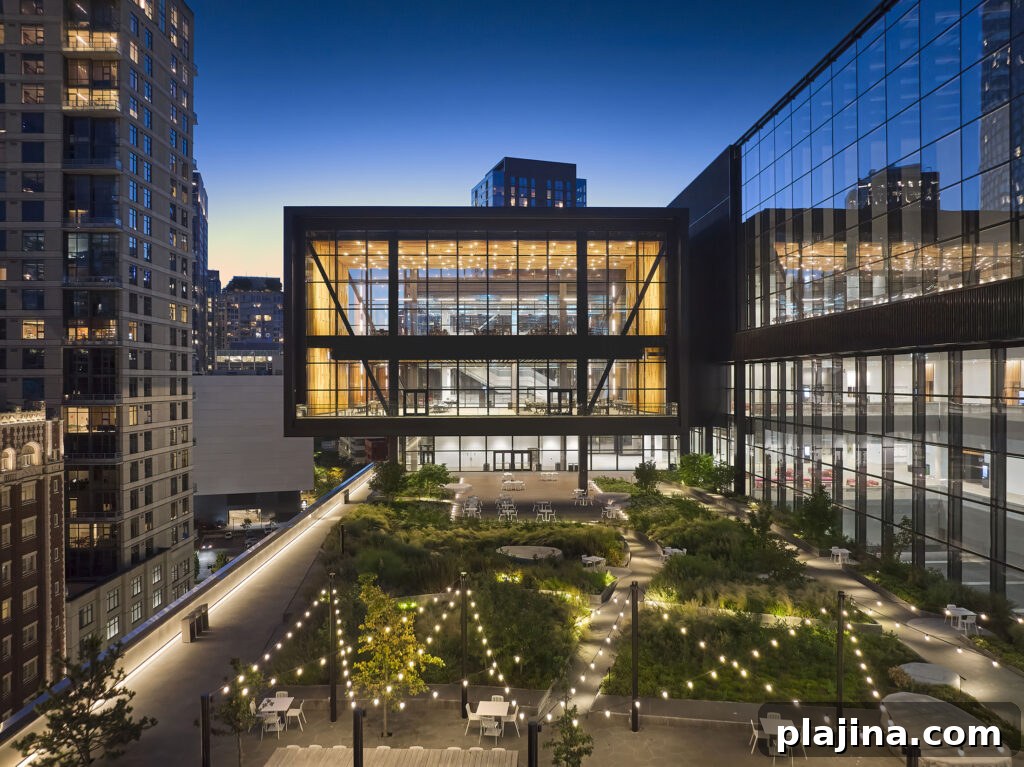
Seattle Convention Center © Lauren K Davis / Feinknopf
Airport operations have followed suit: all restaurants, lounges and take-out outlets within Seattle-Tacoma International Airport must use reusable or approved compostable food service ware and packaging. This initiative aims to divert 60 percent of terminal waste away from landfills.
Composting is one example of how the Seattle Convention Center integrates sustainability into daily operations. The LEED Platinum-certified Summit building uses food-waste dehydrators that cut waste volume and weight by up to 90 percent. The LEED Silver-certified Arch building runs a robust composting program. Both facilities convert food waste into fertilizer used in interior plantings and Summit’s 14,000-square-foot Garden Terrace.
“Our current mission identifies specifically sustainable operations, and it has multiple meanings for us,” said Jon Houg, COO of the Seattle Convention Center. “Sustainable operations is not only being financially sustainable, but it’s also being sustainable in terms of stewardship of the environment and in our purchasing practices.”
One of the most significant recent projects near the convention center is the redevelopment of the Seattle Waterfront. The Alaskan Way Viaduct, a 1950s-era double-decker highway that separated downtown from the water, has been removed and replaced by a people-focused waterfront featuring a linear park promenade, bike lanes, nine permanent art installations, play areas, an elevated connector to Pike Place Market and more than 150,000 new plants and trees.
“It has been a tremendous change from a Brutalist viaduct transportation element that was on your doorstep to one of the greatest assets of the city — this beautiful boardwalk and park structure,” Houg said. “It has been transformational in terms of how our corridor looks from Capitol Hill to First Hill to the downtown core to Pike Market and down to the waterfront. It is really breathtaking.”
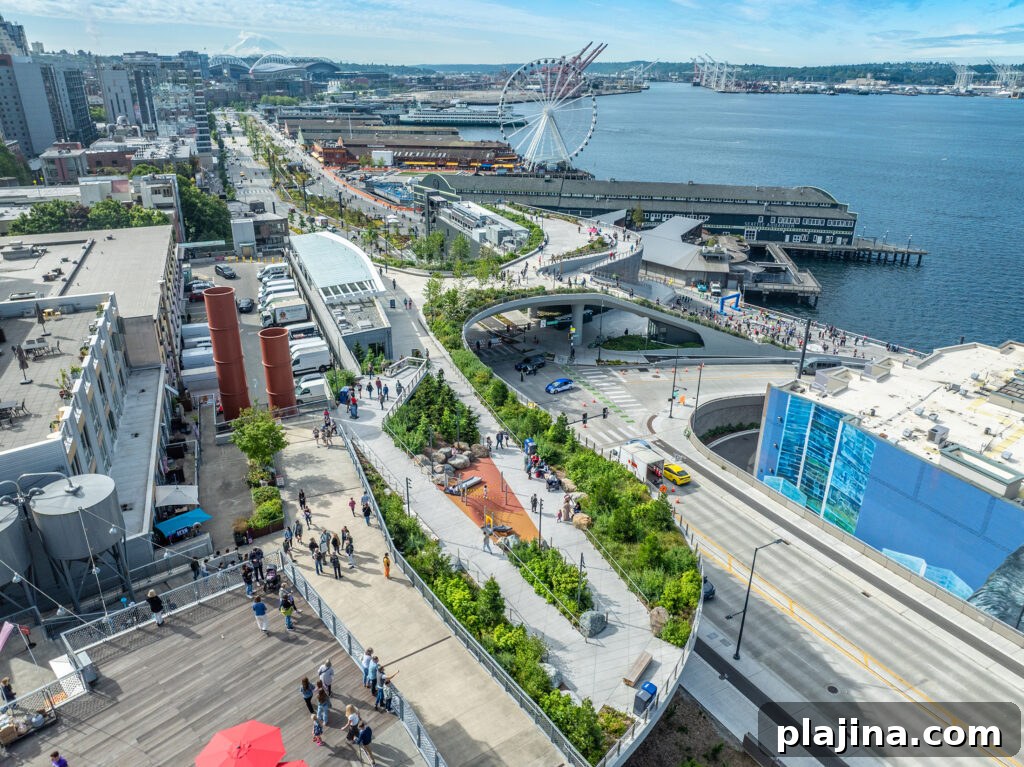
© Erik Holsather / Courtesy of Friends of Waterfront Park
“The new Seattle Waterfront is a once-in-a-generation transformation, a civic milestone that reconnects people to the water, to each other and to the city’s story,” said Mayor Bruce A. Harrell. He described the waterfront as an icon of what’s possible for the city: restoring salmon habitat, strengthening climate resilience and creating a vibrant, sustainable public space that is welcoming to all. As Seattle prepares to welcome visitors for the 2026 FIFA World Cup, the waterfront provides an impressive first impression of a walkable, green, people-centered city.
Nearby, new hospitality projects emphasize sustainable, nature-inspired design. 1 Hotel Seattle, which opened this spring, features reclaimed materials from local artisans, a fully electric fleet of house cars, a ban on single-use plastics and a commitment to divert 90 percent of its waste from landfills. The carbon-positive Populus Hotel in Pioneer Square plants a tree for every guest night booked through its One Night One Tree program.
Getting around Seattle is increasingly convenient and sustainable. The electric-powered Link light rail connects the airport with the city center and beyond, with expanded service to the University of Washington, Northgate, Lynnwood, Bellevue, Redmond and Federal Way. At the same time, the city is expanding bike lanes and pedestrian walkways to improve accessibility and encourage active transportation.
SCENIC DRIVES
Seattle is a gateway to some of the Pacific Northwest’s most dramatic drives. The 29-mile Cascade Valley Heritage Corridor traces the route Native Americans used to reach Puget Sound, beginning near Woodinville — a short drive northeast of the city known for wineries — and winding past small towns, waterfalls and hiking trails en route to North Bend.
For iconic views of Mount Rainier, take the Chinook Scenic Byway from Enumclaw, about an hour southeast of Seattle, over Chinook Pass to Naches. The roughly 100-mile drive rewards visitors with vistas of the mountain, old-growth forests, subalpine meadows, streams, lakes and waterfalls — all excellent for outdoor exploration.
About an hour north of Seattle, a ferry to Whidbey Island opens up the Whidbey Island Scenic Isle Way. Starting in Clinton, a historic coastal community, the route passes villages by the sea, botanical gardens and a lighthouse before reaching Deception Pass State Park. There you’ll find hiking, kayaking and the dramatic bridge spanning to Fidalgo Island, offering panoramic views of the surrounding waterways and islands.