
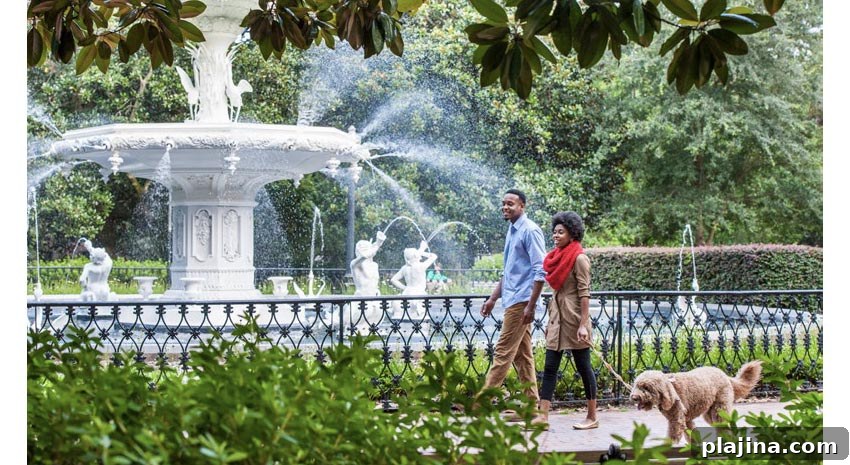
WITH ITS EASY CHARM, avant-garde style and a steady string of economic development successes, Savannah attracts far more than just tourists. This vibrant riverfront Georgian city—best known for its picturesque public squares, grand historic mansions and moss-draped live oaks—has also become a growing center for business. In 2016, Savannah drew $279 million in new investment, creating more than 1,000 jobs and signaling a broader trend of expansion.
“Savannah is booming,” says Hugh “Trip” Tollison, president and CEO of the Savannah Economic Development Authority. “Our container port is the fastest-growing port in the United States. We’re a hub for manufacturing and healthcare, and we’ve seen double-digit growth in tourism as well.”
Tourism surged after the publication of John Berendt’s Midnight in the Garden of Good and Evil in 1994, but the city’s appeal runs deeper than a single book. Savannah’s distinctive character—stylish yet welcoming, casual and lively—combined with its natural beauty has produced steady growth. “Savannah still has an undiscovered vibe,” says Erica Backus, director of public relations for Visit Savannah. “Visitors often expect a sleepy town but are pleasantly surprised by the vibrant music, arts and food scenes.”
That tourism growth has driven a wave of hotel investment and renovation across the city. Major brands like Westin, Marriott and Hyatt have undertaken significant updates, while new entries such as AC Hotels, West Elm’s hospitality venture, Tribute and Aloft are opening properties. Luxury brands including JW Marriott and a growing number of independent boutique hotels are also planting roots. The dining scene is expanding, too, with notable openings such as a Savannah location of Husk, the farm-to-table restaurant from celebrity chef Sean Brock.
“In the next three years, we’ll add about 16,000 hotel rooms to the historic district,” Backus notes. Rather than diluting Savannah’s identity, many hotel projects aim to protect and complement the city’s character. Design teams are being thoughtful about preserving the historic fabric—JW Marriott’s plan, for example, reuses the old power plant and retains its original smokestacks as part of the new design.
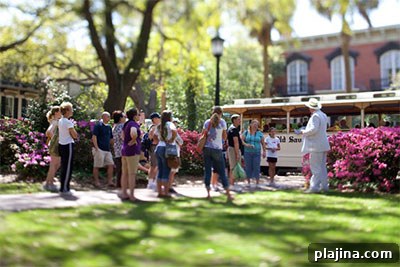
Savannah History Walking Tour © VISIT SAVANNAH
Much of this focus on adaptive reuse and historic preservation can be traced to the influence of the Savannah College of Art and Design (SCAD), which opened in 1978. SCAD’s mission extended beyond arts education to preparing students for professional creative careers, and its presence has had a transformative effect on the city. Today, SCAD is one of the largest and most comprehensive art and design universities in the United States, offering more than 100 programs in areas ranging from furniture design and fashion marketing to architecture and sustainable design. The school’s community—about 13,000 students and 1,700 employees—has an estimated economic impact measured in the hundreds of millions, but equally important is the cultural impact. SCAD has led dozens of restorations, converting old structures into dorms, galleries, shops and classrooms and inspiring broader revitalization across the city.
That influence—often called the SCAD Effect—helped jump-start redevelopment throughout Savannah. Projects like The Grey, which transformed the 1938 Art Deco Greyhound Bus Station into a celebrated restaurant, became catalysts for neighborhood change. “SCAD’s impact on downtown cannot be overstated,” Tollison says. “Their contributions are immeasurable.”
Savannah’s historic look and cinematic atmosphere have also attracted the film and television industry. Over 100 professional productions have recently used Savannah and its surroundings as locations, contributing roughly $62 million to the local economy and raising the city’s national profile.
Even as these wins accumulate, city leaders are focused on sustaining growth across multiple sectors. “Our next big push is to cultivate and maintain all of the economic sectors that have contributed to our success,” Tollison explains. Major projects, including improvements to the port, remain in the pipeline and point to continued opportunity for the region.
SCENIC DRIVES
A short, scenic drive from Savannah reveals a landscape of salt marshes, glassy rivers and ancient live oaks that arch over the road like a green tunnel. The roughly hour-long trip to Beaufort is a favorite for locals and visitors alike. Beaufort gained national recognition after appearing in the movie The Big Chill, and its charming Old Point neighborhood—lined with galleries, boutiques, coffee shops and waterfront restaurants—offers a relaxed pace and coastal charm. Locals head to Saltus River Grill for river views, or follow the Sea Island Parkway toward the Shrimp Shack for a casual meal featuring local seafood specialties.
Tybee Island, just 20 minutes from downtown Savannah, feels like a world apart. The barrier island features wide sandy beaches, winding tidal creeks and abundant wildlife, with no fast-food chains along the coast. Surfers find waves near the pier while calmer waters up north around Eighth Street are ideal for swimming. Kayakers and canoeists can paddle through marshland, spotting turtles, dolphins and colorful songbirds. Tybee is also home to Fort Pulaski, a brick fortification completed in 1829. Visitors can take free guided tours, climb the fort’s walls for wide-reaching views toward Hilton Head Island, and explore the surrounding 56,000 acres of parkland.