
With the 34th America’s Cup Finals approaching, San Francisco Bay is already alive with activity as top young sailors prepare with Artemis Racing and Oracle Team USA. From July 4 to Sept. 1, challengers will race wing-sailed catamarans across the Bay, offering high-adrenaline competition and spectacular waterfront views.
This year also marks San Francisco’s debut as a host city for the World Baseball Classic, bringing international teams together to showcase their distinct styles of play and drawing fans from around the globe.
Meanwhile, the city’s economy is moving ahead of many U.S. peers, driven by both tourism and technology. According to the UCLA Anderson Forecast, job growth in San Francisco and Silicon Valley has outpaced the national average, reflecting the area’s continued strength in innovation and visitor services.
In 2011 more than 16 million people visited San Francisco, nearly 3 percent more than the year before, spending about $8.5 billion—an increase of almost 10 percent. Those figures, compiled by the San Francisco Travel Association, translated into $526 million in tax revenue, up from $480 million. Tourism supports roughly 72,000 jobs, while the technology sector creates about 44,000 jobs.
Social media and technology play complementary roles in promoting the city. “Facebook and social media in general continue to be an amazing tool to promote our destination,” said San Francisco Travel Association President and CEO Joe D’Alessandro, noting that in 2012 alone the organization attracted 138,000 visitors to its website through Facebook.
San Francisco remains a magnet for creators, entrepreneurs, and communicators. With major tech firms expanding their presence in the city, that tradition continues to thrive. City leaders, including Mayor Ed Lee, have actively courted technology companies to locate in San Francisco rather than the suburbs. In interviews and public outreach they’ve emphasized programs to support minority entrepreneurs and to strengthen technology education in schools to close the digital divide. As a result, more tech companies are hiring local talent.
Officials at San Francisco Travel expect momentum to continue thanks to high-profile events such as the 75th anniversary of the Golden Gate Bridge, the U.S. Open, and the America’s Cup yacht race.
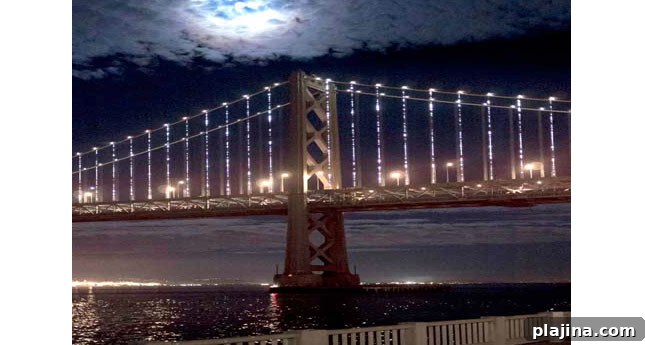
Commemorating the Bay Bridge’s milestone, the Bay Lights project stretches 1.8 miles and rises 500 feet to form the world’s largest LED sculpture. Leo Villareal’s nightly installation illuminates the bridge from dusk until 2 a.m. for two years and is forecast to contribute significantly to the local economy.
The Port of San Francisco, celebrating its 150th anniversary, is building the James R. Herman Cruise Terminal at Pier 27, which will serve as the venue for the 34th America’s Cup Village. The terminal is scheduled for completion to accommodate cruise ships and will include a new 2.5-acre public park called the Northeast Wharf Plaza.
San Francisco International Airport earned recognition from Skytrax for having the best staff service in North America. Terminal 2’s refurbishment included thoughtful passenger amenities, such as a dedicated Yoga Room—an uncommon amenity that reflects the city’s focus on traveler experience.
Moscone Center has undergone a two-year, $56 million renovation of its North and South buildings, resulting in 1.2 million square feet of event space. The center hosts roughly 1 million visitors annually and generates an estimated $1.6 billion in economic activity. Planned expansions aim to create thousands of long-term jobs and add substantial hotel tax revenue to the city budget.
San Francisco’s hotel inventory sits at about 34,000 rooms, with roughly 20,000 within walking distance of the Moscone Center. The city center features more than 200 hotels. Recent property upgrades include refreshed interiors at the Mandarin Oriental in the Financial District and meeting-space renovations at the Hyatt Fisherman’s Wharf. The Inn at the Presidio also plans a modest expansion in a nearby historic house.
The SoMa neighborhood has seen significant hotel development, including the redesigned W San Francisco. Hotel Zetta, a 116-room boutique property, occupies a strategic spot where Union Square, SoMa and the Financial District converge, placing guests within easy reach of the city’s fashion, arts, technology, and music scenes.
Yerba Buena Gardens and the San Francisco Museum of Modern Art © Jeff Whyte | Dreamstime.com
In recent years, several of San Francisco’s leading cultural institutions have undergone dramatic transformations or expansions. Golden Gate Park has been a focal point for this renewal, including major projects at the California Academy of Sciences and the de Young Museum.
The California Academy of Sciences project represented one of the largest cultural investments in the city’s history, nearly $488 million. Home to the Steinhart Aquarium, Morrison Planetarium and the Kimball Natural History Museum, the Academy introduced the Amazonian Flooded Rainforest exhibit beneath domed skylights and a 2.5-acre living roof planted with native California species that attract birds and butterflies.
The de Young Museum was rebuilt into a striking 292,000-square-foot modern structure, housing world-class exhibitions. Notable traveling shows have been featured at the museum, enhancing its reputation among both residents and visitors.
The SFJAZZ Center opened as the nation’s first facility designed specifically for jazz, joining a cultural corridor that includes Davies Symphony Hall, the War Memorial Opera House, the Asian Art Museum, the San Francisco Conservatory of Music and Bill Graham Civic Auditorium. New attractions such as the Walt Disney Family Museum in the Presidio and the Contemporary Jewish Museum in Yerba Buena have further diversified the city’s cultural draw.
San Francisco has also inspired a range of specialty tours. Bay Area Brewery Tours offers visitors a chance to sample local award-winning beers, while Bluxome Street Winery revives urban winemaking with an operational winery near the Caltrain station at Fourth and King streets.
Gourmet walking tours guide participants through neighborhoods to taste foods from Japanese, Thai, Korean, Vietnamese and Indian cuisines. For a local perspective, Discover Walks provides free tours led by San Francisco natives. For those who prefer a less strenuous option, the Bugster Experience uses restored Volkswagen Beetle convertibles equipped with GPS to highlight iconic sights such as Coit Tower, Chinatown, the Castro, Palace of Fine Arts, Fisherman’s Wharf, Haight-Ashbury and Sausalito.
San Francisco’s twin engines—tourism and technology—continue to feed one another, creating opportunity and inviting newcomers to pursue their own versions of success in a city that prizes innovation and experience.