
ROME
Experience the timeless beauty and romance of Rome, a city layered with history and culture. Home to more than 2.7 million residents, Rome’s past spans more than 2,700 years—from Etruscan roots through the Roman Empire to the vibrant modern capital it is today. Stroll the winding streets around Piazza Navona and Campo de’ Fiori, savoring tempting aromas and discovering monuments at every turn. Whether it’s your first visit or a return trip, the abundance of historic sites and lively neighborhoods will leave you enchanted.
GETTING THERE
Rome is served by two main airports: Leonardo da Vinci–Fiumicino (FCO), the primary international gateway, and Ciampino (CIA), favored by many low-cost carriers. The Leonardo Express train connects Fiumicino to Stazione Termini—the central rail, bus and metro hub—departing every 30 minutes with a direct, comfortable ride. Shuttle buses also operate between the airports and Termini for lower fares. From Ciampino, regular bus services link to Termini. Taxis to the city center have fixed fares from the airports, which can be convenient if you have luggage or arrive late.
GETTING AROUND
Walking is one of the best ways to explore Rome, as many attractions are clustered within walkable neighborhoods. The city’s public transit network—buses, trams and metro—operates under ATAC with affordable single-ride tickets. The metro typically runs from early morning until around midnight, while buses provide 24-hour service on many routes. If you plan to use public transport frequently during your stay, consider a day pass or multi-day ticket for unlimited travel. Metered taxis are widely available and useful for shorter or late-night journeys; fares include an initial base rate plus distance-based increments.
TOP ATTRACTIONS
Historic Center
Rome’s historic center, a UNESCO World Heritage site since 1980, is a compact area filled with iconic monuments and ancient ruins. Explore landmarks such as the Colosseum, the Pantheon and the Mausoleum of Augustus, alongside the public and religious monuments tied to papal Rome. Recent access improvements have opened new areas of the Colosseum to visitors, including the underground chambers where gladiators prepared and the upper levels that offer stunning views across the arena and the city skyline.
Palazzo Doria Pamphilj
Palazzo Doria Pamphilj displays an impressive private art collection within an elegant family palace. The galleries host masterpieces by artists such as Velázquez and Caravaggio and overlook a peaceful courtyard. The palace is open daily with an entrance ticket that typically includes an audio guide for an informed visit.
Villa Borghese
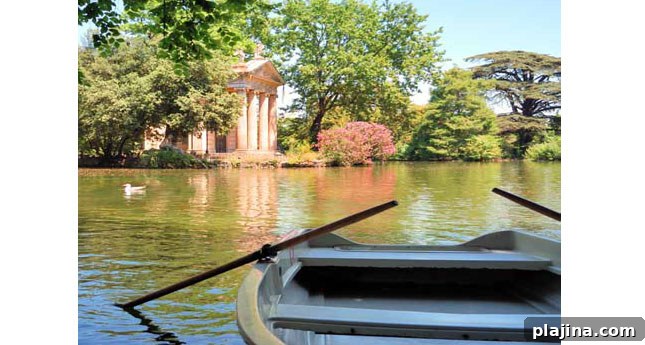
Villa Borghese is Rome’s principal green space, a large landscaped park near Piazza del Popolo offering shaded avenues, formal gardens and recreational options. Enjoy a picnic under umbrella pines, rent a bicycle, visit the park’s small zoo or reserve entry to Galleria Borghese, a world-class museum featuring sculpture and painting from the Renaissance through the Baroque. Advance reservations are required for the gallery to manage visitor numbers.
EVENTS AND FESTIVALS
Estate Romana Festival
Estate Romana, the city’s summer program, brings music, film and arts events to parks, squares and the banks of the Tiber. Outdoor screenings, performances and seasonal markets create lively evenings during the warmer months.
Festa di Primavera
In late March or early April, Rome celebrates spring with concerts and floral displays, including the Spanish Steps decorated with colorful azaleas—an ideal time to enjoy the city’s outdoor charm.
Natale di Roma Festival
Each April 21 Rome marks its legendary founding with the Natale di Roma festival. The-day festivities often include historical reenactments, parades and performances that evoke the city’s ancient past.
RESOURCES
For official tourism information about Rome, consult the city’s tourism resources for up-to-date details on attractions, events and practical travel tips.