
Imagine a capital where you can finish a morning meeting and by lunchtime be relaxing on a Caribbean island, touring a colonial city founded in 1524, walking the rim of an active volcano, or eating lobster on a mile-long Pacific beach.
Managua isn’t primarily a tourist destination — it’s the business hub of rapidly developing Nicaragua. But when work concludes, you and any accompanying family will find abundant natural and cultural attractions just a short drive or prop-plane flight away.
My wife joined me on this trip, and we had a week to explore without rushing. We began with a short flight to the Corn Islands — two classic, laid-back tropical islands on Nicaragua’s Atlantic coast, about 44 miles offshore. Big Corn offers several small resorts and a single road that can be biked in an hour. Little Corn has no roads or vehicles, so you walk or take a boat to most destinations. Both islands feature lovely beaches, plentiful rum, and inexpensive lobster. Internet is available if needed, but these islands are ideal for unplugging.
There are opportunities to dive, snorkel, and fish, though we mostly relaxed. On Big Corn we stayed at Arenas Resort on one of the island’s nicest stretches of sand, settling into beach chairs beside a long bar fashioned from a wooden boat.
Our main excursion was a boat trip to Little Corn, where we had planned to stay at Yemaya Island Hideaway, an organic, wellness-focused retreat with daily yoga and scenic bungalow terraces. It was fully booked, so we enjoyed lunch made with ingredients from its garden and took in the aquamarine sea and coconut-lined beach from the deck.
Touring Granada via horse-drawn carriage © Lester Woodward | Dreamstime.com
Back in Managua, we headed straight to Granada, the crown jewel of Nicaragua’s growing tourism industry. Founded in the early 1500s, much of Granada’s architecture dates to the 19th century because the city was largely burned in 1856 during William Walker’s attempted conquest. Rebuilt relatively quickly, Granada has a coherent architectural character, with colorful homes, red tile roofs, horse-drawn carriages, and the imposing silhouette of Volcán Mombacho nearby. The city is tidy and full of interesting sights in every direction.
We toured Granada by horse-drawn carriage at a relaxed pace. Outside Xalteva Church we passed a black carriage decorated for a funeral; the funeral horses were draped in black nets, a visual reminder of local customs and traditions.
Visiting the cemetery on the town’s edge felt appropriate. The cemetery contains elaborate above-ground tombs that signal wealth and status: tall markers sometimes topped by angels and even a scale replica of a Spanish church with Moorish arches carved in marble. We also climbed the bell tower at La Merced Church for panoramic views of steeples, rooftops, and the surrounding landscape.
Granada boasts some of Nicaragua’s best restaurants. Calle la Calzada is a long stretch of outdoor cafés and eateries; our waiter joked that happy hour there is “all day, every day.” It’s easy to slow down and enjoy the atmosphere, while the city also serves as an excellent base for nearby attractions.
One day we visited Masaya — home to an active volcano you can drive close to. The parking signs instruct visitors to park facing outward so cars can make a quick exit if volcanic activity increases. Masaya is also the country’s craft center: we visited a pottery workshop where the artisan worked a foot-powered wheel and stacked wood to fire the kiln.
The Masaya craft market mixes high-quality handicrafts with touristy items. The best buys seemed to be woodwork, masks, and embroidery, so we picked up a few souvenirs after some friendly bargaining.
After several days in Granada the beach called us again. We drove south on improving roads to deserted Pacific beaches. San Juan del Sur, a perfect crescent-bay beach, remains a popular but not overcrowded center for surfers and beachgoers. Many excellent surf spots along the coast still show minimal development.
From Pelican Eyes Resort we toured nearby coves by private sailboat. Under a deep blue sky, with wind in the sails and a cigar in hand, we passed nearly empty beaches and the occasional home or hotel.
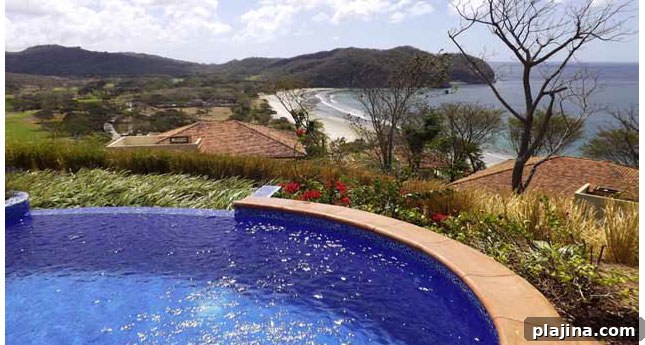
Pelican Eyes is a hillside resort of villas and bungalows with ocean views from many balconies and pools. At sunrise the bay is backlit; at sunset guests gather to watch the sky change. We enjoyed one of the trip’s best lobster dinners at El Timón while watching boats bob in the water.
Our final stop was Mukul, a new luxury resort on the coast that aims to outclass many regional beach properties. Owned by a prominent Nicaraguan family, the resort features high-end design, a championship golf course whose 18th hole sits beside the ocean, and an exceptional spa.
The spa at Mukul is composed of separate villas, each with private changing areas, showers, and large treatment rooms. Our three-hour couple’s ritual combined lava mud, herbal rubs, grapefruit baths, and deep tissue massage, followed by an outdoor heated pool overlooking the Pacific.
As evening fell, we sampled the resort’s rum selection, progressing from seven- to 25-year expressions of Flor de Caña while discussing the differences aging creates. After a seafood dinner on the beach, we relaxed in a heated plunge pool on our bungalow balcony and watched the stars.
Scenes of luxury and pampering may not be the first images many people associate with Nicaragua. Even 25 years after the civil war, political labels like “Sandinista” might still come to mind. Yet Nicaragua is now among the safest countries in Central America, and many travelers who visit Managua on business would be surprised to learn how much of this varied, beautiful country lies within a two-hour radius.
On our last morning at Mukul, we watched a mother sea turtle nesting on the quiet beach — a fitting finale in a country that felt full of renewal and promise.
Nicaragua Info to Go:
Managua’s Augusto César Sandino International Airport handles most international flights; visitors pay a small immigration entry fee. A taxi to a central hotel typically costs $20 or less. The airport is on the city’s eastern edge, about seven miles from downtown, so renting a car can be practical for regional travel. Private taxis to Granada usually run $40–60 and to San Juan del Sur $80–100; shared shuttles are less expensive. Flights to Big Corn Island are operated by local carriers and prices vary.
Where to Stay in Nicaragua
Hotel Dario A small full-service hotel in Granada with 21 rooms, a pool, two restaurants, and a central location. Calle la Calzada, Granada $$
Mukul Beach, Golf & Spa A luxury resort opened in 2013 featuring a championship golf course, an award-winning spa, and a sweeping beach. Km 10 Carretera Tola-Las Salinas, Guacalito de la Isla $$$$
Pelican Eyes Resort and Spa A hillside retreat with 61 individual bungalows and villas overlooking the bay. De la Parroquia, San Juan del Sur $$$
Restaurants in Nicaragua
Bistro Estrada A popular, upscale restaurant serving beautifully presented local dishes and desserts. Calle el Arsenal, Granada $$
Restaurante El Timón A beachfront favorite known for consistently excellent lobster and fresh fish. Central beachfront, San Juan del Sur $$
El Zaguán Restaurant Famous for parrilla-style steaks, grilled meats, and local favorites. Avenida Sirena, Granada $$
Read more about Nicaragua’s Lake Cocibolca.