
Speaking about the Al Faisaliah Center, British architect Lord Norman Foster said, “The opportunity to create Riyadh’s and Saudi Arabia’s first skyscraper was a tremendous responsibility. I wanted a concept that was original and that the community would be proud of for years to come.”
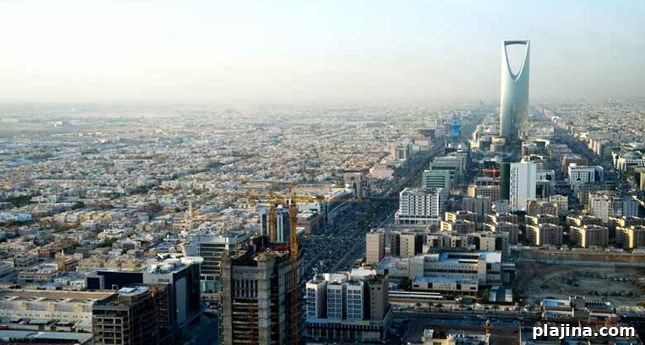
Located in the heart of the Arabian Peninsula, Riyadh has evolved dramatically since it became the official capital in 1932. Only fragments of the early mud-brick fort of Al-Musmak remain in the southern part of the city, a reminder of its humble past. Today Riyadh — from the Arabic word rawdah meaning “garden” — presents a skyline of soaring towers set against expanses of sand. In the 19th century the royal capital began as a dusty desert outpost; now it is a bustling modern metropolis.
Riyadh has grown into the kingdom’s administrative and financial center. The city combines deep-rooted tradition with rapid modernization and hosts notable institutions, including the world’s largest women’s university, Princess Nora Bint Abdul Rahman University. Fueled by oil revenues since the 1950s, Riyadh attracted major foreign investment and development, turning it into a commercial hub serving more than five million residents. One persistent challenge, however, is the limited public transport system; business travelers often rely on the city’s white taxis to get around.
An ambitious master plan, the King Abdullah Financial District, is underway. When completed, it aims to become the region’s first financial district developed at a scale rivaling major global centers, featuring offices, retail, dining and landscaped parks set among striking high-rises that together form a modern urban precinct.
About 30 minutes from King Khalid International Airport and situated in the commercial core of the Al Olaya District, the Al Faisaliah Center stands as one of Riyadh’s signature towers. The Al Faisaliah Hotel, a Rosewood property within the complex, is a luxury option for business travelers.
The 330-room hotel is highly regarded for its personalized butler service available in all guestrooms. The property offers in-room dining, contemporary amenities and five distinct restaurants well suited for entertaining and corporate dining. One standout venue is the Globe Restaurant, which has received industry recognition for fine dining.
In Al Olaya you can also visit Burj Al Mamlaka at the Kingdom Centre, the city’s tallest skyscraper, noted for its dramatic shape often compared to a modern bottle opener. Located at the junction of Olaya Road and the King Fahad Expressway, the Kingdom Centre houses the Four Seasons Hotel Riyadh, a 274-room luxury hotel occupying part of the 99-story tower. The Four Seasons blends Arabic influences with contemporary design and features a spectacular ballroom highlighted by multiple crystal chandeliers.
The Four Seasons offers diverse international cuisine, from Italian and Asian to grilled specialties. Its all-day restaurant, Elements, hosts themed culinary evenings and a popular Friday brunch with live cooking stations led by the hotel’s executive chef. Elements also includes a private dining room suitable for groups up to 24 guests.
Riyadh’s meeting and convention infrastructure has expanded alongside its hospitality sector. The Riyadh International Convention and Exhibition Center, recognizable by its wave-shaped roof, has become a key venue since opening in 2009. The center provides column-free exhibition halls totaling about 160,000 square feet indoors plus 54,000 square feet outdoors, accommodating large trade shows and conferences with modern technology and on-site WiFi.
Dining in Riyadh reflects the city’s cosmopolitan growth: international chains are present across the city, while trendy spots like Tao Lounge on Tahlia Street serve contemporary Asian cuisine in stylish settings. For traditional Saudi flavors, Najd Village offers a set menu of local specialties, including kabsa (meat with rice) and regional dishes such as hashi (baby camel), showcasing the culinary heritage of the Najd region.
Classic French-style steak frites is the sole main course at Le Relais de l’Entrecôte, yet its focused menu draws regular queues of loyal patrons who appreciate the consistent quality.
For a quieter cultural experience, the King Abdul-Aziz Historical Center provides landscaped parks and plazas designed by German landscape firm MK2 International. The complex connects several important cultural destinations, including the dune-shaped National Museum of Saudi Arabia designed by Raymond Moriyama, the Al-Murabba Palace, the restored Al Musmak Citadel and the distinctive old Water Tower.
Riyadh continues to grow and adapt as its urban boundaries shift like the dunes that frame the city. Amid the wealth, development and oil-driven prosperity, the capital remains a metropolis in transition — a place where tradition and modernity meet and where new landmarks keep emerging.