
The demand for travel has steadily risen since the world began recovering from the COVID-19 pandemic. Along with this resurgence, travelers have placed greater value on comfort, privacy and thoughtful service during flights. Modern travelers now expect more humane, accommodating conditions and are willing to pay for an improved experience that helps them arrive at their destination better rested and refreshed.
Long hours spent in cramped economy seats are no longer acceptable to many passengers, particularly on long-haul international routes. While first and business class cabins remain expensive, premium economy has emerged as a popular middle ground. It delivers many of the creature comforts associated with higher classes—more legroom, larger seats and upgraded dining and entertainment—at a price that is significantly lower than a full premium upgrade.
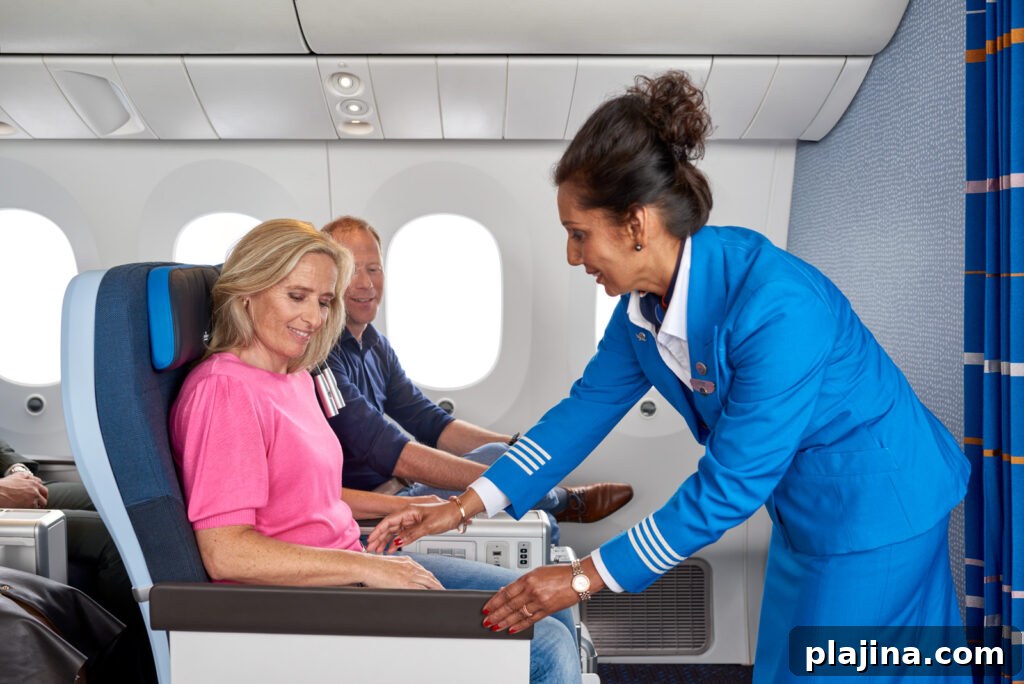
Airlines use different names for this cabin—KLM’s Premium Comfort and British Airways’ World Traveller Plus are examples—but the core appeal is consistent: an elevated in-flight experience that balances comfort and cost. Our annual review of airlines’ premium-economy offerings examines how these cabins enhance the passenger experience and why demand for them continues to grow.
© KLM
As carriers respond to passenger demand for more space and perks, an increasing number of airlines now offer dedicated premium-economy cabins positioned between business and economy. Air France, for example, includes premium economy on many international routes, including destinations in the Caribbean and the Indian Ocean. These seats provide extra space and comfort and often come with amenities more commonly associated with premium cabins, such as comfort kits, blankets, pillows and bottled water upon boarding.
United Airlines markets its Premium Plus cabin on aircraft like the Boeing 777-200, 767-300 and 787-9 Dreamliner. Features include larger seats with greater recline and legroom, power outlets and USB charging, complimentary alcoholic beverages and upgraded hot meals with snacks and desserts. Premium Plus also offers priority boarding and increased baggage allowances—typically two checked bags instead of one—and passengers may purchase discounted access to United Club lounges to extend the premium experience into the airport.
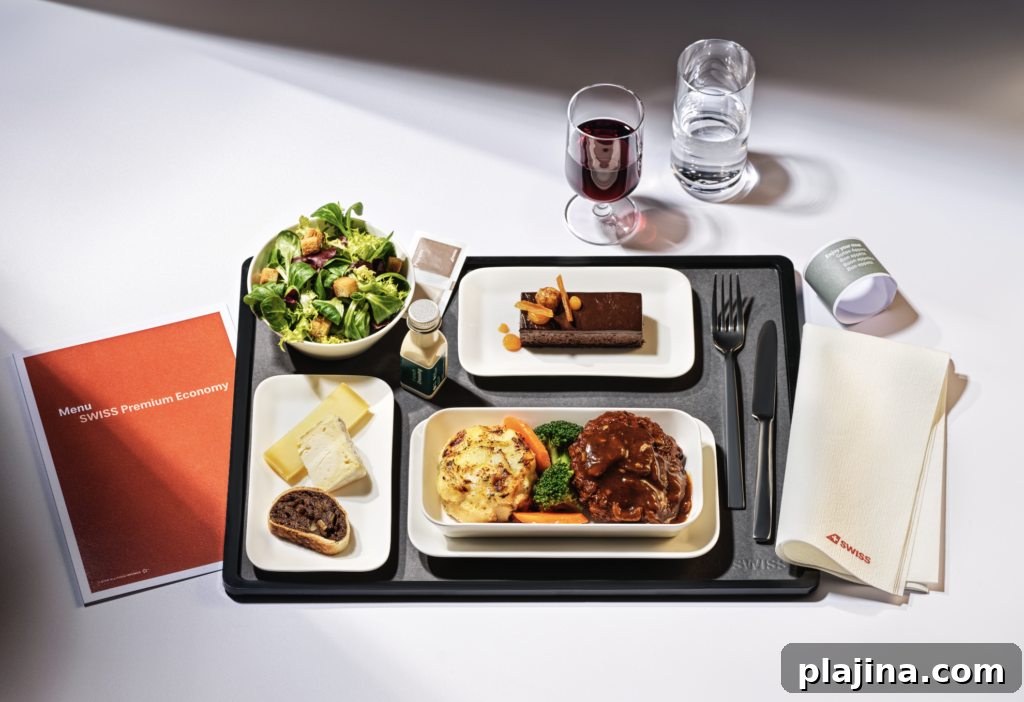
Air Canada’s premium-economy cabins on wide-body aircraft serving North American and international routes focus on service elements that resemble business class. Passengers receive coat service, warm scented towels, bottled water at the seat upon boarding and printed menus for hot meal choices. By placing these seats in a separate section, airlines create a more exclusive atmosphere that reinforces the perception of an upgraded travel class.
© Swiss
On North American flights longer than two hours, Air Canada has introduced a pre-meal bar service for premium-economy passengers, offering an exclusive wine selection poured from full-sized bottles alongside the usual pre-flight welcoming beverages such as orange juice or sparkling water.
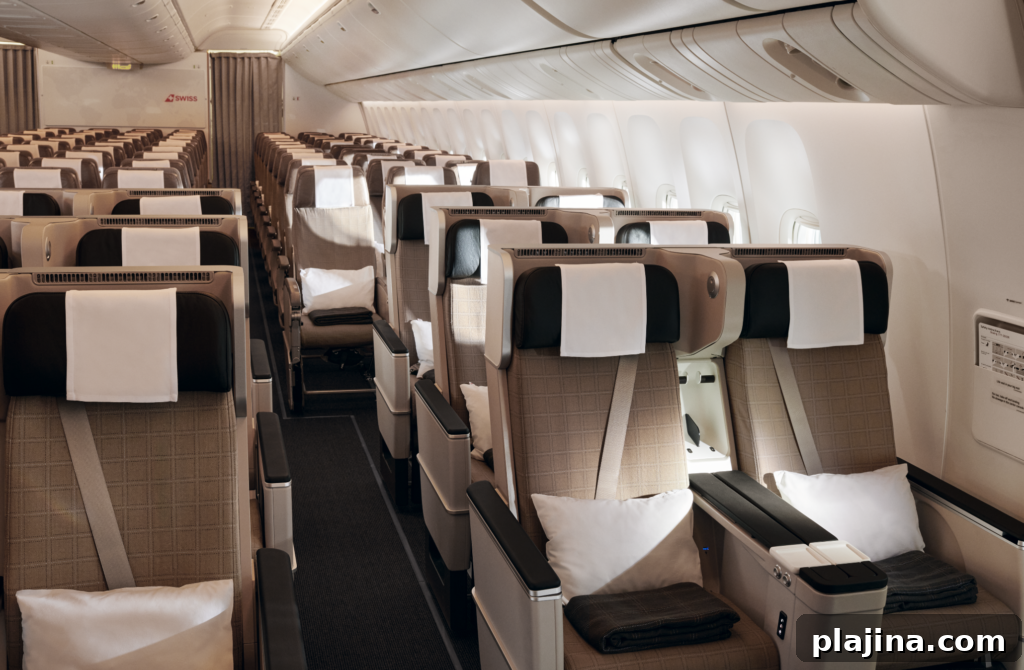
Swiss International Air Lines recently launched a new premium-economy cabin, fitting all four of its Airbus A340s and planning to expand the cabin across its Boeing 777-300ER fleet. This move reflects broader airline efforts to meet growing passenger expectations for comfort and personal space.
Air New Zealand has introduced a Sky Pantry in its premium economy—and extended it to economy passengers as well—allowing travelers to stand, stretch and help themselves to snacks and beverages during the flight. Such features aim to improve passenger wellbeing on longer journeys.
© Swiss
Airlines are also prioritizing sustainability when redesigning cabins. Air New Zealand plans to reduce seat weight by switching to modern fabrics instead of leather, trimming approximately two pounds per seat, and to cut the weight of service ware by about 20 percent. These adjustments lower fuel burn while maintaining passenger comfort. The new premium-economy seats aim to offer more privacy and a recline that does not disturb the passenger behind, supporting better rest on long flights.
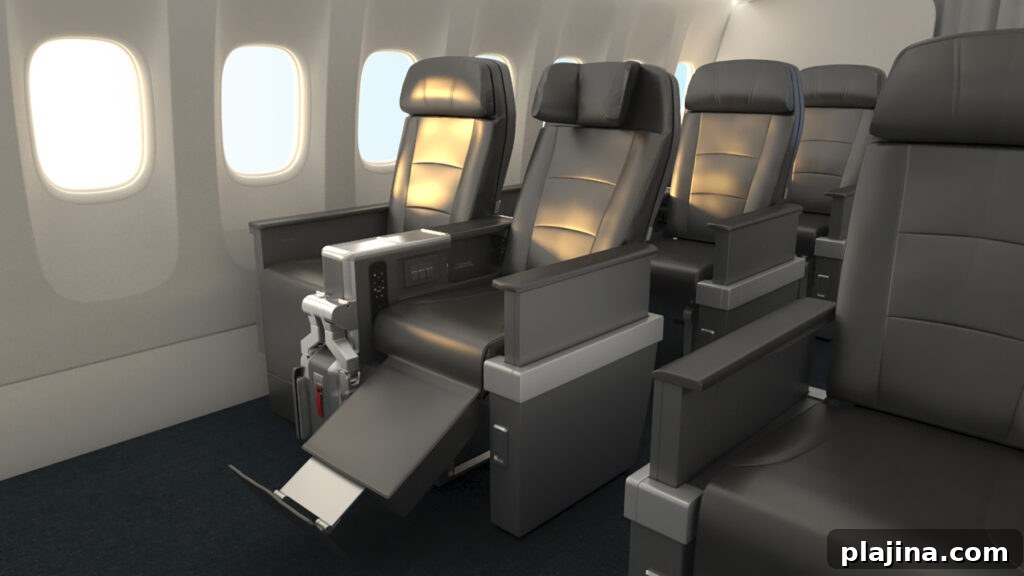
American Airlines, which introduced premium economy on its long-haul aircraft in 2016, is expanding premium seating across its fleet. New deliveries of Boeing 787-9 and Airbus A321XLR aircraft will add more premium-economy capacity. The redesigned cabins will resemble business-class styling with increased personal space, larger in-seat storage and entertainment screens, and enhanced headrests that improve comfort and privacy. For example, the Boeing 787-9 configuration will increase premium-economy seats from 21 to 32 on certain aircraft.
© American Airlines
Passengers worldwide are responding positively to premium economy. It offers a tangible improvement over basic economy—more space, better service and a more restful journey—without the premium price tag of business or first class. As travelers continue to prioritize comfort, privacy and overall wellbeing in the air, the prevalence of premium-economy products will likely expand as airlines adapt cabin layouts and services to match passenger expectations.
While premium economy typically costs more than basic economy, it represents a cost-effective option for travelers who value comfort and a higher level of service. With airlines steadily enhancing these cabins—through improved seating, upgraded dining, dedicated cabin areas and sustainable design choices—premium economy has become a compelling choice for many passengers seeking a better balance of price and comfort on long-haul flights.