
Architectural design firm BIG – Bjarke Ingels Group has been selected to design Prague’s new Vltava Philharmonic Hall, the first national concert hall built in more than a century. At approximately 535,000 square feet, the venue will accommodate over 1,800 people, honoring the Czech musical tradition while reinforcing Prague’s reputation as one of Europe’s leading cultural destinations.
The Vltava Philharmonic Hall will become the permanent home for the Czech Philharmonic and the Prague Symphony Orchestra FOK. Both ensembles will base their residences and educational programs in the new complex. The hall’s design features a sequence of public spaces, gently sloping colonnades and accessible terraces that lead from the Vltava riverbank up to the roof, making the building an attraction for all visitors — not only classical music audiences. The project aims to bridge Old Town’s historic character with the more contemporary cultural scene of Holešovice, creating a continuous cultural corridor through the city.
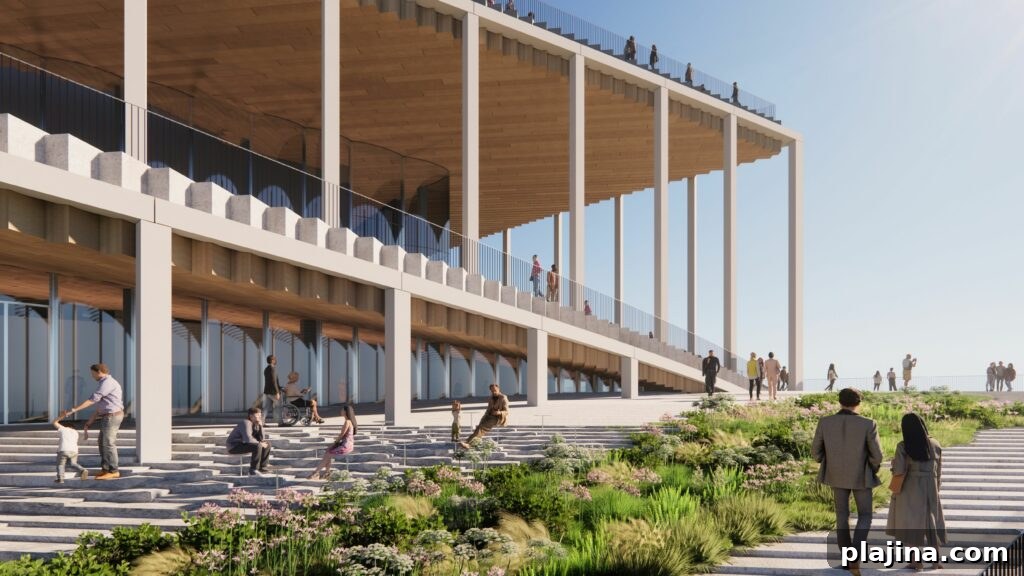
© BIG – Bjarke Ingels Group
“The Vltava Philharmonic Hall is composed as a meandering journey from riverbank to rooftop,” said Bjarke Ingels, founder and partner at BIG. “Public flows and belvedere plazas link Prague’s urban life to the music within. The halls are shaped for sight, tuned for sound and organized for practical connectivity. From this rhythmic structure, a sequence of colonnades and balconies unfolds as platforms for public life. Expressive yet pragmatic, the new Philharmonic will rise as a defining landmark for Prague, from river to roof.”
The building’s roof is conceived as an accessible landscape: visitors will be able to walk to the top as if ascending a hill. Colonnades will support a series of roof terraces, while timber sourced from the Bohemian Forest will provide shelter from sun and weather and create intimate spaces for informal outdoor performances.
Although the Vltava Philharmonic Hall is not expected to open until 2032, the new venue is poised to become a major cultural focal point in a city where music has shaped daily life since the 13th century.
© Vivid Vision
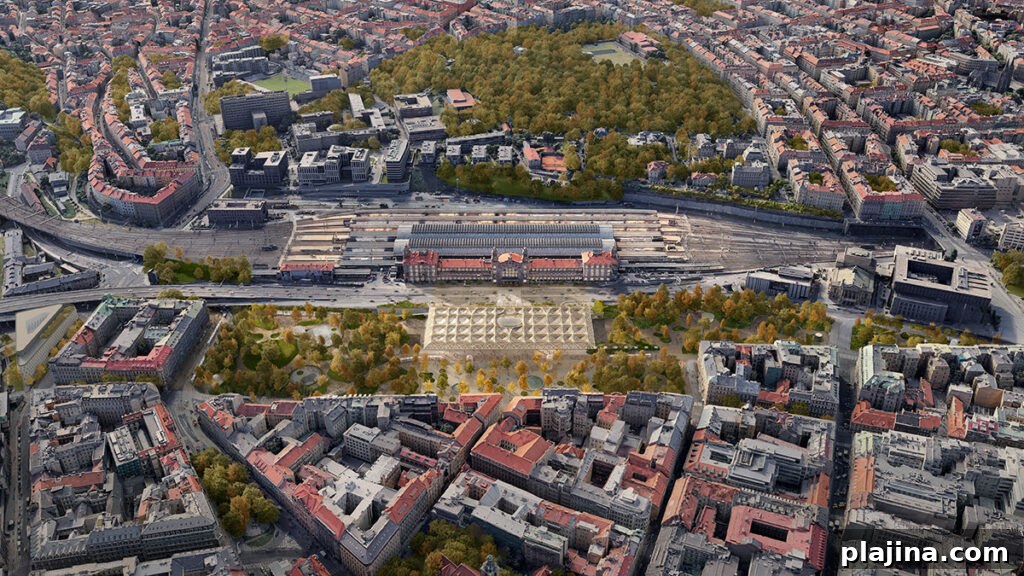
In a separate major urban initiative, Henning Larsen has been tasked with redesigning Prague’s historic Hlavní nádraží (Central Rail Station) and its surrounding neighborhood. The plan will connect the station and its grand terminal hall with Vrchlického sady Park, often called Sherwood Park, transforming the area into a more sustainable and vibrant urban quarter.
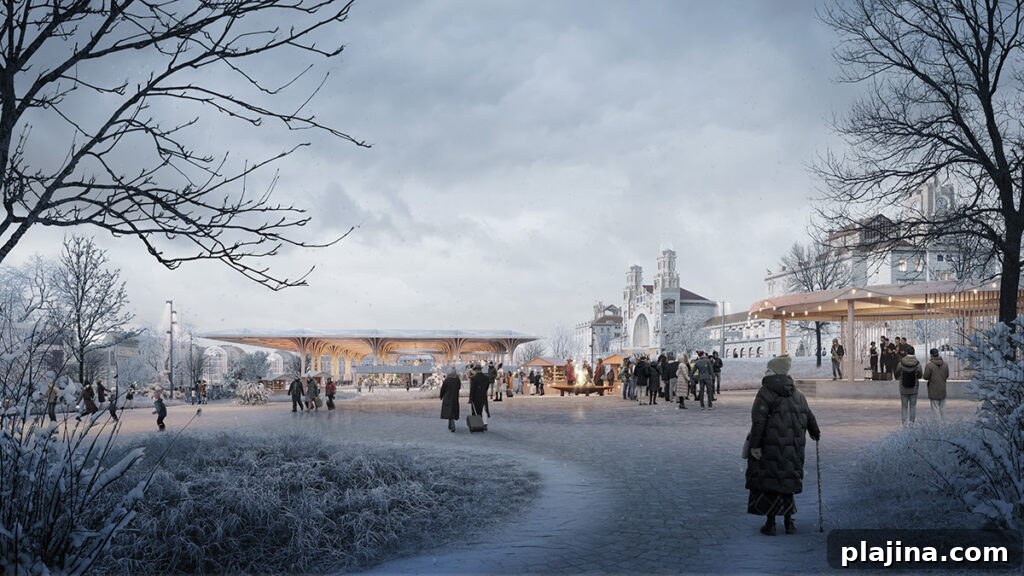
Vrchlického sady Park will be organized into distinct zones — a cultural zone, an activity zone and a central arrival plaza — providing space for expanded seasonal events such as a larger Christmas market. The scheme emphasizes native planting and the preservation of historic trees to enhance biodiversity and urban amenity. The redesigned station will integrate with the city’s planned cycling network, offering improved bicycle access and parking to support Prague’s goal of reducing carbon emissions. With a new tram line and an anticipated doubling of visitor numbers in the area, the upgraded Hlavní nádraží transport hub is expected to be a transformative milestone for Prague’s urban development.
© Vivid Vision
The redesign will honor the architectural heritage of the station by preserving, reinterpreting and extending the terminal hall’s distinctive features to handle increased capacity. Iconic elements such as the striped paving and the terminal’s curved forms will be retained as a tribute to the building’s modernist legacy.
Arriving at Hlavní nádraží from the city center, visitors will encounter the park and a lively pavilion that serves as a gateway to the Fantova Building, encouraging exploration and movement through the site. A prominent open-roof timber canopy will unify the park, the central station and the transport interchange. To accommodate a new tram stop and the city’s transport plan, a new glued laminated timber roof will be raised approximately 45 feet above the terminal floor, improving sightlines to the park and skyline and enhancing access to the recently restored Art Nouveau Fantova Building within the station.
The combined projects — the Vltava Philharmonic Hall and the Hlavní nádraží master plan — represent a concerted effort to strengthen Prague’s cultural infrastructure, improve connectivity and create welcoming public spaces that reflect both the city’s history and its future ambitions.